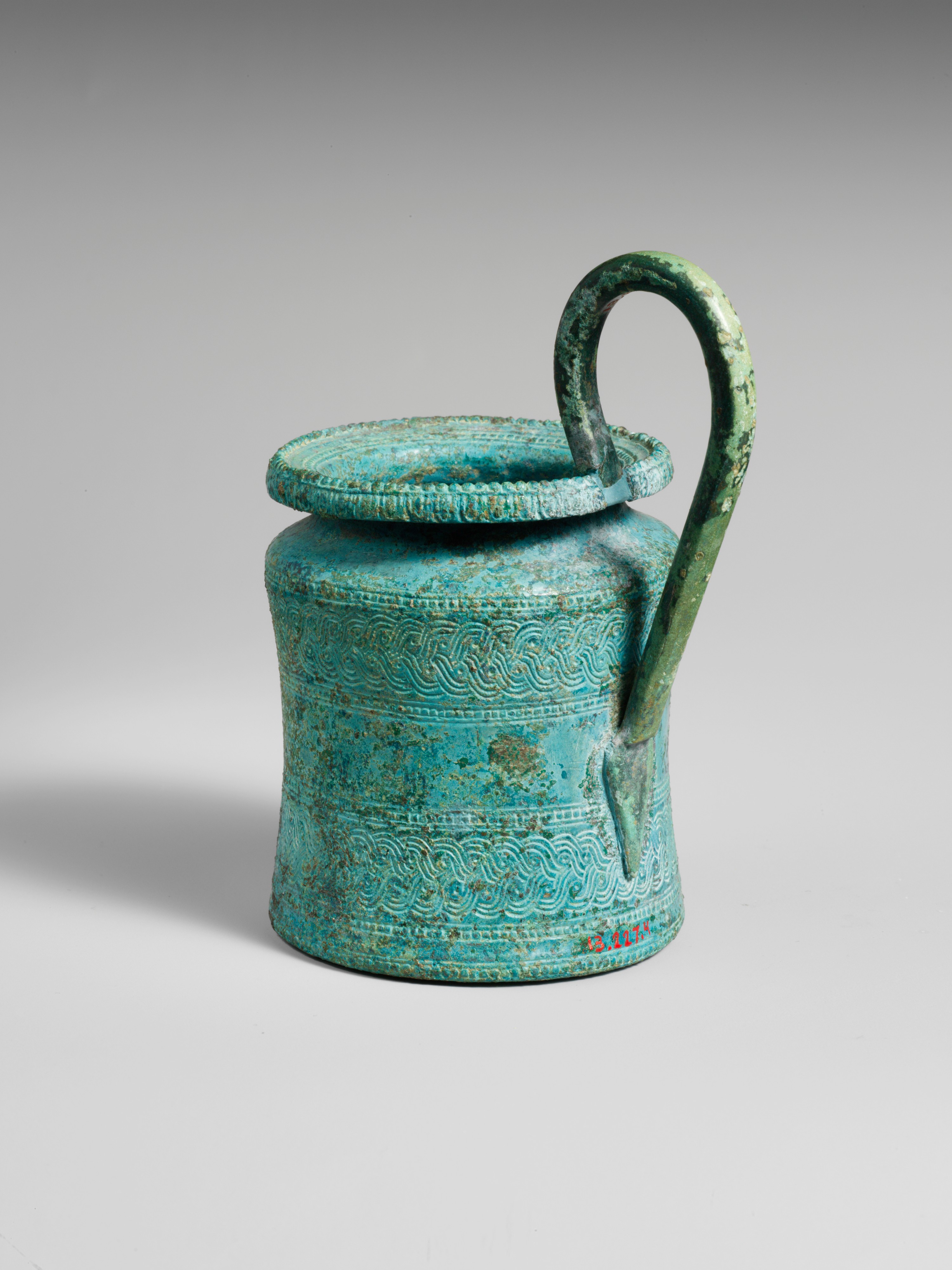
Heritage Analysis: The Etruscan Bronze Kyathos and Its Resonance for Katherine Fashion Lab
Introduction: The Kyathos as a Conduit of Etruscan Power
The bronze kyathos—a single-handled jug of Etruscan origin—is far more than a utilitarian vessel. Crafted between the 7th and 4th centuries BCE, this object embodies a sophisticated synthesis of symbolic power, historical adornment, and spiritual meaning. For Katherine Fashion Lab, the kyathos is not merely an artifact; it is a strategic blueprint. Its form and function resonate deeply with our ongoing research on the “Rock in the form of a fantastic mountain” and the “Jar in the shape of bronze container (hu)”, two seemingly disparate objects that, upon DNA-level cultural correlation, reveal a shared narrative of transformative luxury and ritual authority. This analysis positions the kyathos as a cornerstone for a 2026 high-end luxury strategy that redefines heritage as a living, actionable asset.
Symbolic Power: The Kyathos as a Marker of Elite Status
The Etruscan kyathos was not a quotidian item. Its single-handled design, often adorned with intricate geometric patterns or mythological scenes, signaled its owner’s aristocratic lineage and ritual function. In Etruscan society, where banquets and libations were central to social and religious life, the kyathos served as a status symbol—a tool for pouring wine or oil during ceremonies that reinforced the host’s authority. This symbolic power parallels the “Rock in the form of a fantastic mountain,” which we previously analyzed as a representation of cosmic hierarchy. Both objects transform the mundane into the monumental: the rock elevates a natural form into a spiritual landmark, while the kyathos elevates a simple pouring action into a declaration of power.
For Katherine Fashion Lab, this symbolism translates directly into luxury branding. The 2026 strategy must emphasize exclusivity through ritual. A kyathos-inspired accessory—whether a handbag handle shaped like its curved form or a jewelry piece mimicking its bronze patina—becomes a talisman of authority. The key is to embed the object’s original hierarchical meaning into modern design, allowing the wearer to access a heritage of command without overt display. This is not about copying antiquity but about encoding its power dynamics into a contemporary silhouette.
Historical Adornment: Bronze as a Medium of Prestige
The choice of bronze as the medium for the kyathos is deliberate. Bronze in Etruscan culture was a material of permanence and prestige, often reserved for objects that bridged the human and divine. Its warm, enduring patina—developed over centuries—adds a layer of tactile luxury that cannot be replicated by synthetic materials. This aligns with our findings on the “Jar in the shape of bronze container (hu),” where the bronze form was not merely a container but a vessel for spiritual transfer. The jar’s shape echoed ancient Chinese ritual bronzes, suggesting a cross-cultural appreciation for metal as a conduit of eternal value.
In the context of historical adornment, the kyathos’s surface decoration—often incised with vines, animals, or mythical creatures—functioned as a narrative garment. It adorned the object and, by extension, the user. For Katherine Fashion Lab, this offers a powerful lesson: adornment is not separate from function. The 2026 luxury strategy should prioritize material storytelling. Bronze-toned hardware, oxidized finishes, and handcrafted detailing can evoke the kyathos’s patina, while the single-handled motif can be reimagined as a clasp or a sculptural element in bags and belts. This approach bridges historical authenticity with modern minimalism, appealing to clients who seek depth in their purchases.
Spiritual Meaning: Libation, Transformation, and the Sacred
The kyathos was intimately tied to Etruscan libation rituals, where wine or oil was poured as an offering to ancestors or gods. This act of spiritual transformation—changing a liquid into a sacred gesture—imbued the object with transcendent meaning. Similarly, the “Rock in the form of a fantastic mountain” was a threshold object, marking the boundary between the earthly and the divine. Both artifacts share a DNA-level correlation: they are vessels of passage, facilitating communication with unseen forces.
For high-end luxury in 2026, this spiritual dimension is a differentiation tool. Modern consumers increasingly seek meaning beyond materialism. A kyathos-inspired collection can tap into this by framing each piece as a ritual object—not for religious worship, but for personal transformation. Imagine a limited-edition bronze bracelet that, when worn, is said to “pour” intention into the wearer’s day. Or a handbag whose single handle symbolizes the single-minded pursuit of excellence. This narrative elevates the product from accessory to artifact of self-actualization, aligning with the luxury market’s shift toward experiential and spiritual wealth.
2026 High-End Luxury Strategy: Synthesizing the Kyathos, the Rock, and the Jar
The kyathos, the “Rock in the form of a fantastic mountain,” and the “Jar in the shape of bronze container (hu)” form a triad of heritage power. Their DNA correlation reveals a universal language: objects as anchors of authority, adornment, and transcendence. For Katherine Fashion Lab, this is a strategic goldmine. The 2026 strategy should be built on three pillars:
1. Symbolic Curation. Each collection must tell a unified story of transformation. The kyathos’s libation ritual, the rock’s cosmic elevation, and the jar’s spiritual containment can be woven into a single narrative arc. Launch a “Vessels of Power” line where each piece—be it a clutch, a necklace, or a belt—references one of these objects. The kyathos inspires the single-handle motif, the rock inspires asymmetrical silhouettes, and the jar inspires sculptural forms. This creates a cohesive brand mythology.
2. Material Integrity. Use authentic bronze alloys or patinated metals as signature materials. Offer a “patina service” where clients can commission pieces that age uniquely over time, mirroring the kyathos’s historical journey. This taps into the slow luxury trend, where value increases with use. The “Jar in the shape of bronze container” teaches us that material is message—bronze speaks of endurance, while the rock’s raw texture speaks of primal force.
3. Ritual Marketing. Position the brand as a curator of modern rituals. Host private events where clients participate in “libation ceremonies”—not with wine, but with scented oils or custom fragrances poured from kyathos-inspired vessels. This experiential layer builds emotional loyalty and positions each purchase as a sacred act. The spiritual meaning of the kyathos becomes a brand ethos: every Katherine Fashion Lab piece is a tool for personal elevation.
Conclusion: From Artifact to Asset
The Etruscan bronze kyathos is not a relic. It is a strategic artifact that, when analyzed through the lens of heritage DNA, reveals the enduring principles of luxury: symbolic power, historical adornment, and spiritual meaning. By correlating it with the “Rock in the form of a fantastic mountain” and the “Jar in the shape of bronze container (hu),” Katherine Fashion Lab can construct a 2026 strategy that transcends trend. This is not nostalgia; it is recontextualization. The kyathos’s single handle becomes a signature, its bronze patina becomes a process, and its libation ritual becomes a brand experience. In a market saturated with ephemeral fashion, the kyathos offers a path to permanence. Katherine Fashion Lab will not merely sell products; it will preside over rituals of power—one heritage-informed design at a time.