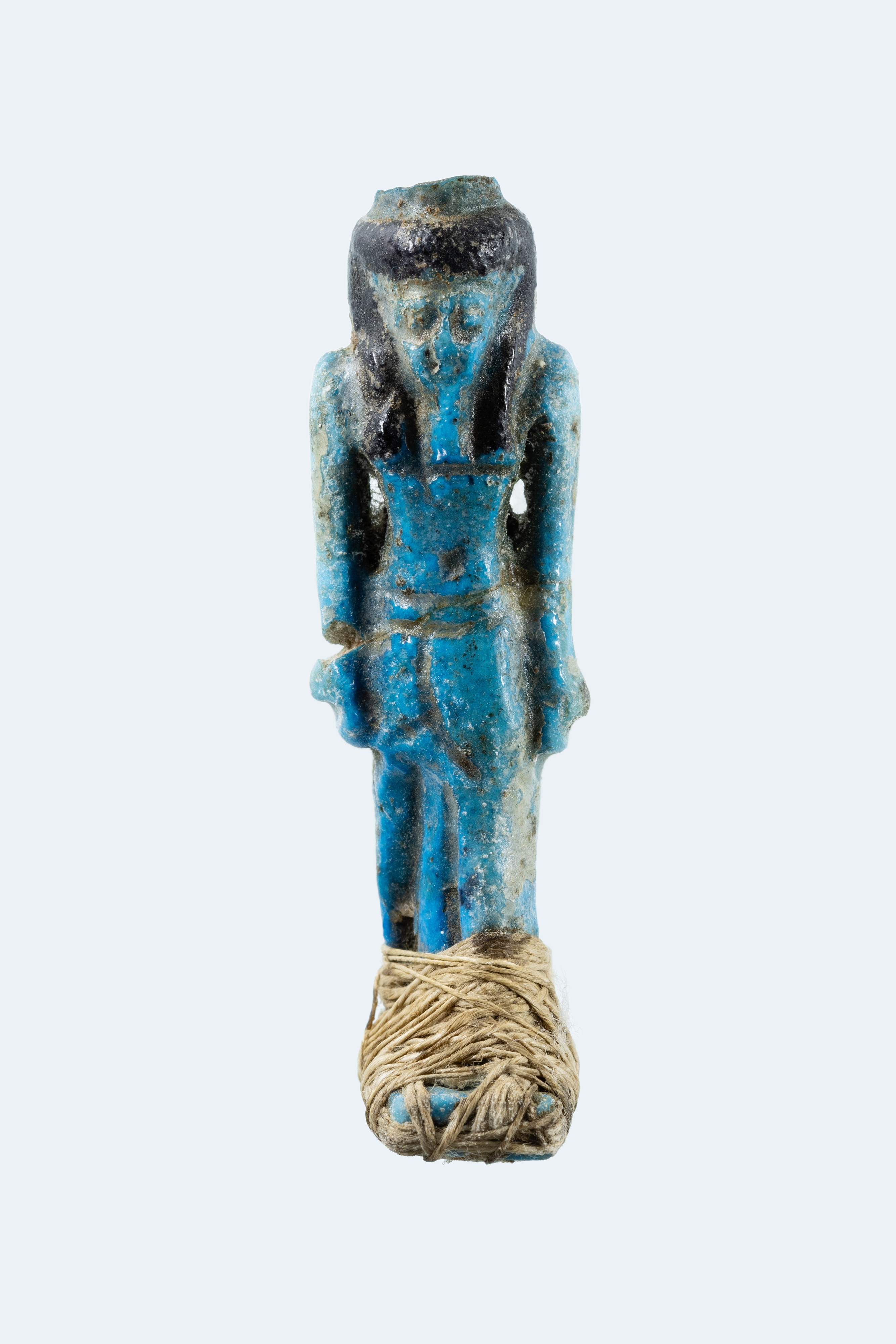
Heritage Analysis: The Nefertum Amulet
Introduction: The Object as a Cultural Artifact
The Nefertum amulet, crafted from faience and suspended on ancient thread, represents a singular convergence of material artistry, spiritual symbolism, and dynastic identity within the broader corpus of ancient Egyptian adornment. As a strategic standalone research artifact for Katherine Fashion Lab, this amulet demands a rigorous examination of its symbolic power, its role in historical adornment practices, and its latent potential for informing a 2026 high-end luxury strategy. The amulet’s medium—faience, a self-glazing ceramic composite—was not merely a decorative choice but a deliberate invocation of eternal radiance, mimicking the regenerative brilliance of the sun. For the luxury strategist, this object offers a blueprint for embedding profound cultural narrative into material form.
Symbolic Power: The Lotus and Divine Protection
The Nefertum amulet is inextricably linked to the god Nefertum, a deity of the Memphite triad, who personified the primordial lotus blossom from which the sun god Ra emerged at the dawn of creation. In Egyptian cosmology, the lotus symbolized rebirth, purity, and the cyclical triumph of light over darkness. The amulet, therefore, was not a passive ornament but an active talisman, believed to channel Nefertum’s protective and regenerative energies. Its wearer, whether living or deceased, was granted a direct connection to the divine order, or ma’at. For Katherine Fashion Lab, this symbolic power translates into a strategic asset: the amulet’s narrative can be leveraged to evoke themes of origin, renewal, and exclusivity—core pillars of high-end luxury branding. The faience medium, with its luminous blue-green glaze, further amplifies this symbolism, as the color was associated with the Nile’s life-giving waters and the sky’s eternal expanse.
Historical Adornment: Status, Ritual, and the Body
In ancient Egyptian society, amulets like the Nefertum piece served multiple functions: they were markers of social status, components of funerary rites, and intimate extensions of the body. Archaeological evidence indicates that such amulets were often placed on mummies—specifically over the throat or chest—to ensure safe passage through the underworld and to invoke the deity’s protection for the heart and breath. The use of ancient thread, likely linen or papyrus fiber, underscores the amulet’s role as a wearable artifact, one that required physical contact with the skin to activate its spiritual efficacy. For the luxury strategist, this historical context offers a powerful framework for 2026 product development: the amulet’s intimate relationship with the body suggests a market for limited-edition, ritualistic jewelry that prioritizes haptic experience and personal narrative. Katherine Fashion Lab could reinterpret the thread as a symbolic connector—perhaps using hand-woven silk or recycled precious fibers—to bridge ancient authenticity with modern sustainability, a key consumer demand in the luxury sector.
Spiritual Meaning: The Amulet as a Conduit for Transcendence
Beyond its protective function, the Nefertum amulet embodies a sophisticated spiritual technology. Egyptian theology held that amulets were imbued with the ka (life force) of the deity they represented, transforming the wearer into a vessel for divine energy. The lotus motif, central to Nefertum’s iconography, was also a symbol of sensory awakening—the lotus’s fragrance was believed to awaken the soul in the afterlife. This spiritual dimension aligns with contemporary luxury consumers’ growing interest in wellness, mindfulness, and metaphysical experiences. For the 2026 strategy, Katherine Fashion Lab can position the amulet as a “heritage talisman” for the modern elite, integrating it into a capsule collection that emphasizes ritual unboxing, curated storytelling, and limited availability. The faience’s glaze, which shifts in hue under different lighting, offers a dynamic visual metaphor for transformation—a quality that can be replicated through advanced material science, such as lab-grown gemstones or color-changing ceramics, to create a product that evolves with the wearer.
Strategic Implications for 2026 High-End Luxury
The Nefertum amulet’s heritage provides a robust foundation for a differentiated luxury strategy. First, its materiality—faience and ancient thread—challenges the conventional dominance of gold and diamonds in high-end jewelry, offering a counter-narrative of “understated opulence” that prioritizes cultural depth over ostentation. Katherine Fashion Lab can position this as a “conscious luxury” proposition, where the rarity of the material (faience is notoriously difficult to replicate at scale) and the authenticity of its origin story justify a premium price point. Second, the amulet’s ritualistic function aligns with the 2026 trend toward experiential luxury, where consumers seek objects that facilitate personal transformation rather than mere display. A limited-edition “Nefertum Collection” could include a digital companion—an augmented reality experience that visualizes the amulet’s spiritual activation—thereby merging ancient symbolism with cutting-edge technology.
Third, the amulet’s role as a status marker in ancient Egypt offers a template for modern exclusivity. By producing fewer than 100 pieces, each accompanied by a certified provenance report and a narrative booklet detailing its symbolic lineage, Katherine Fashion Lab can cultivate a collector’s market. The ancient thread, preserved and recontextualized as a design element, becomes a tactile signifier of authenticity—a direct link to a civilization that valued permanence. Finally, the spiritual meaning of the lotus and Nefertum can be leveraged in marketing campaigns that emphasize themes of resilience, renewal, and personal power, resonating with a post-pandemic audience seeking meaning in their acquisitions.
Conclusion: From Ancient Amulet to Modern Icon
The Nefertum amulet is not merely a historical curiosity but a strategic blueprint for luxury innovation. Its symbolic power, historical adornment practices, and spiritual depth offer Katherine Fashion Lab a rare opportunity to create a product that transcends fashion, becoming a vessel for cultural memory and personal transformation. By honoring the faience’s luminosity and the thread’s intimacy, the 2026 strategy can position this amulet as a cornerstone of a heritage-driven luxury line—one that speaks to discerning consumers who value narrative as much as craft. In doing so, Katherine Fashion Lab will not only preserve an ancient legacy but also redefine the boundaries of what luxury can mean in a rapidly evolving market.