The Art of Fragmentation: A Couture Analysis of Katherine Fashion Lab’s Embroidered Net
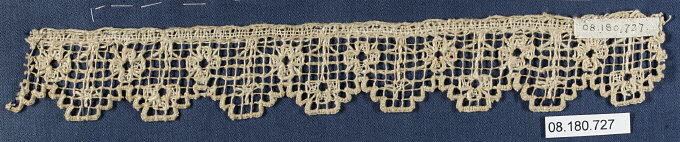
In the rarefied realm of haute couture, where fabric becomes narrative and stitch embodies culture, Katherine Fashion Lab presents a singular study titled “Fragment.” This standalone piece, rooted in a philosophy of Global Heritage, transcends mere garment construction to become a meditation on memory, loss, and the enduring power of craft. The analysis that follows dissects the technical and conceptual dimensions of this work, focusing on its materiality—specifically, the use of embroidered net and the historical stitching techniques of punto à rammendo and punto à tela. Through this lens, we explore how fragmentation is not an aesthetic flaw but a deliberate, sophisticated dialogue between the past and the present.
Conceptual Foundations: Fragment as Cultural Archive
The title “Fragment” immediately signals a departure from the seamless, monolithic ideals of traditional couture. Instead, Katherine Fashion Lab embraces the incomplete, the broken, and the reassembled. This is not a garment that hides its seams; it celebrates them as conduits of narrative. The Global Heritage origin is not a superficial reference to motifs or colors but a deep structural engagement with techniques that have been passed down through generations across continents. The embroidered net serves as the foundational canvas—a lattice of open spaces and interstices that metaphorically represent the gaps in history, the lost stories, and the fragments of identity that we carry forward.
In this context, the fragment is not a deficiency but a generator of meaning. Each embroidered patch, each thread that bridges a void, becomes a testament to resilience. The garment does not attempt to reconstruct a whole; rather, it honors the beauty of the partial, the suggestive, and the evocative. This conceptual choice aligns with contemporary fashion theory that posits the garment as a living archive—one that is inherently incomplete and open to interpretation.
Material Mastery: Embroidered Net as Structural Paradox
The use of embroidered net is a masterstroke of material intelligence. Net, by its nature, is a fabric of absence—its strength lies in its voids. When layered and embroidered, it becomes a paradox: simultaneously transparent and opaque, fragile and robust. Katherine Fashion Lab exploits this duality to create a sense of depth and movement that is both ethereal and grounded. The net is not merely a support for embroidery; it is an active participant in the design, its grid-like structure imposing order on the organic, often chaotic, patterns of the stitches.
The embroidery itself is executed with surgical precision, yet it retains a handcrafted quality that speaks to the human touch. The choice of threads—some matte, others with a subtle sheen—creates a play of light that shifts with the wearer’s motion. This is not a static piece; it is a dynamic interaction between the fabric, the light, and the body. The net’s transparency also allows for a layering effect, where undergarments or skin become part of the visual composition, further emphasizing the fragmentary nature of the whole.
Historical Stitching: Punto à Rammendo and Punto à Tela
Two specific embroidery techniques anchor this work in a rich historical lineage: punto à rammendo and punto à tela. Both originate from Italian needlework traditions, but they serve distinct purposes that are skillfully integrated into the “Fragment” narrative.
Punto à rammendo, or “darning stitch,” is traditionally used for mending—repairing tears or holes in fabric by recreating the original weave. In the context of this couture piece, Katherine Fashion Lab subverts this utilitarian function. Instead of hiding damage, the technique is employed to create deliberate gaps and reconstructions. The stitches mimic the grid of the net but are deliberately irregular, as if the fabric is healing itself in an imperfect, organic manner. This evokes a sense of time passing, of wear and repair, and of the beauty found in impermanence. The thread used for punto à rammendo is often finer than the net’s base, creating a subtle textural contrast that rewards close inspection.
Punto à tela, or “canvas stitch,” is a counted-thread embroidery technique that produces a dense, woven-like surface. Historically used for decorative panels and ecclesiastical garments, it is characterized by its geometric precision and durability. In “Fragment,” punto à tela is applied in small, isolated patches that appear as floating islands of solidity within the net’s openness. These patches often feature motifs inspired by global heritage—fragments of geometric patterns from Islamic art, floral elements from Japanese textiles, or linear abstractions from African mud cloth. The juxtaposition of these dense, structured areas against the airy net creates a visual tension that is both jarring and harmonious. It suggests a collision of cultures, a piecing together of disparate traditions into a new, cohesive whole.
Standalone Study: The Garment as Thesis
As a standalone study, “Fragment” is not intended to be part of a larger collection or a commercial line. It exists as a singular object of inquiry—a laboratory for exploring the boundaries of couture as an intellectual and artistic practice. This context frees the designer from the constraints of wearability or marketability, allowing for a pure focus on technique and concept. The piece is likely presented as an installation, perhaps on a mannequin or suspended in space, where viewers can examine it from all angles. The absence of a surrounding collection emphasizes its status as a focused thesis on fragmentation, heritage, and materiality.
The study’s standalone nature also invites a deeper engagement with the viewer. Without the distraction of a narrative arc or a seasonal theme, the audience is compelled to confront the piece on its own terms. Every stitch, every gap, every patch becomes a point of contemplation. This is couture as philosophy—a slow, deliberate dialogue between the maker, the material, and the observer.
Global Heritage: A Tapestry of Influences
The Global Heritage origin is not a mere label; it is woven into the very fabric of the piece. The embroidered net itself has historical precedents in European lace-making, particularly in the Venetian reticella of the 16th century. The punto à rammendo and punto à tela techniques are distinctly Italian, yet they are applied here to motifs that span continents. This is not cultural appropriation but cultural dialogue—a respectful acknowledgment that craft techniques are borderless and that heritage is a living, evolving entity.
For example, one section of the net features a punto à tela patch that echoes the repetitive geometric patterns of Moroccan zellij tilework. Another patch, executed in punto à rammendo, mimics the irregular, organic forms of Japanese boro textiles, where mending becomes a form of aesthetic expression. These references are not literal reproductions but abstracted interpretations, filtered through the lens of contemporary couture. The result is a garment that feels both ancient and futuristic, rooted in tradition yet unbound by it.
Conclusion: The Power of the Incomplete
Katherine Fashion Lab’s “Fragment” is a profound exploration of what it means to create in the 21st century—a time when global influences are accessible, yet identity remains fragmented. Through the masterful use of embroidered net and the historical precision of punto à rammendo and punto à tela, the piece transforms the concept of damage into one of beauty, and the idea of loss into one of potential. It is a standalone study that demands to be seen, touched, and contemplated—a testament to the enduring power of couture to not only clothe the body but to challenge the mind. In embracing the fragment, the lab has created a whole that is infinitely more compelling than any seamless surface could ever be.