Decoding Power: An Akkadian Cylinder Seal as a Proto-Couture Text
In the hushed atmosphere of the atelier, before a single thread is cut, a narrative is conceived. This narrative, a complex language of symbol, form, and intention, is the bedrock of true couture. At Katherine Fashion Lab, we look beyond the recent archives of fashion history to archaeology, finding profound inspiration in ancient artifacts that served as the original vessels of coded communication. The Akkadian cylinder seal, carved from luminous albite and depicting scenes of mythic combat, is one such artifact. More than a administrative tool, it is a concentrated study in power dynamics, narrative construction, and the embodiment of identity—concepts that remain central to the craft of contemporary haute couture.
The Medium is the Message: Albite as the First Chiffon
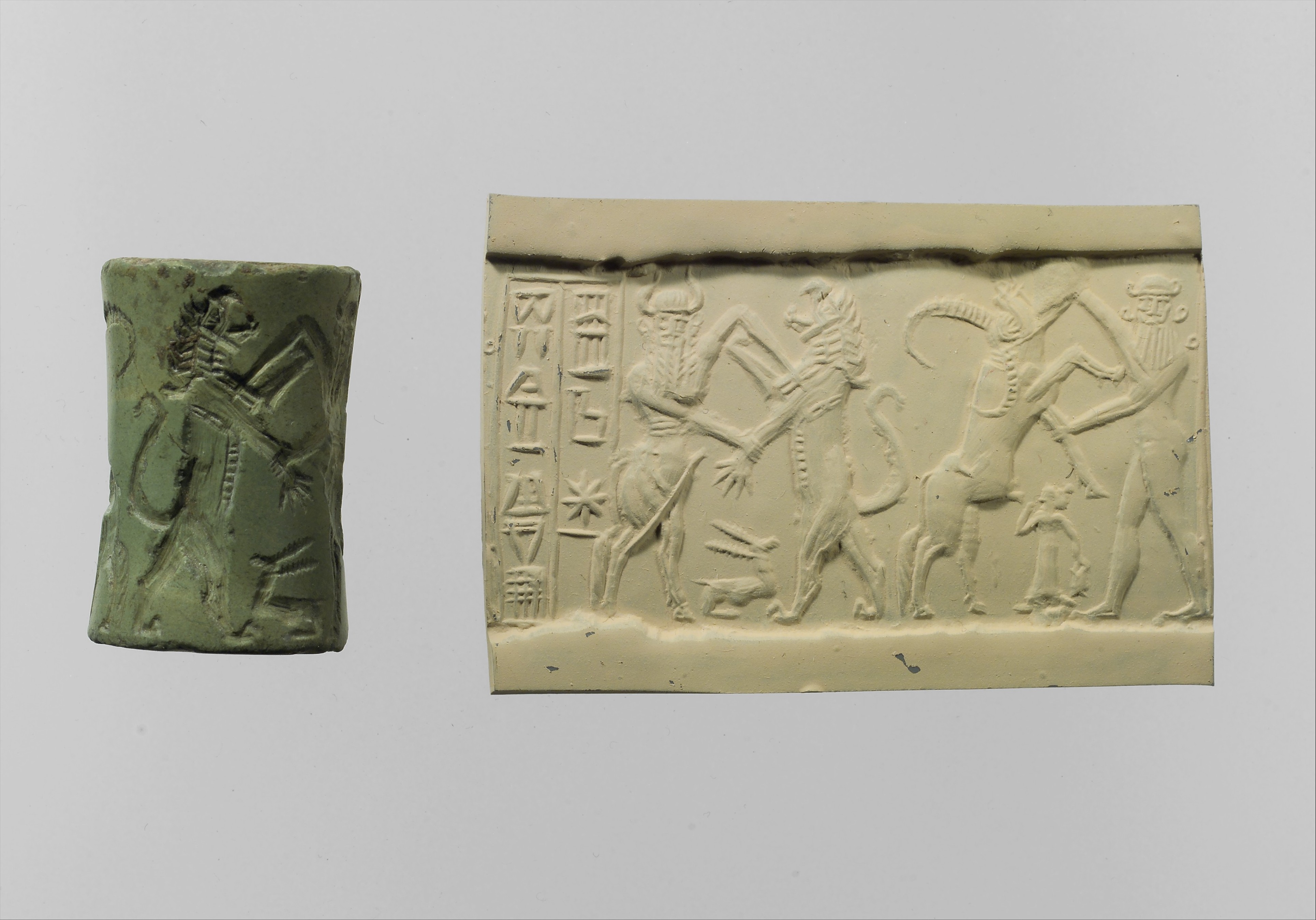
The choice of albite, a feldspar mineral with a distinctive pearly luster and capable of a high polish, is our first point of sartorial analysis. This was not a casual selection. In the Akkadian Empire (c. 2334–2154 BCE), materials carried intrinsic meaning. Albite’s durability spoke to permanence and authority, while its visual quality—capturing and softening light—would have created a rolling impression of subtle brilliance on clay. This is the ancient equivalent of selecting a specific duchesse satin for its weight and sheen, or a gazar silk for its architectural crispness. The material’s inherent properties directly contributed to the legibility and prestige of the seal’s “output.” The modern impression, a positive relief from a negative engraving, translates the seal’s narrative into a tangible form, much as a toile translates a designer’s sketch into a three-dimensional prototype. The medium, in both cases, is fundamentally intertwined with the message’s impact.
Narrative Construction: The Cinematic Sequence of Myth
The seal’s depicted scenes are not random; they are a meticulously composed ideological statement. The bull-man combatting a lion and the nude hero combatting a water buffalo represent a classic Mesopotamian motif known as the “Contest Scene.” This is not mere decoration. It is a sophisticated visual language where hybrid creatures (the bull-man, or *kusarikku*) and idealized human forms (the nude hero) engage in eternal struggle with forces of chaos, represented by powerful wild animals. The arrangement is cyclical and repetitive, designed to unfold in a continuous band—a proto-cinematic sequence.
From a couture perspective, this is a masterclass in narrative pacing and thematic cohesion across a collection. Each combat pair is like a distinct ensemble within a larger show: related in theme (conflict, mastery), yet varied in character (mythological hybrid versus human ideal; lion versus buffalo). The inscription, likely bearing the name and title of the seal’s owner, acts as the “label” or the definitive signature, anchoring the mythical spectacle to a specific individual’s authority and identity. The entire composition functions as a wearable manifesto, asserting control over the natural and supernatural world through symbolic violence and divine favor.
Embodiment of Archetype: Silhouette as Symbol
The most direct couture dialogue lies in the starkly rendered figures. The nude hero is a study in idealized anatomy. His nudity is not a state of vulnerability but one of symbolic purity and primordial power. Every muscle is defined, his pose one of dynamic control and poised aggression. This figure translates directly into couture’s obsession with the architectural body. Consider the sculptural, body-conscious tailoring of a Thierry Mugler power suit from the 1980s or the neo-classical drapery of a Madame Grès gown. Both use fabric to create a perfected, almost superhuman silhouette, embodying an archetype—the executive, the goddess—much as the nude hero embodies the archetype of the primordial champion.
Conversely, the bull-man—a hybrid creature with a human torso and the head and legs of a bull—represents the ultimate in conceptual hybridity and transformative form. This is the couture of Alexander McQueen’s *Plato’s Atlantis* or Iris van Herpen’s biomorphic fusions. It is the creation of a new, mythic silhouette that challenges the very definition of the human form, using craft to construct a being of symbolic potency. The combat scenes, therefore, can be read as a dynamic interplay between two core couture philosophies: the perfection of the natural form versus the invention of an entirely new one.
Modern Impression: The Legacy of the Roll
The ultimate purpose of the cylinder seal was to create an impression—to leave its mark on the mundane world of clay tablets, thereby transforming a legal or economic document into an object touched by divine and royal authority. This act is profoundly analogous to the mission of haute couture. A couture garment is the master seal; its appearance on a client, in a photograph, or on the runway is the modern impression. It transfers a complex narrative—of craftsmanship, artistic vision, and cultural power—onto the individual and into the wider world. Each public appearance becomes a rolling out of that narrative, an authentication of status and identity.
The standalone study of this Akkadian artifact, devoid of its original administrative context, allows us to appreciate it purely as a concentrated exercise in symbolic communication through form. It reminds us that the highest forms of dress have always been more than covering; they are systems of meaning. At Katherine Fashion Lab, this ancient lens sharpens our focus on the core tenets of our practice: the strategic use of material, the construction of compelling narrative across a body of work, the embodiment of archetypes through silhouette, and the lasting impression of a meticulously crafted identity. In the silent combat between hero and beast, etched in pearly stone, we find the enduring blueprint for fashion’s power to define, transform, and impress its story upon the world.