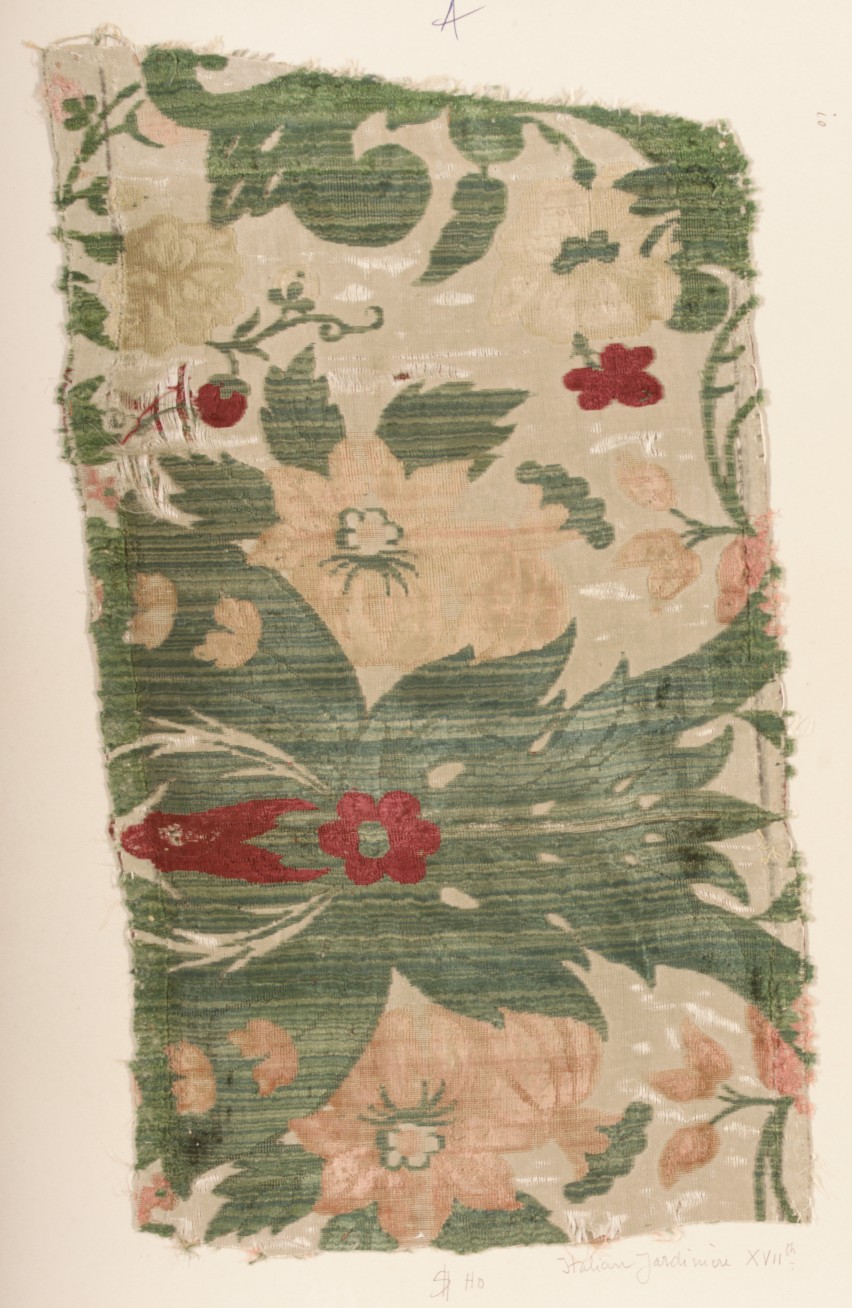
Deconstructing the Fragment: A Couture Analysis of Katherine Fashion Lab’s Silk Narrative
In the rarified world of haute couture, where garments often aspire to monumentality, Katherine Fashion Lab’s latest standalone study, “Fragment,” presents a provocative inversion. This is not a collection of complete, polished forms, but an intellectual and material exploration of the incomplete—the shard, the remnant, the memory of a whole. By centering the design philosophy on the Fragment and grounding it in Silk—a material synonymous with luxury, continuity, and fluidity—the Lab challenges the very definition of couture’s finality. The result is a masterclass in tension: between the global and the personal, the ancient and the contemporary, the whole and the broken.
The Conceptual Framework: Fragment as Global Lexicon
The Fragment is not a limitation but a methodology. Katherine Fashion Lab draws from a deep well of Global Heritage, treating the fragment as a universal cultural artifact. In Japanese kintsugi, the broken piece is celebrated with gold; in ancient Greek sculpture, the torso without limbs speaks of idealized form; in Islamic geometric art, the tessellated fragment suggests the infinite. The Lab synthesizes these disparate traditions into a singular couture language. Each garment becomes a “heritage shard”—a tangible piece of a larger, unspoken narrative that spans continents. The designer does not seek to reconstruct a lost whole, but to elevate the fragment as an autonomous entity, worthy of the same reverence as a complete gown.
This approach demands a radical rethinking of silhouette. Traditional couture relies on symmetry, structure, and closure. The Fragment collection eschews these conventions. A gown might appear as a single, sweeping panel of silk that drapes from one shoulder, its edges raw and unhemmed, suggesting a piece torn from a larger tapestry. Another look features a bodice constructed from overlapping, irregular silk shards, each one laser-cut to mimic the fractured edges of ancient pottery. The absence of a complete form is not a flaw but a feature—a deliberate invitation for the viewer to complete the narrative in their own mind.
Silk as the Medium of Memory and Movement
The choice of Silk is critical to the success of this concept. Silk’s inherent properties—its luminosity, its fluidity, its ability to hold both color and light—transform the fragment from a static relic into a living, breathing entity. The Lab employs a range of silk weights and weaves: chiffon for ethereal, almost transparent shards that float away from the body; duchesse satin for heavier, more sculptural fragments that hold their shape like shards of polished stone; and raw silk with its natural slubs, evoking the texture of unglazed ceramic or weathered parchment.
This material dialogue is not merely aesthetic. Silk, historically a global commodity traded along the Silk Road, is itself a fragment of heritage. Each thread carries the memory of cultivation, weaving, and exchange. By using silk, the Lab connects the physical fragment of the garment to the historical fragments of commerce and culture. The drape of the silk mimics the fall of a broken column’s shadow; the sheen recalls the glimmer of a fragment of stained glass. The fabric does not just cover the body—it becomes a living archive of global memory, cut and reassembled in an act of creative archaeology.
Construction and Craft: The Couture of the Unfinished
From a technical standpoint, the Fragment study demands a level of precision that belies its apparent rawness. The Lab’s atelier employs a technique of “controlled disintegration.” Seams are not hidden but exposed, often stitched with contrasting silk threads in a deliberate, almost calligraphic pattern. Hems are left raw, but the edges are stabilized with a micro-fused silk organza to prevent fraying, ensuring the fragment remains intact yet appears unbound. Draping is the primary construction method, with each silk shard pinned and adjusted directly on the mannequin to achieve the exact tension and fall required.
One standout piece, a “Fragment Gown” in deep indigo silk satin, exemplifies this technique. The garment consists of five large, asymmetrical panels that are joined only at the waist and left shoulder. The panels overlap like tectonic plates, creating a sense of movement and instability. The interior seams are left exposed, revealing the raw, cut edges of the silk and the hand-stitched reinforcement. This is not a garment that hides its making; it celebrates the moment of creation as a fragment of the designer’s hand. The effect is both fragile and powerful, as if the gown is perpetually in the process of being assembled or disassembled.
Color and Texture: A Palette of Erasure and Presence
The color palette for the Fragment study is deliberately restrained, echoing the patina of time and the muted tones of archaeological finds. The Lab favors stone grays, ivory, terracotta, oxidized copper, and deep indigo—colors that suggest the natural aging of silk or the pigments of ancient frescoes. These hues are not applied uniformly; instead, the Lab uses a technique of “gradient staining” where the silk is dipped in natural dyes (indigo, madder root, walnut) to create a fading effect, as if the color has been worn away by centuries of handling.
Texture plays an equally vital role. Some fragments are left with a matte finish, others are polished to a high sheen, and still others are embossed with subtle patterns that mimic cracked earth or shattered glass. The juxtaposition of these textures within a single garment creates a tactile dialogue. A sleeve might be constructed from a single, polished silk shard, while the body is composed of multiple, unpolished fragments. This contrast emphasizes the fragment’s dual nature: part precious artifact, part discarded remnant.
Cultural Resonance: The Fragment as a Global Mirror
The Fragment study resonates deeply with contemporary global discourse. In an era of geopolitical fragmentation, climate crisis, and cultural dislocation, the fragment becomes a metaphor for our collective experience. The Lab does not offer a polished, unified vision of global heritage; instead, it presents the world as a series of beautiful, broken pieces. The silk shards speak to the fragility of cultural memory, the loss of traditional crafts, and the possibility of finding beauty in what remains.
This is particularly evident in the collection’s “Heritage Shard” series, where each fragment is named after a specific cultural tradition: “Kintsugi Panel,” “Mughal Shard,” “Byzantine Torso.” These are not appropriations but respectful evocations. The Lab collaborates with artisans from India, Japan, and Italy to source techniques for dyeing, weaving, and embroidery. The result is a couture that is truly global in its making, yet deeply personal in its expression. The wearer of a Fragment garment does not simply wear a dress; they carry a piece of the world’s history, broken and remade.
Conclusion: The Power of the Unfinished
Katherine Fashion Lab’s Fragment study is a bold redefinition of couture’s purpose. By centering the incomplete, the Lab challenges the industry’s obsession with perfection and finality. The silk fragment, in its raw, unhemmed state, becomes a canvas for infinite interpretation. It is a garment that demands engagement, that refuses to be a passive object of beauty. Instead, it is an active participant in a dialogue about heritage, memory, and the nature of creation itself.
In a world that often seeks to smooth over fractures, the Lab’s choice to elevate the fragment is a radical act of honesty. The Fragment is not a flaw; it is a starting point. It is the piece that invites us to imagine the whole, to complete the story, to find our own connection to the global tapestry. This is couture as archaeology, as philosophy, as art. And in the hands of Katherine Fashion Lab, the fragment is anything but incomplete—it is a masterpiece of intention, memory, and silk.