Heritage Analysis: The Garment of Senebtisi
Introduction: A Nexus of Power and Adornment
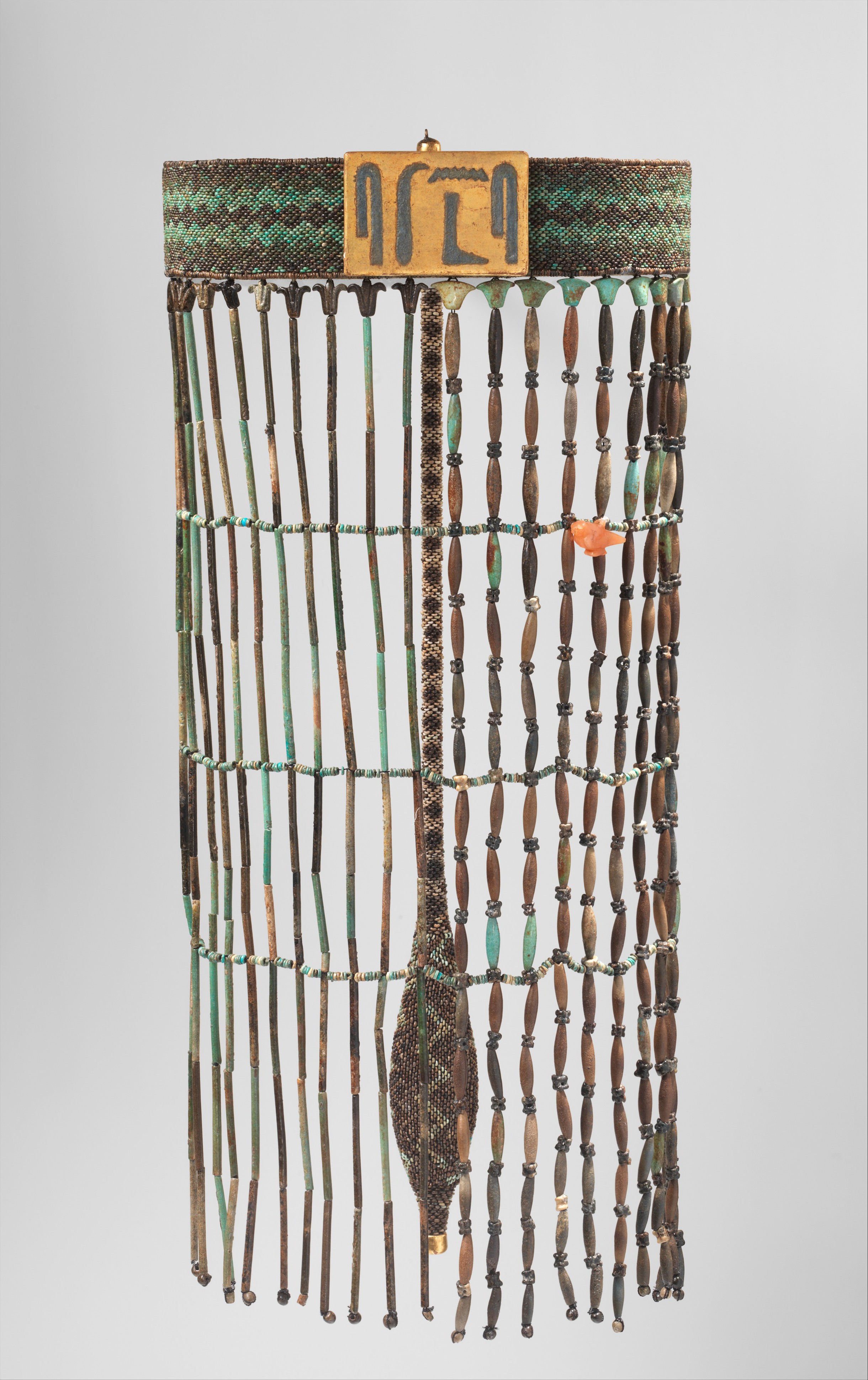
The Garment of Senebtisi, an exquisite artifact from ancient Egypt’s 12th Dynasty (circa 1900 BCE), represents a pinnacle of symbolic and spiritual craftsmanship. Created from light and dark green, blue, and black faience, with painted details, this garment was discovered in the tomb of Senebtisi, a noblewoman of the Middle Kingdom. For Katherine Fashion Lab, this artifact offers a profound strategic lens through which to examine the intersection of heritage, power, and luxury. This analysis deconstructs the garment’s symbolic power, historical adornment practices, and spiritual meaning, culminating in a forward-looking strategy for 2026 high-end luxury positioning.
Symbolic Power: The Language of Color and Material
The faience medium—a glazed ceramic—was not merely decorative but a deliberate choice imbued with cosmological significance. The colors selected for Senebtisi’s garment are a lexicon of ancient Egyptian authority. Light and dark green symbolized rebirth, fertility, and the regenerative power of the Nile. In the funerary context, green affirmed the deceased’s hope for resurrection and eternal life. Blue, particularly the deep lapis-lazuli hue, represented the heavens, the primordial waters of Nun, and divine protection. It was the color of the gods and the pharaoh’s divine mandate. Black signified fertility, the rich soil of the Nile delta, and the underworld deity Osiris, who governed death and rebirth. Together, these colors formed a chromatic armor against chaos, ensuring Senebtisi’s safe passage into the afterlife.
For Katherine Fashion Lab, this symbolic palette is a strategic asset. The combination of green, blue, and black communicates luxury as transcendence—a brand narrative that elevates the wearer beyond the mundane. In 2026, high-end consumers seek not just aesthetics but meaning. By anchoring a capsule collection in these hues, the Lab can position itself as a curator of power through symbolism, where each color choice is a deliberate invocation of heritage and authority.
Historical Adornment: The Body as a Sacred Canvas
Senebtisi’s garment was not a simple dress but a composite of faience beads, netting, and pendants, meticulously arranged to cover the body. This form of adornment was both functional and ritualistic. The net-like structure allowed for airflow in the arid climate, while the beads’ clinking sound during movement was believed to ward off malevolent spirits. More critically, the garment’s design mirrored the hieroglyphic concept of “ankh”—the symbol of life—through its grid-like pattern. Each intersection of beads was a point of spiritual energy, transforming Senebtisi’s physical form into a living talisman.
Historical adornment in ancient Egypt was never passive. It actively participated in the wearer’s identity, social rank, and cosmic role. Senebtisi, as a noblewoman, would have worn such garments in life during religious ceremonies, and in death, as a permanent companion. The beads were crafted by skilled artisans who understood that adornment was a technology of transformation. For Katherine Fashion Lab, this insight is critical. The 2026 luxury consumer does not merely wear clothing; they perform identity. By incorporating techniques such as beadwork, netting, and geometric patterning, the Lab can create pieces that are architectural and kinetic—garments that move, sound, and protect. This aligns with the growing trend of “wearable heritage,” where luxury brands collaborate with master artisans to revive ancient methods.
Spiritual Meaning: The Garment as a Threshold
Spiritually, Senebtisi’s garment functioned as a threshold between the living and the divine. The faience material itself was considered a substance of the gods, created from sand and fire—elements of creation. The act of wearing this garment was a ritual of divine embodiment. Each bead was a prayer, each color a hymn. In the tomb, the garment served as a map for the soul to navigate the Duat (underworld), with its patterns guiding the deceased toward judgment and eventual rebirth.
This spiritual dimension offers Katherine Fashion Lab a profound strategic narrative for 2026. The luxury market is increasingly drawn to ritualistic consumption—products that offer a sense of purpose, protection, or transcendence. By framing collections as “spiritual armor” or “talismanic adornment,” the Lab can tap into the consumer’s desire for meaning in an era of digital saturation. For example, a limited-edition line inspired by Senebtisi could include a “color code” guide for the wearer, explaining the ancient significance of each hue. This transforms the purchase from a commodity into a personal artifact, fostering deep brand loyalty.
2026 High-End Luxury Strategy: From Heritage to Hyper-Relevance
To translate the Garment of Senebtisi into a 2026 luxury strategy, Katherine Fashion Lab must adopt a three-pillar approach: authenticity, exclusivity, and narrative depth.
Authenticity requires rigorous collaboration with Egyptologists and cultural institutions. Rather than superficial appropriation, the Lab should co-create with museums, such as the Metropolitan Museum of Art, which houses Senebtisi’s artifacts. This ensures that the symbolic and spiritual meanings are preserved and communicated accurately. For instance, a “Senebtisi Collection” could feature faience-inspired enamel work on limited-run handbags or jewelry, with each piece authenticated by a heritage certificate.
Exclusivity is paramount. The garment’s original rarity—crafted for a single noblewoman—mirrors the ultra-luxury model of bespoke, made-to-order items. In 2026, Katherine Fashion Lab can offer a “Spiritual Adornment Atelier” where clients commission custom pieces based on their birth dates, astrological signs, or personal narratives, using the Senebtisi color palette. This hyper-personalization creates emotional scarcity, driving demand among high-net-worth individuals who value uniqueness over ubiquity.
Narrative depth must be woven into every touchpoint. The brand’s marketing should not simply showcase the garment’s beauty but tell its story through immersive experiences. For example, a flagship store could feature a virtual reality reconstruction of Senebtisi’s tomb, where clients “walk through” the burial chamber and witness the garment’s spiritual role. This transforms shopping into a pilgrimage, aligning with the 2026 trend of experiential luxury. Additionally, a documentary series on the garment’s history, featuring interviews with curators and artisans, can be distributed via private brand channels, reinforcing the Lab’s authority as a heritage steward.
Conclusion: The Eternal Thread
The Garment of Senebtisi is more than a relic; it is a strategic blueprint for luxury in an age seeking depth. By decoding its symbolic power, historical adornment, and spiritual meaning, Katherine Fashion Lab can position itself at the vanguard of a new luxury paradigm—one where heritage is not a static past but a living, evolving force. In 2026, the consumer will not simply buy a garment; they will acquire a legacy. The Lab’s challenge is to ensure that legacy is as luminous, protective, and transcendent as the faience beads of Senebtisi herself.