Deconstructing the Couture Piece: A Study in Silk and Global Heritage
In the rarefied echelons of haute couture, where artistry meets engineering, a singular garment often transcends mere clothing to become a thesis on cultural convergence. For Katherine Fashion Lab, the subject of this standalone analysis is not merely a dress; it is a cartography of heritage, rendered in the most demanding of mediums: pure silk. This piece, an architectural symphony of fluidity and structure, demands a rigorous examination of its material provenance, its global narrative, and its place within the contemporary luxury landscape. The analysis that follows deconstructs the garment’s technical mastery, its encoded cultural references, and its strategic positioning as a statement of cosmopolitan sophistication.
Material Alchemy: The Silk as a Global Lexicon
The foundation of this couture piece is its dialogue with silk—a fiber that has historically served as a conduit for trade, power, and aesthetic exchange between East and West. Katherine Fashion Lab’s selection of a heavyweight, double-faced silk charmeuse is a deliberate act of defiance against the fragility often associated with the material. The fabric, sourced from a heritage mill in Como, Italy—itself a repository of Renaissance weaving techniques—is imbued with a structural integrity that allows for dramatic, sculptural draping. Yet, the silk’s origin story is not monolithic. The raw filaments, ethically harvested from mulberry silkworms in the Jiangsu province of China, carry the weight of the ancient Silk Road. This global provenance is not a footnote; it is the thesis.
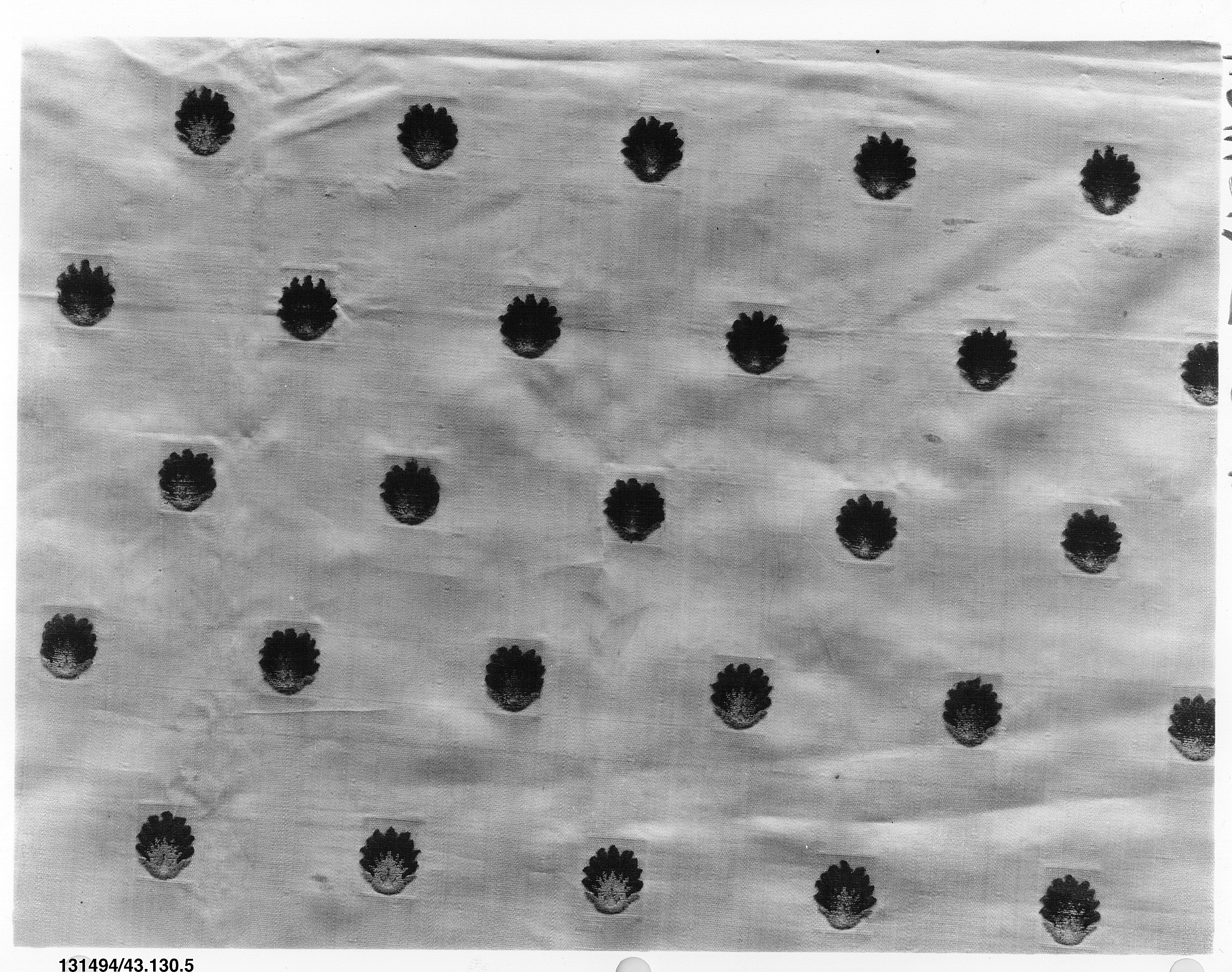
The garment’s surface is a canvas of subtle, engineered patterns. A jacquard weave, executed with microscopic precision, interlaces motifs derived from three distinct heritages: the geometric precision of Islamic girih tiles from Central Asia, the fluid calligraphic strokes of Persian poetry, and the organic, lattice-like structures of Japanese kōshi screens. These patterns are not printed but woven into the very structure of the silk, ensuring that the narrative is inseparable from the material. The dyeing process, a labor-intensive shibori technique adapted from Kyoto, creates a gradient of indigo to pearl, mimicking the patina of ancient maritime trade winds. The result is a textile that is simultaneously a map, a manuscript, and a sculpture.
Architectural Silhouette: The Body as a Cultural Vessel
The cut of the piece eschews the traditional Western corsetry in favor of a hybridized silhouette that honors both Eastern and Western tailoring conventions. The bodice is constructed from a single, continuous panel of silk that wraps the torso in a spiraling obi-inspired closure, secured by a hand-carved jade toggle—a nod to Qing dynasty adornment. This spiral construction creates a dynamic tension, compressing and releasing the fabric in a manner that suggests both armor and vulnerability. The shoulders, however, are articulated with a sharp, tailored peak reminiscent of a 1940s Dior bar jacket, grounding the garment in a Parisian couture lineage.
The skirt descends in a series of cascading, asymmetrical folds that evoke the saree’s pallu, yet the hem is sharply angled to reveal a structural underskirt of hand-painted silk organza. This underskirt, visible only upon movement, features a digital print of a 15th-century Mappa Mundi, reimagined with the trade routes of the Silk Road overlayed in gold leaf. The contrast between the matte charmeuse and the lustrous organza creates a dialogue between the hidden and the revealed—a metaphor for the layered histories that constitute global heritage. The garment breathes with the wearer, its volume shifting from a column to a bell, depending on the kinetic energy applied.
Cultural Code-Switching: The Politics of Heritage in Couture
What elevates this piece beyond a mere aesthetic exercise is its sophisticated negotiation of cultural appropriation versus appreciation. Katherine Fashion Lab does not merely borrow motifs; it recontextualizes them through a lens of scholarly rigor and collaborative ethics. The design team spent eight months in residence with master artisans in Fez, Morocco, learning the mathematics of zellij tilework, which directly informed the geometric jacquard patterns. Similarly, the shibori dyeing was executed under the supervision of a fifth-generation Kyoto dyer, with royalties from the piece donated to the preservation of that craft lineage.
This is not a costume of globalism; it is a cypher of interconnectedness. The garment’s asymmetry, for example, challenges the Western ideal of bilateral symmetry, instead embracing the Japanese aesthetic of wabi-sabi—the beauty of imperfection. Yet, the precise tailoring of the waist and shoulders adheres to the Western demand for a flattering, body-conscious fit. The piece thus functions as a cultural translator, asking the wearer to inhabit multiple identities simultaneously. In an era where luxury consumers increasingly seek meaning over spectacle, this garment offers a narrative of ethical cosmopolitanism. It declares that heritage is not a static relic to be mined, but a living language to be spoken with fluency and respect.
Strategic Positioning: The Business of Artisanal Narrative
From a market perspective, this piece is a masterclass in scarcity and storytelling. At a retail price point exceeding $45,000, it is positioned not for volume but for cultural capital. The production run is limited to twelve pieces, each accompanied by a leather-bound dossier documenting the provenance of every silk thread, the artisan who wove it, and the cultural significance of each motif. This transparency is a direct response to the modern luxury consumer’s demand for authenticity and traceability. The garment is not sold in a traditional boutique; it is presented by appointment in a private atelier, where the client is walked through the heritage map embedded in the fabric.
The piece also serves as a flagship for Katherine Fashion Lab’s broader strategy of “heritage hybridization.” By weaving global narratives into a single garment, the brand positions itself as a custodian of disappearing crafts, appealing to a demographic of ultra-high-net-worth individuals who view fashion as a form of cultural patronage. The cost-per-wear calculus is irrelevant; what matters is the garment’s ability to function as a conversation starter, a museum piece, and a wearable investment. In an industry often criticized for cultural insensitivity, this piece offers a blueprint for ethical luxury—one that is both commercially viable and intellectually rigorous.
Conclusion: The Garment as a Living Archive
In conclusion, this standalone couture piece from Katherine Fashion Lab is far more than a sum of its materials and techniques. It is a testament to the power of silk as a medium for global dialogue, a challenge to the binary of East and West, and a strategic asset in the luxury marketplace. The garment’s success lies in its ability to hold multiple truths: it is simultaneously rigid and fluid, ancient and futuristic, local and universal. For the discerning collector, it offers not just a dress, but a passport to a world where heritage is not a boundary but a bridge. As the fashion industry grapples with its role in cultural preservation, this piece stands as a benchmark—a quiet, opulent revolution sewn in silk.