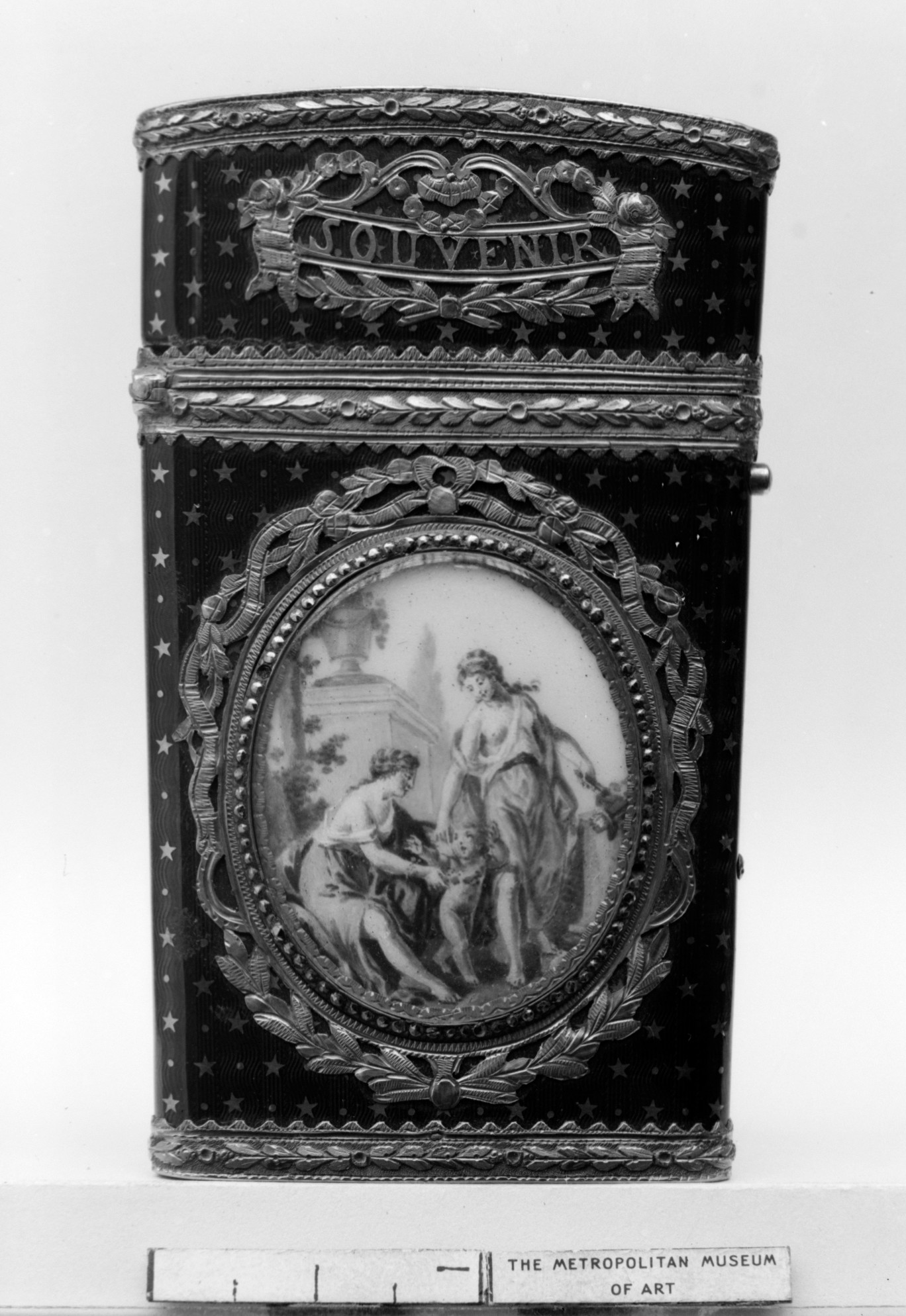
The Art of Memory: Deconstructing Katherine Fashion Lab’s “Souvenir” Collection
In the rarefied echelons of haute couture, where fabric is often the primary lexicon, Katherine Fashion Lab’s latest standalone study, “Souvenir,” presents a radical departure. This collection does not whisper of silk or whisper of tulle; it speaks in the enduring tongues of gold, enamel, mother-of-pearl, and ivory. By framing the subject of global heritage through these materials, the Lab transforms the humble souvenir—a token of travel or memory—into an artifact of profound cultural and material significance. This is not a collection of garments in the traditional sense; it is a curatorial thesis on how we carry the world with us, rendered in the immutable language of the decorative arts.
Materiality as Narrative: The Alchemy of Gold and Enamel
The foundational choice of gold is deliberate and layered. In the context of global heritage, gold is a universal signifier of value, permanence, and the sacred. From the funerary masks of ancient Peru to the intricate filigree of Mughal India, gold has been the medium through which civilizations have preserved their most cherished memories. Katherine Fashion Lab does not merely use gold as a surface; it is employed as a structural and symbolic spine. In the collection’s centerpiece, a “Memory Corset,” 22-karat gold wires are woven into a lattice that mimics the cartography of trade routes. Each intersection is capped with a tiny enamel plaque, fired at temperatures that ensure the color remains as vivid as the original pigment. The enamel itself—a material born from glass and mineral oxides—becomes a palette for micro-narratives. Cobalt blues evoke the lapis lazuli of Persian miniatures; vermillion reds reference the lacquerware of East Asia. The process, known as cloisonné, demands that each color be separated by a thin gold wire, a metaphor for the boundaries and connections that define our globalized heritage. This is not decoration; it is documentation.
Mother-of-Pearl: The Luminescence of Transience
Where gold provides permanence, mother-of-pearl introduces the quality of transience and light. Harvested from the inner shells of mollusks, this material has been used by coastal cultures from the Torres Strait to the Mediterranean for millennia. Its iridescence—a play of light across microscopic layers of aragonite—makes it a perfect allegory for memory itself: shimmering, elusive, and dependent on angle and illumination. In the “Souvenir” study, mother-of-pearl is not inlaid flat; it is carved into three-dimensional relief, forming the petals of a “Nomad’s Brooch.” Each petal is graded in thickness, so that when the wearer moves, the brooch shifts from opalescent white to faint pinks and greens. This kinetic quality is a direct reference to the Hei Tiki pendants of the Māori, which were passed down through generations, their surfaces polished by touch and time. The Lab’s innovation lies in treating mother-of-pearl as a living surface, one that records the wearer’s history through the accretion of light and shadow. It is a souvenir that changes with its owner, a material diary of exposure and experience.
Ivory and the Ethics of Heritage
The inclusion of ivory in this collection demands a nuanced discussion, one that Katherine Fashion Lab addresses head-on. In the context of global heritage, ivory has been a medium of supreme artistry—from the intricate netsuke of Japan to the religious diptychs of Byzantium. However, the Lab operates under a strict protocol of ethical sourcing, utilizing only pre-ban, museum-verified antique ivory or certified fossilized mammoth tusk. This is not an endorsement of contemporary poaching but an acknowledgment of historical materials that carry their own complex narratives. In the study, ivory is used sparingly, as a “Memory Key”—a small, carved toggle that secures a necklace of gold and enamel beads. The carving is micro-sculptural: a single, continuous line that forms a spiral, echoing the labyrinthine patterns found in Bronze Age petroglyphs. The material’s warmth and density offer a tactile counterpoint to the cool hardness of gold and enamel. It serves as a reminder that heritage is not pristine; it is fraught, contested, and often extracted from the earth or from history with great cost. The Lab’s use of ivory is thus a curatorial decision, not a decorative one—a deliberate engagement with the material’s past, forcing the wearer to confront the weight of memory.
Composition and Wearability: The Architecture of the Object
While the materials are extraordinary, their assembly into wearable objects is where Katherine Fashion Lab’s genius truly manifests. The collection eschews the human form in favor of standalone objects—brooches, collars, and hand-held “reliquaries”—that are designed to be worn as extensions of the body, not as clothing. This is a critical distinction. The “Global Heritage Collar” is a prime example: a rigid structure of gold wire that rests on the clavicles, from which hang dozens of mother-of-pearl discs, each inscribed with a single glyph from a different writing system—cuneiform, Ogham, Hanzi, Kufic. The collar does not drape; it frames the wearer, turning the neck and shoulders into a pedestal for a global lexicon. The engineering is precise: each disc is balanced so that the collar remains stable even in motion, a feat of tensile mathematics. Similarly, the “Souvenir Casket” is a small, hinged box of gold and enamel, worn on a chain as a pendant. When opened, it reveals a miniature diorama of a specific heritage site—the Alhambra, the Great Wall, the temples of Angkor—rendered in carved mother-of-pearl and ivory. This is couture as portable architecture, a literal container for memory.
Conclusion: The Souvenir as a Statement of Global Identity
Ultimately, Katherine Fashion Lab’s “Souvenir” study is a profound meditation on how we curate our personal and collective histories. In an era of digital memory—photos on phones, posts on social media—the Lab returns to the tactile, the precious, and the permanent. Gold, enamel, mother-of-pearl, and ivory are not merely materials; they are carriers of civilization, each with a provenance that spans continents and centuries. By combining them into objects that are both intimate and monumental, the Lab challenges the very notion of what a souvenir can be. It is no longer a trinket bought at a market; it is a conscious artifact, a piece of global heritage that one chooses to carry. The collection demands that we ask: What do we remember? How do we honor the cultures we encounter? And what materials are worthy of those memories? In answering these questions, Katherine Fashion Lab has not just created couture; it has authored a new lexicon for the art of memory itself. The objects are not worn to be seen; they are worn to be remembered—a silent, luminous testament to the world we inherit and the world we choose to keep.