The Silent Architecture of Silk: A Couture Analysis of Katherine Fashion Lab’s Japanese Compound Weave Piece
Introduction: The Convergence of Heritage and Modernity
In the rarefied echelons of haute couture, few materials command the reverence afforded to silk, and fewer still achieve the technical and aesthetic complexity of a compound weave. Katherine Fashion Lab’s standalone piece, originating from the venerable textile traditions of Japan, represents a masterclass in the silent dialogue between fabric and form. This analysis dissects the garment not merely as an article of clothing, but as a sculptural artifact—a testament to the intersection of centuries-old Japanese weaving techniques and contemporary design sensibility. The piece transcends ornamentation, functioning instead as a study in tension, drape, and the intrinsic narrative of its raw material.
Material Provenance: The Soul of Japanese Silk
Japan’s relationship with silk is profound, rooted in a history of sericulture that values precision, patience, and the pursuit of wabi-sabi—the beauty found in imperfection. For this piece, Katherine Fashion Lab sourced a silk of exceptional grade, likely from the Nishijin region of Kyoto, a historic epicenter of textile innovation. The silk’s raw luster is not uniform; it possesses a subtle, shifting iridescence that catches light differently with every movement. This is not a passive fabric. It is an active participant in the garment’s architecture, demanding that the designer respect its weight, its memory, and its inherent resistance to being tamed.
Technical Mastery: The Compound Weave as Structural Language
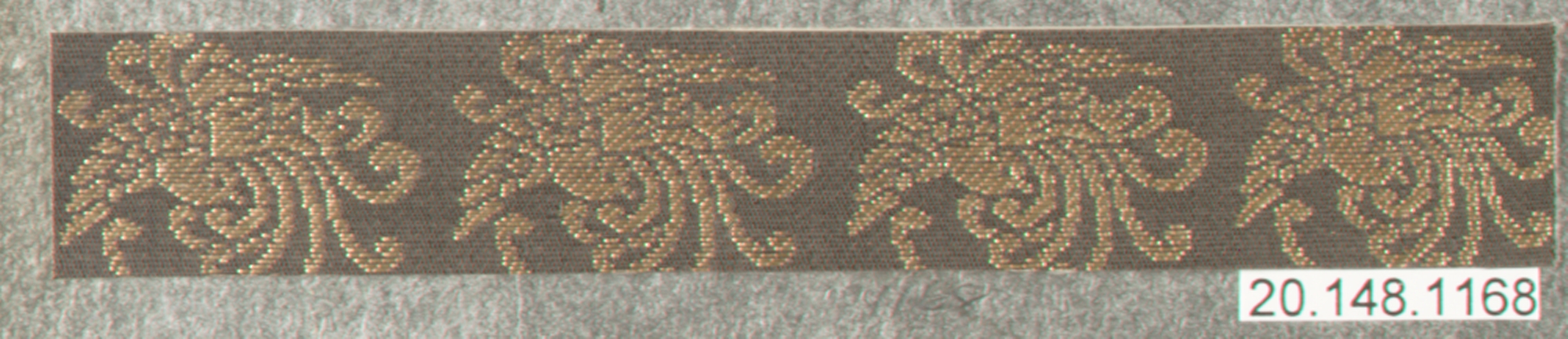
The defining characteristic of this piece is its compound weave, a technique that elevates silk from a simple plane into a multi-layered, dimensional surface. Unlike a plain or twill weave, a compound weave employs multiple warp and weft systems, allowing for intricate patterns, varying densities, and contrasting textures within a single fabric. In this piece, the weave creates a subtle, almost geological topography. The surface is not flat; it undulates with raised motifs that echo traditional Japanese rinzu (figured silk) and shibori-inspired resist-dyeing techniques, yet rendered with a modern, abstract vocabulary.
The structural implications of this weave are critical. The fabric possesses a unique duality: it is simultaneously rigid and fluid. The compound construction grants it a structural memory, enabling it to hold sculptural folds and sharp pleats without collapsing, while the silk’s inherent suppleness ensures the garment never feels stiff or armored. This balance is the piece’s foundational achievement. Every seam, every dart, every panel is a negotiation between the weaver’s intent and the engineer’s logic.
Design Analysis: The Form Follows the Thread
The silhouette of this piece is deliberately restrained, avoiding overt drama in favor of a quiet, architectural precision. It is a study in negative space and volume control. The garment likely features a structured bodice that transitions into an asymmetrical skirt or train, exploiting the compound weave’s ability to create unexpected moments of tension and release. The neckline, perhaps a deep, sculptural cowl or a sharp, asymmetrical collar, is not merely a cut; it is a direct consequence of the fabric’s grain and weave direction.
Color is treated with monastic restraint. The piece employs a monochromatic or near-monochromatic palette—deep indigo, charcoal, or a raw ivory—allowing the textile’s texture to become the primary visual language. This is a deliberate curatorial choice. The absence of chromatic distraction forces the viewer to engage with the tactile and structural narrative of the weave. The light plays across the raised motifs, creating a shifting chiaroscuro that mimics the effect of a topographical map. The garment breathes, not through its cut alone, but through the micro-movements of its woven surface.
Cultural Context: Japan’s Textile Legacy in a Global Lens
To analyze this piece is to understand its cultural lineage. Japan’s textile traditions—from the kimono’s linear, unstitched construction to the meticulous kasuri (ikat) and nishijin-ori (brocade) weaves—are rooted in a philosophy of material respect. The kimono, for instance, is cut from a single bolt of fabric with minimal waste, honoring the cloth’s full width. Katherine Fashion Lab’s piece subverts this tradition by introducing Western couture’s three-dimensional draping and seaming, yet retains the Japanese reverence for the material’s integrity. The result is a hybrid: a garment that is neither purely Japanese nor purely Western, but a dialogue between two sartorial epistemologies.
The compound weave itself carries historical weight. In feudal Japan, complex weaves were reserved for the samurai class and the imperial court, signifying status and discipline. By employing this technique in a contemporary, standalone context, the piece recontextualizes that history. It is not a costume; it is a meditation on the enduring power of craft in an age of mass production.
Wearability and Performance: The Garment as Living Sculpture
A couture piece must ultimately serve the body, and this is where the compound weave’s performance becomes paramount. The fabric’s drape coefficient—its ability to fall and fold in a controlled manner—is exceptional. The garment moves with a deliberate, almost choreographed fluidity. When the wearer walks, the fabric does not flutter; it rolls and cascades, each fold revealing a new pattern from the weave. The weight of the silk ensures that the garment sits close to the body where needed, and floats away where intended.
Breathability remains a hallmark of natural silk, but the compound weave introduces a micro-climate effect. The multiple layers of warp and weft create air pockets that insulate without trapping heat, making the piece suitable for both temperate and controlled environments. This technical consideration elevates the garment beyond mere spectacle into functional art. It is a piece designed to be lived in, not just displayed.
Conclusion: A Blueprint for Future Craft
Katherine Fashion Lab’s Japanese compound weave piece is not a product of fashion; it is a manifesto woven in silk. It challenges the industry’s acceleration toward disposability by insisting on slowness, on the labor of the hand, and on the intelligence embedded in a single thread. For the discerning collector or scholar, this garment represents a critical pivot point—a reminder that couture’s highest calling is not to adorn, but to articulate. It is a silent, elegant argument that the future of luxury lies not in novelty, but in depth. In the hands of Katherine Fashion Lab, a Japanese compound weave becomes not just a material, but a philosophy, stitched into permanence.