Heritage Analysis: Jadeite in Chinese Adornment and Strategic Luxury Positioning
This standalone research paper, prepared for Katherine Fashion Lab, examines the cultural, symbolic, and spiritual dimensions of emerald green jadeite within Chinese heritage. The analysis culminates in a strategic framework for integrating this profound material into a 2026 high-end luxury strategy, aligning historical depth with contemporary market demands.
Symbolic Power: The Imperial Resonance of Emerald Green Jadeite
In Chinese cosmology, jade—particularly the rare, translucent emerald green variety known as fei cui—has long been imbued with supreme symbolic authority. Unlike other gemstones valued primarily for brilliance, jadeite in this hue represents the convergence of heaven, earth, and human virtue. The color emerald green, associated with spring, renewal, and the wood element in the Five Phases (Wu Xing), signifies growth, harmony, and moral integrity. Historically, only the emperor and his immediate court were permitted to wear the deepest, most saturated green jadeite, making it a direct emblem of imperial mandate and celestial favor.
This symbolic power extends beyond political authority into metaphysical protection. Jadeite is believed to possess ling—spiritual efficacy—that guards the wearer against misfortune and attracts prosperity. In traditional Chinese thought, the stone’s internal texture, known as “jadeite’s skin,” is read as a map of cosmic energy. For Katherine Fashion Lab, leveraging this symbolism requires an understanding that emerald green jadeite is not merely a decorative material but a carrier of dynastic memory and personal talismanic agency. In a luxury context, this translates into an asset that communicates exclusivity, timelessness, and moral authority—a narrative that resonates powerfully with discerning high-net-worth clients in both Eastern and Western markets.
Historical Adornment: From Ritual Object to Elite Accessory
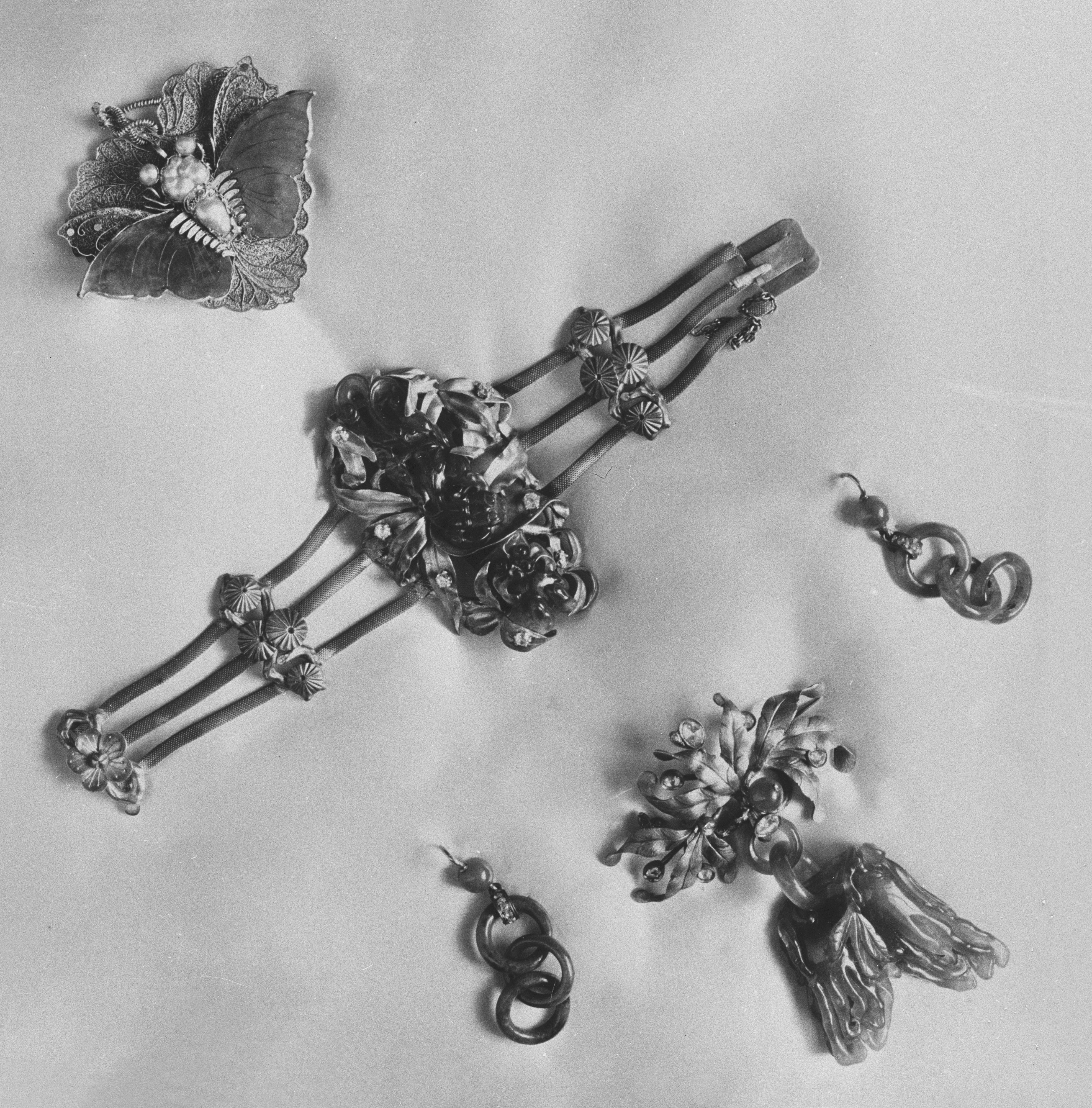
The history of jadeite adornment in China spans over 8,000 years, with the emerald green variety emerging as a prized import from Burma during the Qing Dynasty (1644–1912). Prior to this, Chinese jade was predominantly nephrite, but the arrival of jadeite revolutionized court jewelry. The Imperial concubines and empresses of the Qing court wore intricately carved jadeite bangles, hairpins, and earrings, often set in gold filigree. These pieces were not mere ornaments; they were signifiers of status, fertility, and spiritual alignment. The bangle, for instance, was worn as a protective circle that warded off evil spirits, while carved pendants depicting bats or peaches symbolized good fortune and longevity.
During the Republican era (1912–1949), jadeite jewelry transitioned from strictly imperial to elite civilian adornment, worn by Shanghai socialites and international diplomats. This period saw the rise of Art Deco jadeite pieces, where Chinese motifs were fused with Western geometric designs, creating a hybrid aesthetic that appealed to global luxury collectors. The historical trajectory reveals a consistent thread: jadeite, especially emerald green, has always been a marker of cultural sophistication and economic power. For Katherine Fashion Lab, this historical lineage offers a rich narrative for product storytelling. By referencing specific dynastic motifs—such as the double happiness symbol or the dragon-and-phoenix—the brand can create jewelry that is both historically anchored and modern in execution.
Spiritual Meaning: The Inner Landscape of Jadeite
Beyond visible symbolism, jadeite holds profound spiritual significance in Chinese philosophy. The Confucian scholar Xu Shen (2nd century AD) famously described jade’s five virtues: benevolence (ren), righteousness (yi), wisdom (zhi), courage (yong), and purity (jie). These virtues are believed to be inherent in the stone itself, and wearing jadeite is an act of cultivating these qualities within oneself. The emerald green hue specifically corresponds to the heart chakra in Eastern metaphysical traditions, promoting emotional balance, compassion, and inner peace.
In Taoist and Buddhist practices, jadeite is used as a meditation aid, its cool weight and subtle translucency encouraging mindfulness. The stone is also central to feng shui, where green jadeite pieces are placed in wealth corners to attract abundance. For high-end consumers, this spiritual dimension offers a unique value proposition: a jadeite piece from Katherine Fashion Lab is not just a luxury accessory but a personal spiritual tool. This aligns with the growing global trend of conscious luxury, where clients seek objects that enhance well-being and carry intentional meaning. The brand can capitalize on this by offering ritualistic packaging—such as silk pouches inscribed with blessings—and curated experiences like guided meditations with each purchase.
2026 High-End Luxury Strategy: Integrating Heritage with Modernity
To position emerald green jadeite as a cornerstone of Katherine Fashion Lab’s 2026 luxury strategy, a three-pillar approach is recommended: heritage curation, technological innovation, and experiential exclusivity.
Heritage Curation: The brand should establish a “Jadeite Archive” collection, featuring limited-edition pieces that reinterpret Qing Dynasty court jewelry using contemporary ergonomics and sustainable sourcing. Each piece must come with a certificate of provenance detailing its jadeite’s origin, color grading, and historical inspiration. This builds trust and elevates the product from commodity to collectible. Collaborations with Chinese museums or private collectors for authentic motifs—such as the “dragon scale” carving technique—will reinforce authenticity.
Technological Innovation: In 2026, luxury consumers expect transparency. Katherine Fashion Lab should invest in blockchain traceability for every jadeite gem, verifying its ethical mining journey from Myanmar to the atelier. Additionally, augmented reality (AR) try-ons can allow clients to visualize how the jadeite’s internal patterns interact with their skin tone and wardrobe. For high-net-worth clients, 3D-printed custom settings that integrate jadeite with lab-grown diamonds or recycled gold will appeal to eco-conscious sensibilities without compromising exclusivity.
Experiential Exclusivity: The brand should launch a “Jadeite Immersion” program, offering private appointments in heritage-inspired salons where clients learn about jadeite’s spiritual meaning while selecting stones. A “Spiritual Concierge” service—a trained cultural advisor—can guide clients in choosing jadeite for specific intentions (e.g., career success, family harmony). For the ultra-luxury segment, bespoke commissioning of a single emerald green jadeite bangle, requiring a 12-week creation process, will command prices upward of $500,000. The narrative should emphasize that each piece is “not made, but revealed”—a phrase that echoes the Taoist concept of uncovering inherent beauty.
Finally, the 2026 strategy must address market positioning. Katherine Fashion Lab should position emerald green jadeite as the “new diamond” for the Asian luxury market, while in Western markets, it should be framed as an exotic investment asset akin to fine art. Price anchoring should start at $10,000 for entry-level pieces, with a clear tiered structure up to $1 million for museum-grade artifacts. Marketing channels should include private viewings at Art Basel Hong Kong and editorial partnerships with Vogue China, focusing on the stone’s spiritual and historical narratives rather than mere aesthetics.
In conclusion, emerald green jadeite offers Katherine Fashion Lab a singular opportunity to bridge ancient Chinese symbolism with 21st-century luxury. By honoring its imperial past, spiritual depth, and cultural resonance, the brand can create a product line that is not only commercially viable but culturally transformative—a true heritage asset for the discerning elite.