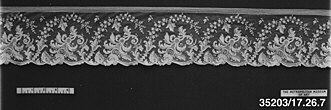
The Poetics of Absence: A Couture Analysis of Katherine Fashion Lab’s “Fragment”
In the rarefied realm of haute couture, where the ephemeral and the eternal converge, Katherine Fashion Lab’s standalone study, “Fragment,” emerges as a masterclass in restrained opulence. This piece, a deliberate departure from the conventional silhouette, is not merely a garment but a philosophical meditation on heritage, deconstruction, and the art of the incomplete. Executed with the painstaking precision of needle lace and the iconic point d’Alençon, “Fragment” redefines the relationship between materiality and memory, inviting the wearer and observer alike to contemplate the beauty inherent in absence.
Deconstructing the Fragment: Conceptual Framework
The title “Fragment” signals a deliberate break from the whole. In a fashion landscape often obsessed with completeness—the perfect hem, the seamless finish—Katherine Fashion Lab posits that the broken, the partial, can possess a more profound narrative weight. This is not a garment that covers; it is one that reveals. The “Fragment” functions as a standalone study, a singular piece of couture that exists outside the context of a collection, allowing it to become a pure vessel for artistic inquiry. The design language eschews symmetry and volume in favor of an asymmetric, almost archaeological structure. Imagine a delicate lattice of lace that appears to have been unearthed, a relic of a forgotten civilization, now suspended on the body. The negative space is as crucial as the lace itself, creating a dialogue between what is present and what is missing. This conceptual framework aligns with the broader postmodern fascination with the ruin, where decay and incompleteness are not signs of failure but rather markers of authenticity and history.
Materiality as Narrative: The Lace of Global Heritage
The choice of materials is the cornerstone of this analysis. Katherine Fashion Lab draws from a global heritage, but not through overt cultural symbols or appropriation. Instead, the heritage is encoded in the very thread and technique. The primary material is needle lace, a textile art form that predates the Industrial Revolution and demands a monastic level of patience. Unlike bobbin lace, which is made in strips, needle lace is built stitch by stitch with a needle and thread, allowing for infinite organic shapes and a sculptural quality. This technique, historically practiced across Europe—from Venice to France—represents a universal language of handcraft. For “Fragment,” the lab employs a variant of point d’Alençon, the legendary French lace known for its fine net ground and raised, corded outline. This specific lace, once reserved for royal trousseaux and papal vestments, here becomes a medium for a radical modernity.
The point d’Alençon in “Fragment” is not used to create a dense, floral pattern. Instead, it is worked in a sparse, almost calligraphic manner. The cordonnet (the heavier outlining thread) is exaggerated, creating a three-dimensional relief that casts shadows on the skin. The net ground is irregular, with intentional gaps and broken threads, mimicking the erosion of time. This is a deliberate subversion of the lace’s original purpose. Where traditional point d’Alençon was a symbol of opulent coverage, here it becomes a symbol of exposure and vulnerability. The global heritage is thus not a static reference but a living, breathing element that is deconstructed and reassembled to speak to contemporary concerns of fragility and endurance.
Technical Mastery: The Alchemy of Needle and Thread
The execution of “Fragment” is a testament to the lab’s technical prowess. The piece is constructed using a technique that blends freestanding lace with a subtle, almost invisible armature. There is no underlying fabric; the lace itself is the structure. This requires an extraordinary level of tension control and pattern engineering. Each motif—perhaps an abstracted floral or geometric shard—is worked individually on a parchment pattern before being joined with delicate picots (small loops) and brides (connecting bars). The result is a garment that is both rigid and fluid, like a piece of armor woven from spider silk.
The point d’Alençon’s signature réseau (net ground) is manipulated to create a gradient of opacity. At the shoulders, the net is dense, offering a semblance of coverage. As the piece descends, the net becomes sparser, dissolving into individual threads that float away from the body. This technique, known as dégradé lace, is incredibly difficult to achieve with needle lace, as each thread must be cut and reattached manually. The color palette is intentionally monochromatic—a single shade of ecru, almost bone-white—which forces the viewer to focus on the interplay of light and shadow, texture and void. This restraint elevates the piece from mere decoration to a study in tonal value and structural integrity.
Wearability and the Body: A Dialogue of Absence
“Fragment” challenges the traditional notion of wearability. It is not a garment that conforms to the body; rather, it creates a second skin that exists in a state of constant tension. The piece is designed to be worn without a lining, allowing the lace to rest directly on the skin. This intimate contact transforms the garment into a living archive, where the oils and warmth of the wearer will, over time, subtly alter the lace’s patina. The cut is asymmetrical, with one shoulder fully exposed while the other is encased in a complex web of lace. This imbalance creates a dynamic silhouette, forcing the body to move in a particular way—with a deliberate, almost ceremonial grace.
The absence of a back closure, or any visible fastening, adds to the piece’s mystique. The “Fragment” is slipped over the head, held in place by the tension of the lace itself. This design choice reinforces the theme of the incomplete: the garment is never fully secured, never entirely closed. It remains a fragment, a work in progress, even when worn. This is a radical departure from the couture tradition of immaculate finishing. Here, the unfinished edge, the loose thread, is celebrated as a mark of authenticity and human touch.
Conclusion: The Enduring Power of the Partial
Katherine Fashion Lab’s “Fragment” is more than a couture piece; it is a philosophical artifact. By harnessing the global heritage of needle lace and point d’Alençon, the lab has created a work that speaks to the timeless human condition of loss, memory, and the beauty of the incomplete. In an era of mass production and digital perfection, this standalone study reminds us that the most powerful stories are often those that are partially told. The “Fragment” does not seek to be a complete statement; it is a question, an invitation to imagine what was once whole. It stands as a bold declaration that in couture, as in life, the most profound beauty can be found in the spaces between, in the threads that are missing, and in the fragments we choose to preserve.