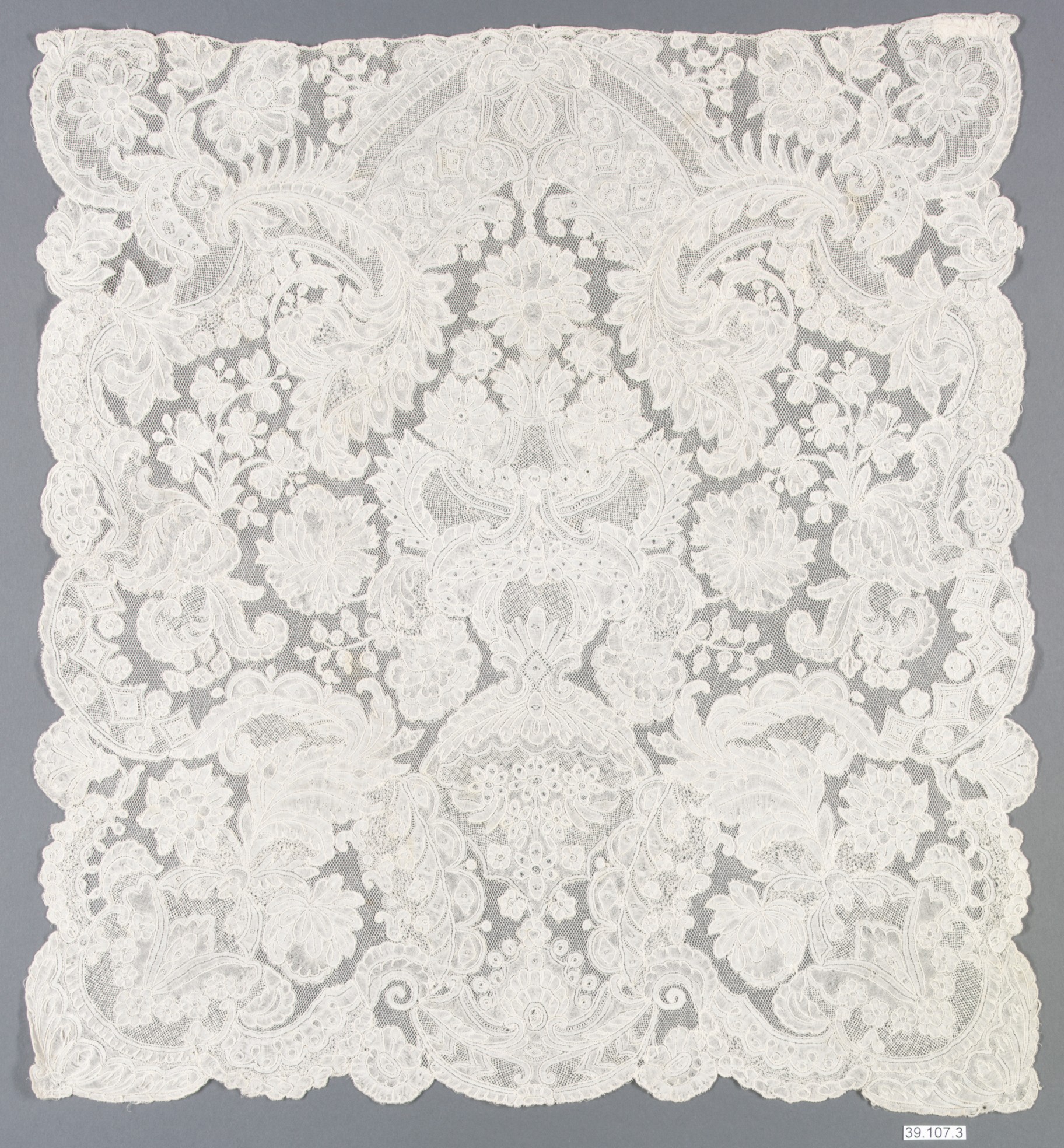
The Lace of Diplomacy: Deconstructing Rabat Through Bobbin Lace at Katherine Fashion Lab
In the rarified air of haute couture, where fabric is not merely material but narrative, Katherine Fashion Lab presents a singular study: Rabat. This standalone analysis does not treat the garment as a mere object of adornment, but as a textile cartography—a map woven from the threads of global heritage and the meticulous artistry of bobbin lace. The subject, a gown or conceptual piece titled after the capital of Morocco, becomes a profound meditation on cultural synthesis. By employing Brussels bobbin lace—a craft synonymous with European aristocratic elegance—to articulate the spirit of a North African city, the Lab performs an act of sartorial diplomacy. This is not appropriation; it is a deliberate, academic fusion, a dialogue between the hand and the history. The result is a garment that transcends geography, existing in a liminal space where the tactile precision of Flemish looms meets the architectural soul of the Maghreb.
The Material Lexicon: Brussels Bobbin Lace as a Language of Power
To understand the garment, one must first decode its primary alphabet: Brussels bobbin lace. Unlike needle lace, which is built stitch by stitch, bobbin lace is a braided negotiation. Dozens of threads, wound on wooden bobbins, are twisted, crossed, and pinned in a continuous, rhythmic dance on a pillow. This technique, perfected in 16th-century Flanders and later synonymous with the courts of Versailles, represents a pinnacle of human patience and geometric intelligence. The choice of this specific lace is no accident. For Rabat, the Lab leverages the inherent structural properties of Brussels lace—its ability to create both dense, opaque zones and ethereal, open grids. This duality mirrors the city itself: the fortified walls of the Kasbah des Oudaias versus the airy, light-filled courtyards of the Andalusian Gardens.
In this analysis, the lace is not applied as a trim or a decorative overlay. It is the primary structural fabric. The garment’s silhouette—a sculpted, almost architectural bodice flowing into a fluid, asymmetrical skirt—is achieved entirely through the tension and release of the lace. The ground (the net-like base of the lace) is manipulated to create varying densities, from a sheer, almost invisible mist at the shoulders to a tightly packed, opaque weave that forms the corset’s core. The toilé (the solid, patterned motifs) is thick with geometric arabesques, echoing the zellij tilework of Moroccan riads. Here, the European craft becomes a vehicle for Islamic geometric abstraction, proving that the language of pattern is universal.
Global Heritage: From Flemish Pillows to Moroccan Palaces
The genius of the Rabat study lies in its refusal to flatten cultural references into a single, digestible aesthetic. Instead, it presents a layered heritage where each thread carries a distinct origin. The bobbin lace technique is unapologetically European, a product of the guilds of Brussels and the courts of the Spanish Netherlands. Yet, the motifs it forms are distinctly Maghrebi. The openwork patterns are not the floral garlands of Baroque lace, but rather the interlacing stars and polygons of Moroccan geometric art. The corded edges of the lace mimic the heavy, embroidered braids of a traditional kaftan, while the lightness of the netting suggests the breathable fabrics required for the Mediterranean climate of Rabat.
This is where the Lab’s curatorial hand is most evident. The garment is a standalone object, not part of a larger collection, allowing it to function as a pure thesis. The global heritage is not a backdrop; it is the argument. The lace, historically a symbol of European colonial power and luxury, is re-contextualized. It no longer speaks of Flemish merchants or French queens. Instead, it whispers of the Bou Regreg river, the Atlantic breeze, and the ochre-colored ramparts of the city. The Lab achieves this through a process of material translation: the stiff, starched quality of traditional Brussels lace is softened with a subtle, hand-applied gum arabic finish—a nod to the natural resins used in Moroccan leather and textile crafts. The result is a fabric that holds its architectural shape while remaining tactile, almost organic, like sun-dried clay.
Silhouette and Structure: The Architecture of the Standalone Study
As a standalone study, the Rabat piece demands a rigorous examination of form. The silhouette is not dictated by trend but by the material’s own logic. The bodice is a masterclass in tension. The bobbin lace is worked in sections, each pinned and starched to create a rigid, almost armor-like front that cups the torso. This is the mechouar—the fortified heart of the city. The seams are not sewn; they are joined through a technique called point de raccroc, where individual threads are invisibly rewoven into the ground, creating a seamless, continuous surface. This requires thousands of hours of handwork, a fact the Lab does not hide but celebrates. The lace becomes a second skin, a woven armor that protects and reveals.
The skirt, in stark contrast, is a study in controlled chaos. It cascades in layers of Brussels lace that have been deliberately unpinned during the final blocking stage, allowing the threads to relax and form a soft, undulating drape. This asymmetry evokes the movement of the Atlantic tides against the coast of Rabat. The hemline is left raw, the individual bobbins’ tails (the picots) left exposed and unclipped. This is a radical choice. In traditional lace, such loose ends are considered unfinished. Here, they become a deliberate textural element—a fringe that whispers of the desert’s sandy edges. The contrast between the rigid, structured bodice and the fluid, organic skirt creates a dialogue between the man-made and the natural, the historical and the contemporary.
The Cultural and Philosophical Implications
To analyze Rabat is to confront the politics of craft. In an era of fast fashion and digital printing, the decision to create a garment entirely from hand-made Brussels bobbin lace is a profound act of resistance. It declares that time is the ultimate luxury. But more than that, it interrogates the very notion of cultural ownership. By taking a European technique and imbuing it with North African visual vocabulary, the Katherine Fashion Lab proposes a model of global heritage that is not hierarchical but reciprocal. The lace is not a colonial imposition; it is a chosen medium, a shared vocabulary.
This standalone study also challenges the traditional hierarchy within couture. Bobbin lace, historically considered a “minor” or “decorative” art, is elevated to the status of primary architecture. The garment does not require a lining, a foundation, or a secondary support. The lace is the structure. This is a philosophical statement: that the decorative is structural, that the ornamental is essential. In the context of Rabat, a city that has long been a crossroads of cultures—Berber, Arab, Andalusian, French—this garment becomes a metaphor for identity itself. It is not fixed or singular but a complex, interlaced network of influences, held together by the tension of their own threads.
Conclusion: A Textile Thesis for the Future
The Rabat study by Katherine Fashion Lab is not a dress. It is a dissertation. It is a physical argument for the enduring relevance of handcraft in an age of mechanical reproduction, and a testament to the power of material to transcend borders. The Brussels bobbin lace, with its mathematical precision and ethereal beauty, becomes the perfect medium to articulate the layered history of a city that is both ancient and modern, African and European, fortified and open. In this standalone analysis, we see not just a garment, but a map—a map woven from the hands of artisans past and present, a map that reminds us that the most profound global heritage is not owned, but shared, thread by thread.