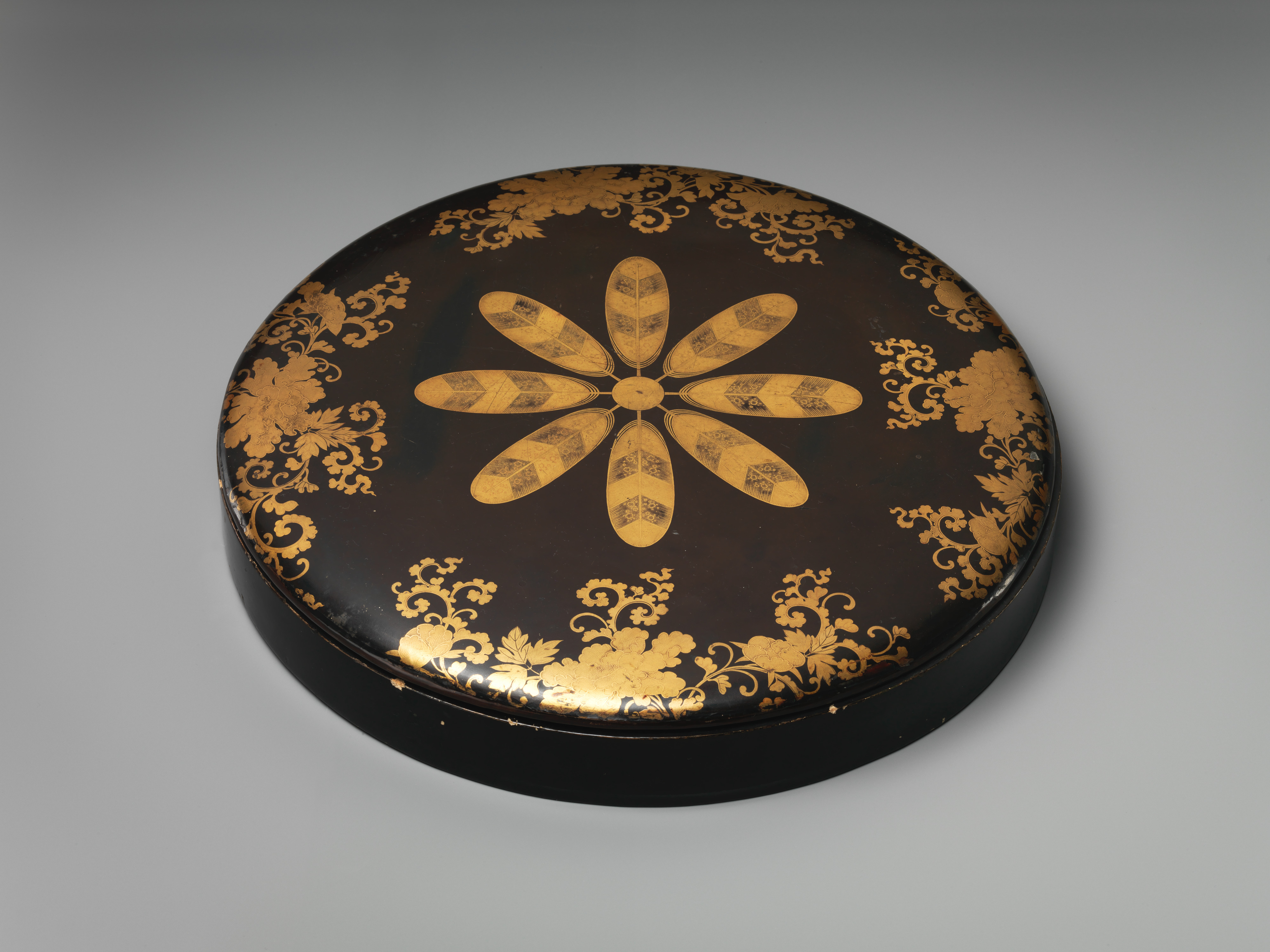
Heritage Analysis: The Kagami-bako (Mirror Box) with Feather Crest and Peony Scrolls
Introduction: The Object as a Cultural Artifact
The Kagami-bako, or mirror box, from Japan represents a pinnacle of Edo-period craftsmanship and symbolic sophistication. Crafted from lacquered wood with gold hiramaki-e (flat sprinkled metal powder) on a black lacquer ground, this object houses a bronze mirror. Its decoration—feather crests intertwined with peony scrolls—elevates it beyond mere utility into a vessel of spiritual meaning, social status, and aesthetic philosophy. For Katherine Fashion Lab, this artifact offers a rich lexicon of symbolic power, historical adornment, and spiritual resonance that can inform a 2026 high-end luxury strategy. This analysis examines the object through four lenses: symbolic power, historical adornment, spiritual meaning, and strategic application for contemporary luxury branding.
Symbolic Power: The Mirror as a Portal to Truth and Transformation
In Japanese culture, the mirror (kagami) holds profound symbolic weight. It is not merely a reflective surface but a sacred object believed to reveal the true nature of the soul. Shinto tradition venerates the mirror as a vessel for kami (spirits), with the imperial regalia including the Yata no Kagami, a mirror representing wisdom and honesty. The Kagami-bako, therefore, is not a vanity item but a ritual object of introspection and self-confrontation. The bronze mirror within, when paired with the lacquered box, creates a dialogue between the inner self and the outer world—a concept that resonates deeply with modern luxury consumers seeking authenticity and meaning.
The feather crest (hane mon) and peony scrolls (botan karakusa) amplify this symbolic power. Feathers, often associated with birds like the crane or phoenix, signify longevity, transcendence, and spiritual ascent. The peony, known as the “king of flowers” in East Asian art, represents wealth, honor, and feminine beauty. Together, they form a visual narrative of transformation: the feather crest lifts the soul toward enlightenment, while the peony grounds it in earthly prosperity. For Katherine Fashion Lab, this dual symbolism offers a potent metaphor for luxury as both aspirational (flight) and rooted (heritage).
Historical Adornment: The Kagami-bako in Edo-Period Court Culture
Historically, the Kagami-bako was an essential accessory for aristocratic women during the Edo period (1603–1868). It was part of a larger trousseau (tansu) and often displayed during wedding ceremonies or formal court functions. The mirror box was not merely functional; it was a statement of lineage, taste, and social rank. The use of hiramaki-e—a technique where gold or silver powder is sprinkled onto wet lacquer—required immense skill and material expense, making these boxes markers of elite patronage. The feather crest, often a family crest (kamon), further personalized the object, linking the owner to a specific clan or historical narrative.
The peony scrolls, rendered in intricate gold on black lacquer, echo Chinese Tang dynasty influences while asserting a distinctly Japanese aesthetic of restrained opulence. This fusion of foreign and indigenous motifs reflects the cosmopolitan nature of Edo-period luxury. For Katherine Fashion Lab, this historical context underscores the importance of narrative depth in luxury goods. A modern Kagami-bako-inspired collection would not simply mimic the design but evoke the ritual of self-adornment, the pride of heritage, and the exclusivity of commissioned craftsmanship.
Spiritual Meaning: The Mirror as a Bridge Between Worlds
Beyond symbolism, the mirror box carries explicit spiritual meaning. In Japanese Buddhism, mirrors are used in rituals to ward off evil spirits and to focus meditation. The act of opening the Kagami-bako mirrors the act of unveiling one’s true self—a practice akin to shin-gyō-sō (formal, semi-formal, informal) in tea ceremony aesthetics. The black lacquer ground, known as roiro-nuri, is itself symbolic: black represents the void (mu) from which all form emerges, while the gold hiramaki-e represents illumination and enlightenment. The feather crest, often associated with the phoenix, hints at rebirth and cyclical renewal.
This spiritual dimension aligns with contemporary luxury trends toward mindfulness and intentionality. Consumers in 2026 will increasingly seek objects that serve as talismans or tools for self-discovery. The Kagami-bako, with its layered symbolism of reflection, transformation, and protection, offers a template for luxury products that transcend materialism. Katherine Fashion Lab can leverage this by positioning mirror-themed accessories or packaging as “portals to authenticity”—a concept that resonates with Gen Z and Millennial buyers who prioritize experiences over possessions.
2026 High-End Luxury Strategy: Translating Heritage into Modernity
To operationalize these insights, Katherine Fashion Lab must consider three strategic pillars: narrative-driven design, ritualized consumer experience, and artisan exclusivity.
Narrative-driven design involves infusing products with the symbolic language of the Kagami-bako. A 2026 collection could feature compact mirrors, jewelry cases, or even digital accessories (e.g., phone cases) adorned with feather crests and peony scrolls in gold-on-black finishes. Each piece would be accompanied by a heritage card explaining the symbolism—mirror as truth, feather as transcendence, peony as prosperity—creating an emotional connection that justifies premium pricing. This approach mirrors the success of brands like Hermès, which uses equestrian motifs to tell stories of craftsmanship and legacy.
Ritualized consumer experience draws from the spiritual act of opening the Kagami-bako. Katherine Fashion Lab could design unboxing experiences that mimic the ritual of revealing a mirror. For example, a limited-edition mirror box could include a bronze-toned compact mirror in a lacquered case, with the opening sequence designed to evoke a sense of ceremony—perhaps with a soft sound, a subtle fragrance, or a hidden engraving. This transforms the purchase into a moment of self-reflection, aligning with the 2026 luxury trend of “slow luxury” and mindful consumption.
Artisan exclusivity capitalizes on the hiramaki-e technique’s labor-intensive nature. Katherine Fashion Lab could partner with contemporary Japanese lacquer artists to produce a limited series of mirror boxes, each numbered and authenticated. This not only preserves a dying craft but also creates scarcity and cultural capital. The price point would reflect the hours of labor (often months per piece) and the rarity of the materials (pure gold powder, aged urushi lacquer). Such collaborations have proven successful for Louis Vuitton and Gucci, which have partnered with Japanese artisans to create exclusive collections.
Conclusion: The Mirror as a Strategic Asset
The Kagami-bako with feather crest and peony scrolls is far more than a historical artifact; it is a blueprint for luxury branding in an era of meaning-seeking consumers. Its symbolic power (mirror as truth), historical adornment (aristocratic ritual), and spiritual meaning (transformation and protection) offer a rich tapestry for Katherine Fashion Lab to weave into its 2026 strategy. By embracing narrative-driven design, ritualized experiences, and artisan exclusivity, the brand can position itself as a purveyor of not just luxury goods, but of cultural wisdom and personal transformation. In a market saturated with mass-produced opulence, the Kagami-bako reminds us that true luxury is a mirror—reflecting not just the face, but the soul.