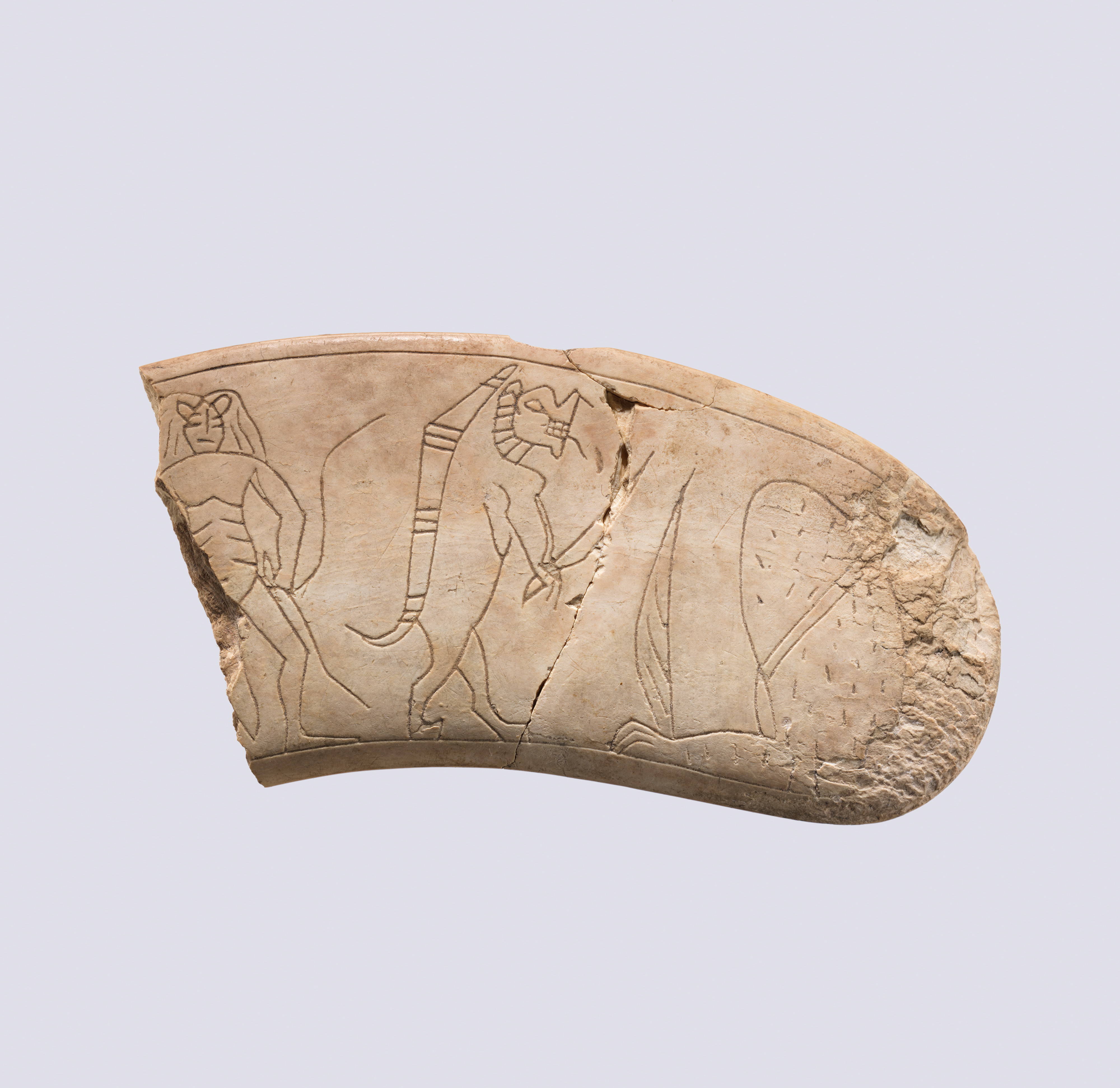
Heritage Analysis: Fragment of an Apotropaic Wand
Introduction to the Artifact
The fragment under analysis is a carved ivory segment from an apotropaic wand, originating from an ancient civilization—likely predynastic or early dynastic Egypt, circa 3200–2700 BCE. Apotropaic wands, often crafted from hippopotamus ivory, were ritual objects imbued with protective and defensive properties. This particular fragment measures approximately 12 centimeters in length, retaining a portion of a curvilinear form with incised motifs of a feline predator and a stylized serpent. The medium of ivory, sourced from the hippopotamus, was not merely a material choice but a deliberate invocation of the animal’s formidable strength and association with the goddess Taweret, a deity of childbirth and protection. For Katherine Fashion Lab, this artifact offers a profound case study in symbolic power, historical adornment, and spiritual meaning, providing a strategic foundation for high-end luxury positioning in 2026.
Symbolic Power: The Apotropaic Function
The primary function of this wand was apotropaic—derived from the Greek apotropaios, meaning “to turn away evil.” In ancient contexts, such wands were wielded during rituals to ward off malevolent spirits, particularly during childbirth, a perilous time for mother and child. The feline motif, likely a representation of a lioness or leopard, symbolizes predatory vigilance and dominance over chaos. The serpent, often associated with the primordial forces of the underworld, was simultaneously feared and revered; its inclusion on the wand suggests a harnessing of dangerous energy for protective purposes. The combination of these emblems on a single object reflects a sophisticated understanding of dualities—life and death, chaos and order, vulnerability and strength.
For Katherine Fashion Lab, this symbolic power translates into a design philosophy that embraces protective and empowering narratives. In high-end luxury, consumers increasingly seek objects that confer a sense of security and identity. The wand’s symbolism can be reinterpreted as a motif of guardianship and resilience, aligning with contemporary desires for personal talismans. The fragment’s partial state—broken yet potent—also speaks to the luxury of imperfection, a trend gaining traction in 2026 as exclusivity is redefined through authenticity and historical resonance.
Historical Adornment: Ivory as a Medium of Prestige
Ivory, as a medium, carried immense historical weight in ancient civilizations. It was a luxury material reserved for elites, priests, and royalty, due to the difficulty of acquisition and the skill required to carve it. The hippopotamus, from which this ivory was sourced, was a creature of the Nile’s liminal spaces—between water and land, life and death. The act of carving transformed raw animal material into a refined object of power, a process akin to modern haute couture’s transformation of raw textiles into wearable art. The fragment’s surface retains traces of polishing and incised lines, indicating meticulous craftsmanship. This aligns with ancient adornment practices where objects were not merely functional but were extensions of the wearer’s spiritual and social status.
In the context of historical adornment, this wand was likely held or worn as a pendant during rituals, making it a piece of ceremonial jewelry. Its portability and intimate scale suggest it was a personal object, passed down through generations as a heirloom. For Katherine Fashion Lab, this offers a direct parallel to the luxury industry’s emphasis on heritage craftsmanship. The medium of ivory, while ethically problematic in modern contexts, can be reimagined using sustainable alternatives such as fossilized ivory, tagua nut, or high-polish resin that mimics the material’s luster. The strategic narrative becomes one of material reverence—honoring the ancient technique without ecological harm. This positions the brand as a custodian of history while innovating for a conscious future.
Spiritual Meaning: The Wand as a Conduit
Beyond its protective function, the apotropaic wand served as a spiritual conduit between the human and divine realms. In ancient belief systems, the wand was not merely a symbol but an active agent of transformation. The incised motifs were believed to hold heka (magical power), activated through ritual speech or touch. The fragment’s curved shape mirrors the crescent moon, a symbol of cyclical renewal and feminine divinity, linking it to Taweret and the life-giving forces of the Nile. This spiritual dimension elevates the object from mere ornament to a sacred tool, imbuing it with an aura of mystery and reverence.
For a 2026 luxury strategy, this spiritual meaning can be leveraged to address the growing consumer demand for mindful luxury. High-net-worth individuals are increasingly drawn to objects that offer metaphysical benefits—calm, protection, or connection to ancestral wisdom. Katherine Fashion Lab can position its collections as modern talismans, using the wand’s motifs in jewelry, accessories, or even garment hardware. For example, a pendant featuring a stylized feline and serpent, rendered in ethically sourced materials, could be marketed as a “guardian piece” for the wearer. The brand can also incorporate ritualistic packaging—such as a silk pouch inscribed with protective symbols—to enhance the spiritual narrative. This transforms a purchase into a meaningful experience, fostering brand loyalty and emotional attachment.
2026 High-End Luxury Strategy: Heritage as Differentiation
In the competitive landscape of 2026, luxury brands must differentiate through authentic storytelling and cultural depth. The apotropaic wand fragment offers a rich tapestry of narratives that align with key luxury trends: sustainability, individuality, and spiritual wellness. Katherine Fashion Lab can develop a capsule collection titled “The Apotropaic Line,” featuring pieces that reinterpret the wand’s motifs in contemporary forms. Each item would be accompanied by a heritage card detailing the artifact’s history, symbolic meaning, and the ethical sourcing of materials. This transparency appeals to the discerning consumer who values education and provenance over mere aesthetics.
Strategically, the brand can also leverage limited-edition releases inspired by the fragment’s incomplete state. Just as the wand is a fragment, the collection could feature “unfinished” or asymmetrical designs, celebrating the beauty of brokenness—a concept known as wabi-sabi in Japanese aesthetics. This aligns with the 2026 trend toward imperfect luxury, where rarity is defined by unique flaws rather than mass-produced perfection. Additionally, the spiritual aspect can be amplified through experiential retail: pop-up stores designed as sacred spaces, with scent diffusers using frankincense and myrrh, and soundscapes of ancient chants. Such immersive environments create a sense of pilgrimage, elevating the purchase to a ritual act.
Finally, the brand should consider collaborative research with archaeological institutions or museums, such as the British Museum or the Louvre. By co-creating content—exhibitions, digital archives, or even a documentary on the wand’s history—Katherine Fashion Lab positions itself as a thought leader in heritage luxury. This not only enhances credibility but also opens doors to cross-promotional opportunities, reaching audiences interested in history and culture. The fragment, though ancient, becomes a bridge to the future, proving that true luxury is timeless.
Conclusion
The fragment of the apotropaic wand is far more than a broken piece of ivory; it is a repository of symbolic power, historical adornment, and spiritual meaning. For Katherine Fashion Lab, it serves as a strategic asset, offering a narrative that resonates with 2026 luxury consumers seeking authenticity, protection, and transcendence. By honoring the artifact’s origins while innovating for ethical and aesthetic relevance, the brand can carve a unique niche in the high-end market. The wand’s story—of turning away evil and embracing strength—becomes the brand’s story: a guardian of heritage, a harbinger of luxury, and a conduit for meaning in a fragmented world.