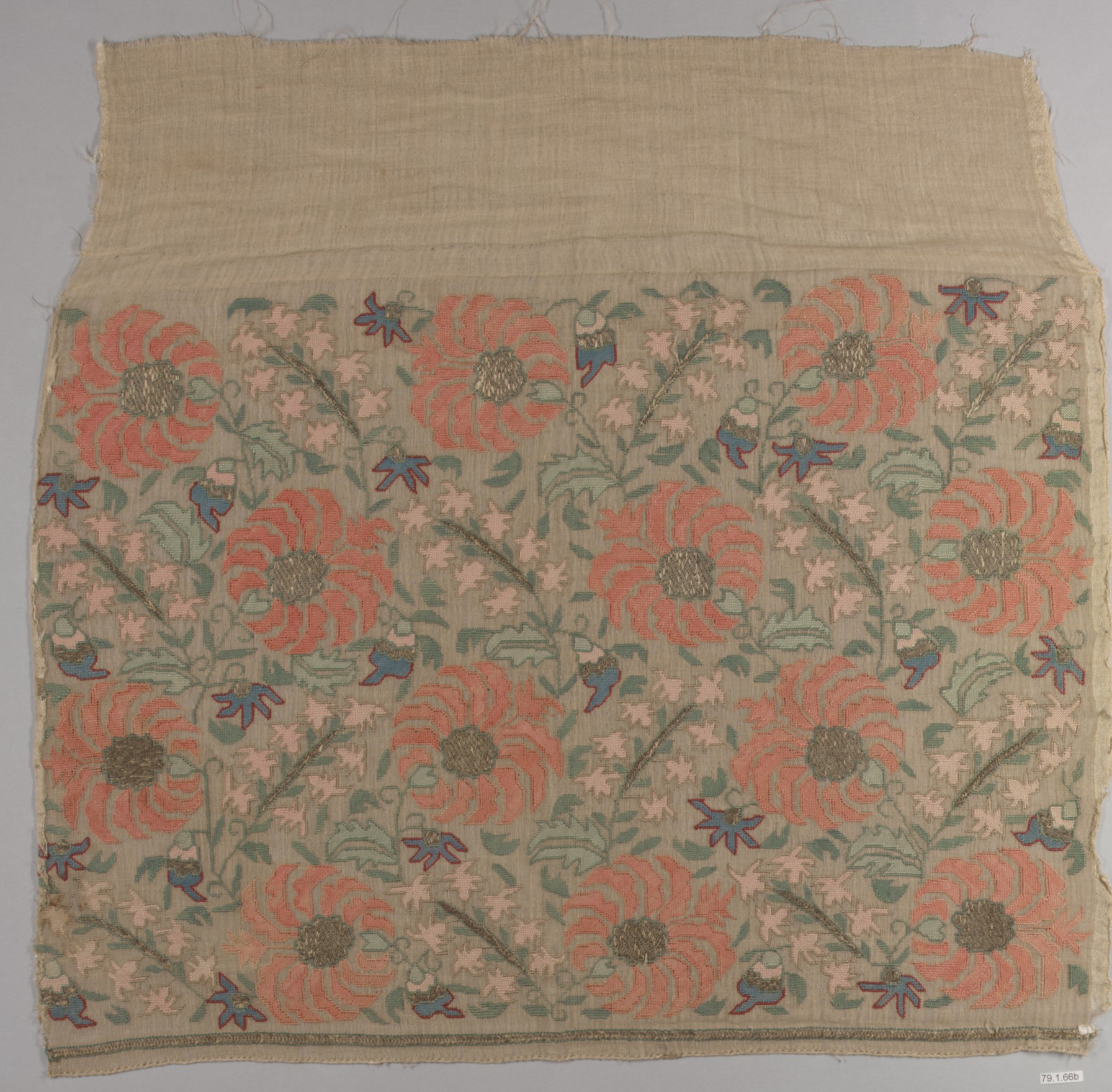
The Art of the Edge: Deconstructing the “Towel End” as Couture Statement
In the lexicon of fashion, the term “towel end” typically evokes the utilitarian, the forgotten fringe of a bath linen. Yet, within the conceptual framework of Katherine Fashion Lab, this humble designation is reimagined as a profound study in contrast, craftsmanship, and cultural narrative. This standalone analysis deconstructs a singular artifact: a textile fragment defined by its global heritage, constructed from linen, silk, and metal-wrapped thread, executed in a plain weave foundation with intricate embroidery. This is not merely a decorative border; it is a microcosm of couture philosophy, where the edge becomes the epicenter of meaning.
Material Dialogue: The Triad of Linen, Silk, and Metal
The choice of materials in this Towel End is a deliberate orchestration of texture and symbolism. Linen, derived from the flax plant, serves as the foundational warp and weft. Its inherent irregularities—the subtle slubs, the matte finish, the crisp hand—anchor the piece in a tradition of utility and honesty. Linen’s history as a fabric of both peasant and priest (from Egyptian mummy wrappings to Renaissance altar cloths) imbues it with a democratic yet sacred quality. In this context, it provides a tactile ground that resists ostentation, demanding that any embellishment earn its place.
Interwoven with this humble base is silk, a fiber synonymous with luxury, fluidity, and light. The silk appears not as a structural element but as a contrasting weft in the embroidered sections, introducing a sheen that catches the eye and creates a dynamic interplay between matte and glossy surfaces. This juxtaposition is critical: it elevates the linen from the mundane to the muse, suggesting that even the most ordinary edge can be touched by opulence.
The third component, metal-wrapped thread, is the most audacious. Composed of a fine core—likely silk or cotton—encased in a metallic foil (often silver or gold gilt), this thread introduces a third dimension: weight, rigidity, and reflectivity. It does not merely lie on the surface; it creates a raised, almost sculptural relief. The metal thread’s presence is a historical nod to ceremonial textiles from cultures as diverse as Byzantine ecclesiastical vestments, Indian brocades, and Chinese imperial silks. Here, it transforms the Towel End into a relic of status, a border that announces its own importance without shouting.
Structural Grammar: Plain Weave as a Canvas for Complexity
The base weave is deceptively simple: a plain weave (1/1 interlacing). This structure, the most basic of all textile constructions, offers no inherent pattern or texture. It is a neutral field, a blank slate. The genius of the designer lies in exploiting this neutrality. The plain weave provides a uniform, stable grid upon which the embroidery can be applied with precision. It also ensures that the textile remains supple and drapeable, preventing the metal thread from making it brittle.
Contrast this with a twill weave, which would introduce diagonal lines, or a satin weave, which would create glossy floats. Both would compete with the embroidery. The plain weave, by contrast, recedes into the background, allowing the embroidered motifs to command absolute attention. This is a lesson in restraint: the foundation is strong enough to support the weight of the metal thread, yet humble enough not to detract from the narrative stitched upon it.
Embroidery as Cultural Cartography: The Global Heritage
The embroidery is not merely decorative; it is a cartographic record of global textile traditions. The motifs, though not explicitly defined in a single cultural lexicon, draw from a reservoir of shared heritage. Geometric patterns—diamonds, chevrons, and stepped zigzags—echo the weavings of the Caucasus and Central Asia, where such forms symbolize protection and eternity. Floral or arabesque elements, rendered in the metal thread, recall the zardozi of Mughal India or the or nué of medieval Europe, where goldwork was used to create a shimmering, dimensional effect.
The technique itself is a hybrid. Counted-thread embroidery (likely cross-stitch or darning stitch) ensures precision on the plain weave grid, while freestyle couching of the metal thread allows for fluid, curvilinear forms. This combination of disciplined geometry and organic flow mirrors the tension between the linen’s rustic origin and the silk’s refined elegance. Each stitch is a negotiation between the hand of the artisan and the inherent properties of the materials—a dialogue that spans continents and centuries.
Contextual Provocation: The Standalone Study
To analyze this Towel End as a standalone study is to liberate it from its functional origins. In a couture context, the edge is no longer a boundary; it is a focal point. This fragment could be the basis for a garment’s hem, a collar, a belt, or even an entire bodice constructed from assembled borders. The designer’s intent is to challenge the viewer to see the periphery as the center. The repetition of the embroidered pattern—a rhythm of metal and silk against linen—creates a visual pulse that draws the eye along the length, encouraging a slow, meditative observation.
The choice of a towel end as subject matter is also a statement on value. In an era of fast fashion, where edges are often finished with a simple overlock stitch, this piece demands a re-evaluation of what constitutes luxury. The labor involved in hand-embroidering metal thread onto linen is immense. Each stitch is a commitment to time, to patience, to the preservation of a skill that is increasingly rare. The Towel End becomes a metaphor for the threshold—the liminal space between the ordinary and the extraordinary, the functional and the ceremonial.
Conclusion: The Edge as Essence
In the hands of Katherine Fashion Lab, the Towel End transcends its nomenclature. It is a masterclass in material alchemy, structural intelligence, and cultural synthesis. The linen grounds it in reality; the silk lifts it into aspiration; the metal thread anchors it in history. The plain weave provides the discipline; the embroidery offers the poetry. Together, they create an artifact that is both ancient and avant-garde, a testament to the power of the edge to define the whole. This is not a leftover; it is a legacy. It is the couture of the boundary, where the finish line becomes the starting point for a deeper dialogue between craft and concept.