Deconstructing Heritage: The Fragment as a Couture Statement
In the rarefied world of haute couture, where every stitch is a narrative and every material a testament to craftsmanship, Katherine Fashion Lab presents a standalone study that redefines the intersection of global heritage and contemporary design. The subject, Fragment, emerges not as a mere remnant but as a deliberate, curated artifact. Drawing from the intricate traditions of Bobbin lace, this analysis explores how the Lab transforms a technique rooted in centuries-old European and Asian textile history into a modern emblem of luxury. The Fragment becomes a metaphor—a broken yet whole expression of cultural memory, meticulously reconstructed through the lens of high fashion.
The Materiality of Bobbin Lace: A Global Heritage Reimagined
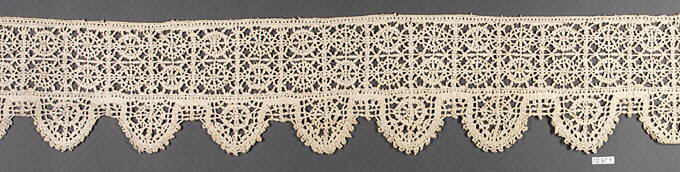
Bobbin lace, with its origins traced to 16th-century Italy and Flanders, and later adopted and refined in regions from France to Japan, represents a pinnacle of manual dexterity and patience. Traditionally crafted by twisting and crossing threads wound on bobbins, this technique yields a delicate, openwork fabric that is both structurally complex and visually ethereal. Katherine Fashion Lab’s choice of bobbin lace for the Fragment collection is a strategic homage to this global lineage. The material is not used in its conventional form—as a trim or an accent—but as the primary structural element. Each Fragment is a standalone piece, a swath of lace that is intentionally incomplete, evoking the idea of a relic unearthed from a forgotten archive.
The Lab sources its bobbin lace from artisan cooperatives in Belgium and India, ensuring that the heritage of the craft is preserved while infusing it with a contemporary sensibility. The lace is hand-dyed using natural pigments derived from indigo, madder root, and pomegranate, grounding the material in an ecological narrative that resonates with modern luxury consumers. This choice underscores a critical tension: the Fragment is both ancient and urgent, a physical link to a pre-industrial past that challenges the ephemerality of fast fashion. The texture of the lace—its ridges, gaps, and knots—becomes a tactile vocabulary, speaking to the fragility and resilience of cultural traditions.
Structural Deconstruction: The Fragment as a Design Principle
The Fragment, as a concept, operates on multiple levels. In the standalone study, Katherine Fashion Lab eschews the typical garment silhouette—no sleeves, no hems, no full coverage. Instead, the lace is sculpted into asymmetrical panels, suspended from fine metal chains or anchored by raw-edged silk ribbons. This architectural approach transforms the bobbin lace from a flat textile into a three-dimensional form that drapes and moves with the wearer. The fragment is not a flaw but a feature: the missing sections invite the eye to complete the pattern, engaging the viewer in an act of co-creation.
From a couture perspective, this deconstruction challenges the notion of perfection. Traditional bobbin lace is prized for its uniformity and precision; here, the Lab deliberately introduces irregularities—loose threads, intentional gaps, and asymmetrical repeats. These elements are not errors but deliberate design choices that mirror the impermanence of heritage itself. The Fragment becomes a meditation on loss and preservation, echoing the way cultural artifacts are often found in fragments, their full context lost to time. The wearer, by donning such a piece, becomes a custodian of this narrative, embodying both the beauty and the incompleteness of global heritage.
Contextualizing the Standalone Study: A New Paradigm for Couture
This standalone study positions itself outside the traditional runway cycle, offering a focused, almost academic exploration of a single concept. Katherine Fashion Lab’s approach is akin to a museum exhibition: the Fragment is presented not as a seasonal trend but as a timeless inquiry. The absence of a full collection allows for deeper scrutiny of the material and its implications. The bobbin lace, here, is not merely decorative but conceptual—it questions the boundaries between art and fashion, between the finished and the unfinished.
In the context of global heritage, the Fragment serves as a bridge between disparate cultures. Bobbin lace has been practiced in Europe for centuries, but its techniques share affinities with Indian Chikankari and Japanese Kashira lace. The Lab’s sourcing from multiple regions acknowledges this interconnectedness, presenting the Fragment as a universal language of craftsmanship. The standalone format also allows for a more sustainable production model: each Fragment is made-to-order, minimizing waste and emphasizing the value of artisanal labor over mass production. This aligns with the growing demand for slow fashion and ethical luxury, where the story behind the garment is as important as the garment itself.
Marketing and Consumer Psychology: The Allure of the Incomplete
From a strategic standpoint, the Fragment appeals to a discerning clientele that seeks exclusivity and intellectual depth. The incomplete nature of the piece creates a sense of mystery and ownership; the wearer is not just purchasing a product but a piece of a larger narrative. The Lab positions the Fragment as a collectible, akin to a limited-edition artwork, with each piece numbered and accompanied by a certificate detailing the provenance of the lace and the artisan who crafted it. This elevates the garment beyond fashion into the realm of cultural investment.
The psychological impact of the fragment is profound. In an era of information overload and visual saturation, the incomplete form invites contemplation. The bobbin lace’s transparency—its gaps and voids—mirrors the way memory works: selective, fragmented, yet deeply meaningful. The consumer is drawn not to a perfect object but to a honest one, where the marks of human hands are visible and celebrated. This authenticity resonates with the modern luxury consumer, who increasingly values narrative over novelty.
Conclusion: The Fragment as a Future Heritage
Katherine Fashion Lab’s standalone study on the Fragment, executed through bobbin lace, is a masterclass in couture analysis. It demonstrates that heritage is not static but malleable, that a fragment can be more powerful than a whole. By isolating the material and the concept, the Lab invites us to reconsider what luxury means: not opulence, but depth; not completion, but possibility. The bobbin lace, with its intricate geometry and global roots, becomes a vessel for this inquiry. As the Fragment moves from the atelier to the wardrobe, it carries with it the weight of centuries—a testament to the enduring power of craftsmanship in a fragmented world. This is couture as archaeology, fashion as philosophy, and heritage as a living, breathing dialogue.