Deconstructing the Fragment: A Couture Analysis of Katherine Fashion Lab’s Global Heritage Narrative
In the rarefied world of haute couture, where garments often aspire to seamless perfection, Katherine Fashion Lab has charted a deliberately disruptive course. Their latest standalone study, titled “Fragment: Origin: Global Heritage. Material: Applied.”, is not merely a collection but a rigorous intellectual and aesthetic inquiry. It challenges the very notion of the finished garment, proposing instead that the fragment—the broken shard, the incomplete pattern, the cultural echo—is a more potent vessel for meaning than any pristine whole. This analysis dissects the lab’s methodology, examining how it transforms the concept of global heritage into a tangible, applied material lexicon, and what this means for the future of couture as a narrative medium.
The Fragment as a Foundational Grammar
At first glance, the garments presented in this study appear as beautiful ruins. A bodice might be constructed from what looks like a single, meticulously preserved sleeve from a 17th-century Japanese kosode, its silk threads fraying intentionally at the shoulder. A skirt could be a patchwork of embroidered panels from Ottoman caftans, their gold-wrapped threads left unbound at the seams. This is not carelessness; it is a deliberate design philosophy. The fragment, in Katherine Fashion Lab’s hands, becomes a grammatical unit—a discrete piece of cultural syntax that can be recombined, recontextualized, and reunderstood.
The lab posits that a complete garment, in its finished state, often obscures the labor, the migration, and the hybridity of its origins. By presenting the fragment, they force the viewer and the wearer to engage in an act of archaeological reconstruction. Each missing stitch, each raw edge, is a question: What was this piece before? Where did it come from? How did it travel across time and geography to arrive here? The answer is never singular. A fragment of a Mughal pashmina shawl, for instance, might be paired with a laser-cut leather exoskeleton inspired by Aztec armor. The resulting silhouette is neither Mughal nor Aztec; it is a third thing—a dialogue between two imperial histories, broken and reassembled in the present.
Global Heritage: Beyond Appropriation to Applied Ethics
The phrase “Global Heritage” is often a minefield in contemporary fashion, frequently masking cultural appropriation under the guise of inspiration. Katherine Fashion Lab sidesteps this trap through a rigorous framework of applied ethics. The “Origin” in the study’s title is not a vague suggestion but a documented provenance. Each fragment is sourced from specific, often endangered, textile traditions, and the lab collaborates directly with artisan communities—not as suppliers, but as co-creators. A recent piece, for example, incorporated a fragment of a 19th-century Ukrainian rushnyk (ritual cloth), its red and black geometric embroidery still vibrant. The fragment was not cut from a whole cloth but was itself a historical remnant, already a survivor of displacement and war. The lab’s intervention was to frame it within a sculptural, carbon-fiber structure that allowed the textile to float, untethered, as if in a state of suspension between past and future.
This approach redefines heritage not as a static inheritance but as a living, mutable resource. The “applied” materiality becomes a form of preservation that is active, not passive. By embedding these fragments into contemporary couture, the lab argues that heritage must be worn, touched, and reimagined to survive. It cannot be locked in a museum vitrine. The fragment, in this sense, is a statement against cultural ossification. It is a defiant, beautiful assertion that the past is not dead; it is not even past. It is a material that can be cut, sewn, and recontextualized into new narratives of identity.
Applied Materials: The Alchemy of the Broken
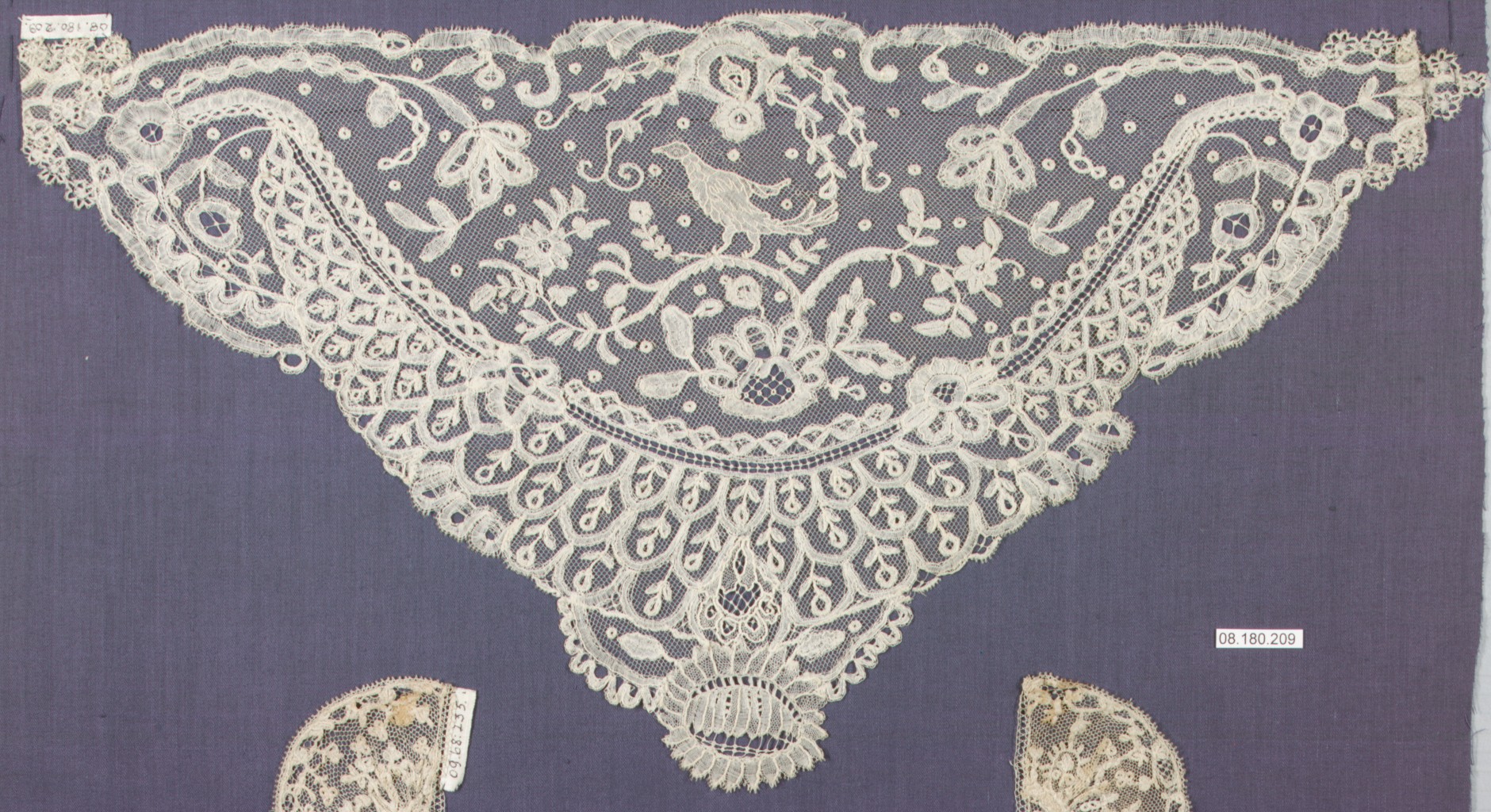
The “Material: Applied” component of the study is where the lab’s technical virtuosity shines. The fragments are not merely placed onto a garment; they are integrated through a complex process of structural alchemy. Katherine Fashion Lab’s atelier employs a combination of traditional hand-sewing techniques—such as sashiko stitching from Japan and kantha quilting from Bengal—alongside cutting-edge digital fabrication. A fragment of antique Belgian lace, for instance, might be digitized, its pattern algorithmically deconstructed, and then reprinted onto a biodegradable, flexible biopolymer that mimics the original’s transparency but offers a new tensile strength. The resulting garment is a palimpsest: the original lace is present, but so is its ghost, its mathematical double, its future iteration.
This dual application of heritage and technology creates a powerful tension. The fragments are often left with their jagged edges, their fraying threads, their visible signs of age and wear. These are not flaws to be corrected but features to be highlighted. In one striking evening gown, a fragment of a 1920s Art Deco silk panel is suspended within a lattice of 3D-printed titanium, the metal’s cold precision contrasting with the silk’s organic decay. The wearer becomes a living archive, a walking museum of broken histories. The garment does not hide its construction; it celebrates its fractures. It asks the question: What does it mean to wear something that is not whole, but is, in fact, more honest for its incompleteness?
Standalone Study: The Garment as Thesis
Katherine Fashion Lab has intentionally framed this work as a “standalone study,” distinguishing it from a conventional collection or runway show. Each garment is presented as a research artifact, accompanied by a dossier that includes the fragment’s provenance, the material analysis, and the ethical framework of its acquisition. This transforms the garment from a commodity into a critical text. The wearer is not just a consumer but a participant in a scholarly discourse. The study is designed to be experienced in intimate, gallery-like settings, where the viewer can examine the fragments up close, trace the stitches, and read the accompanying notes.
This format challenges the fast-paced, seasonal nature of the fashion industry. The lab is arguing for a slower, more deliberate mode of creation and consumption. A single garment in this study can take months to complete, as the team negotiates the acquisition of fragments, collaborates with artisans, and tests new material applications. The result is a garment that is irreproducible—not because of a legal patent, but because the fragments themselves are unique and non-renewable. This scarcity is not manufactured; it is inherent. It forces a reevaluation of value in fashion: What is more precious, a perfectly new dress that can be mass-produced, or a fragment of history that can never be replaced?
Conclusion: The Fragment as Future
Katherine Fashion Lab’s “Fragment: Origin: Global Heritage. Material: Applied.” is a masterclass in conceptual couture. It does not offer easy answers or comfortable beauty. Instead, it presents a rigorous, intellectually honest exploration of how fashion can grapple with the complexities of a globalized world. By embracing the fragment, the lab rejects the myth of cultural purity and the fantasy of the finished object. It proposes that our heritage is always already broken, always in translation, always being reassembled. The garment, in this framework, is not a final statement but a working hypothesis—a provisional, beautiful, and deeply human attempt to make meaning from the pieces we have inherited. In a world of increasing fragmentation, this may be the most couture response of all: to wear our brokenness not as a mark of loss, but as a testament to our enduring capacity to create, connect, and reimagine. The fragment, in Katherine Fashion Lab’s hands, is not an end. It is a beginning.