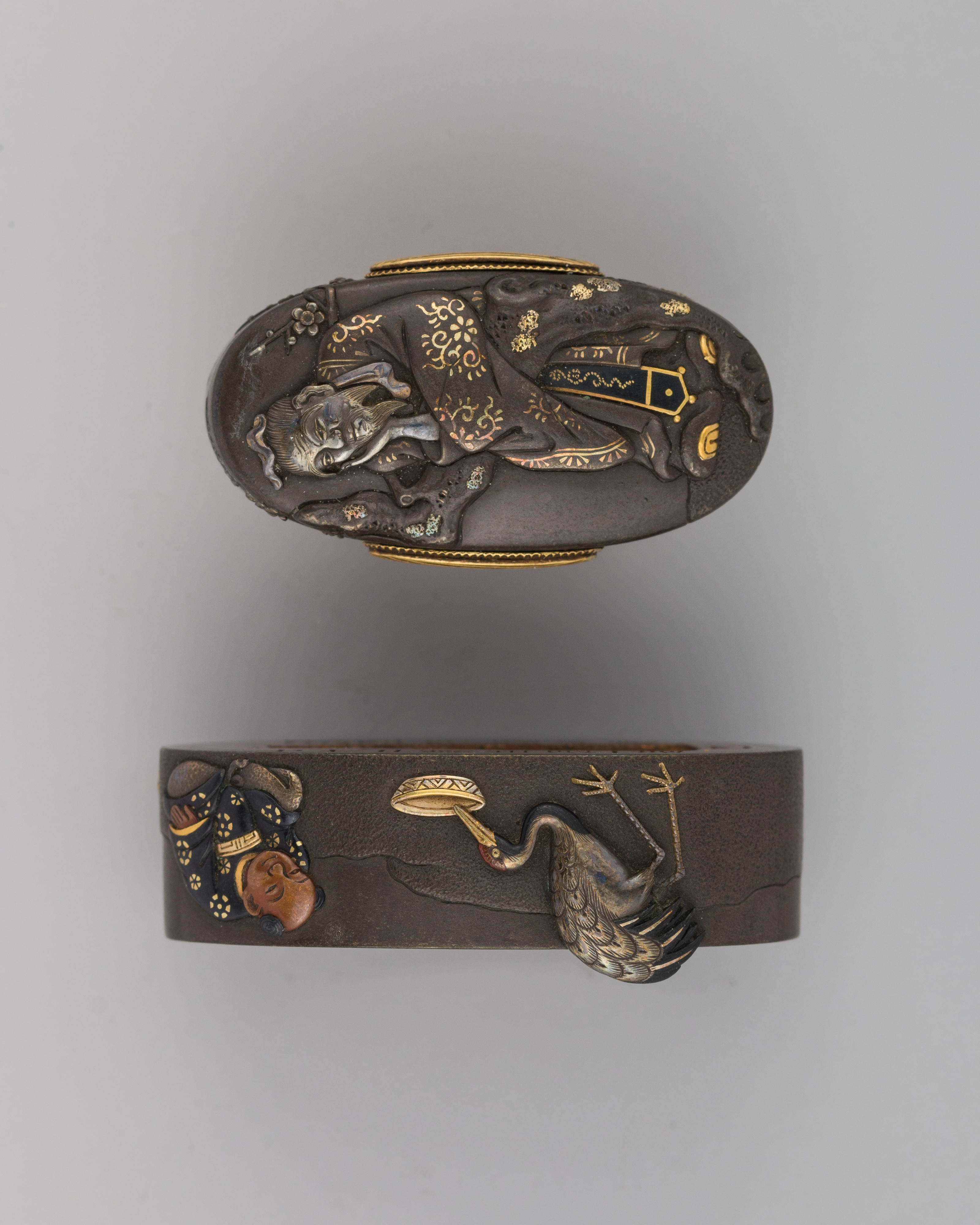
Executive Heritage Analysis: The Fuchigashira as a Strategic Artifact for Katherine Fashion Lab
This report presents a comprehensive heritage analysis of a Japanese fuchigashira (sword-hilt collar and pommel), crafted from a sophisticated alloy palette including shibuichi, shakudō, gold, silver, and copper. The object is examined through the dual lenses of historical symbolism and contemporary luxury strategy, specifically for integration into Katherine Fashion Lab’s 2026 high-end collections. As a standalone research piece, this analysis identifies the fuchigashira as a potent emblem of restrained power, spiritual discipline, and material mastery—attributes that directly inform a new paradigm of luxury adornment.
Symbolic Power and Historical Adornment
The Sword as a Vessel of Authority
In feudal Japan, the sword was not merely a weapon but a tangible symbol of the samurai’s soul and social standing. The fuchigashira, though a small component of the mount, served as a critical interface between the warrior and his blade. It was the only part of the hilt consistently visible and tactile during use, making it a focal point for personal expression and status signaling. The materials selected—shibuichi (a copper-silver alloy prized for its subtle, patinated gray tones) and shakudō (a copper-gold alloy that develops a deep, lustrous black-blue patina)—were not chosen for ostentation. Instead, they reflect a cultural preference for wabi-sabi, the aesthetic of understated elegance and imperfection. This is a critical insight for luxury strategy: true power in high-end design is often expressed through restraint and material integrity, not overt display.
Micro-Adornment as Macro-Statement
The fuchigashira’s scale—typically two to four inches in length—demands a close, intimate engagement. This micro-adornment tradition aligns with contemporary luxury trends toward personal, meaningful objects rather than logo-driven excess. The use of multiple metals (gold, silver, copper) in a single piece required extraordinary skill from the kinkō-shi (metal artisan), who would carve, inlay, and patinate each element to create a harmonious composition. For Katherine Fashion Lab, this suggests a product strategy focused on bespoke, small-scale accessories—cufflinks, brooches, or necklace pendants—that invite the wearer into a private dialogue with the object’s history and craftsmanship.
Spiritual Meaning and Material Alchemy
Metallurgical Symbolism in Japanese Culture
Each metal in the fuchigashira carries distinct spiritual and philosophical connotations. Gold represents the sun, enlightenment, and the immutable divine. Silver signifies the moon, receptivity, and the cyclical nature of existence. Copper is associated with the earth, vitality, and the transformative power of fire. The alloys shibuichi and shakudō are themselves alchemical creations—copper transformed through precise proportions of silver or gold to achieve colors that mimic natural phenomena: the gray of storm clouds, the blue-black of a raven’s wing. This material alchemy mirrors the samurai’s spiritual journey: the forging of discipline, the tempering of ego, and the pursuit of a balanced, enlightened state.
The Protective and Meditative Function
Beyond aesthetics, the fuchigashira served a talismanic role. Many designs incorporated motifs from nature—dragons, waves, chrysanthemums—that were believed to ward off evil and bring good fortune. The act of gripping the hilt, with the fuchigashira pressing against the palm, was a meditative gesture, grounding the warrior in the present moment. For a 2026 luxury audience, this spiritual functionality can be translated into design language: pieces that are not only beautiful but also serve as anchors for mindfulness, resilience, and personal protection. Katherine Fashion Lab could position such items as “armor for the modern spirit,” blending heritage symbolism with contemporary wellness narratives.
2026 High-End Luxury Strategy: From Artifact to Icon
Positioning the Fuchigashira as a Design Archetype
The Japanese fuchigashira offers Katherine Fashion Lab a unique archetype for a 2026 luxury collection: the intersection of martial precision and artistic soul. This aligns with the growing consumer demand for quiet luxury—products that speak through material quality and historical depth rather than branding. The strategy should focus on:
1. Material Storytelling: Each piece should be accompanied by a detailed provenance of its metals, explaining the patination process and the symbolic meaning of each alloy. This transforms the product into an educational artifact, appealing to the intellectually curious high-net-worth individual.
2. Limited-Edition Craftsmanship: Partner with contemporary Japanese metal artisans trained in traditional mokume-gane or zōgan (inlay) techniques. Produce no more than 50 pieces per design, each numbered and certified. This scarcity reinforces exclusivity and honors the original bespoke nature of the fuchigashira.
3. Modular Design Language: Develop a collection where the fuchigashira motif is scaled and adapted across categories: a pommel-shaped handbag clasp, a collar-inspired necklace closure, or a cuff bracelet that mimics the hilt’s grip. This creates a cohesive visual identity while allowing for functional versatility.
Target Consumer and Brand Narrative
The primary target for this strategy is the “conscious connoisseur”—an individual aged 35–55 with a deep appreciation for cultural heritage, sustainable luxury, and personal symbolism. They seek objects that tell a story of transformation, much like the alchemical metals themselves. Katherine Fashion Lab’s brand narrative should emphasize “the power of the unseen,” highlighting how the fuchigashira’s strength lies in its subtlety and its role as a silent partner to the wearer’s own authority.
Marketing channels should include curatorial storytelling via digital lookbooks that juxtapose historical katana imagery with modern styling, and private trunk shows where clients can handle raw metal samples and meet artisans. The price point should reflect the object’s dual value as art and accessory, starting at $8,000 for simple pieces and exceeding $50,000 for highly intricate, custom commissions.
Conclusion: A Strategic Asset for Heritage-Driven Luxury
The Japanese fuchigashira is far more than a historical artifact; it is a masterclass in symbolic power, material alchemy, and restrained adornment. For Katherine Fashion Lab, this analysis reveals a clear pathway to differentiate in the crowded 2026 luxury market by embracing depth over display. By translating the fuchigashira’s principles—micro-scale mastery, spiritual functionality, and metallurgical storytelling—into a cohesive product and brand strategy, the Lab can capture a discerning audience seeking meaning, craftsmanship, and quiet authority. This is not a trend; it is a return to the foundational values of luxury: time, skill, and the enduring power of a well-wrought object.