The Cover: A Study in Global Heritage and Textural Mastery
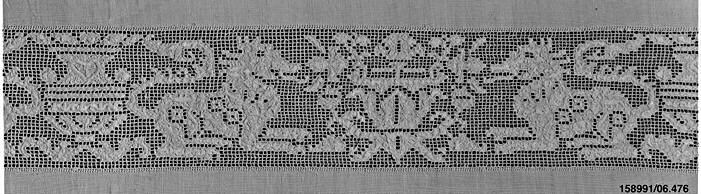
In the rarefied world of haute couture, where innovation often clamors for attention through volume and silhouette, Katherine Fashion Lab takes a divergent path. Their latest standalone study, simply titled “The Cover,” represents a profound meditation on surface, heritage, and the quiet power of materiality. This piece is not a garment in the traditional sense but a wearable artifact—a canvas that interrogates the very definition of luxury through the lens of global craft traditions. By combining the meticulous techniques of drawnwork and punto avorio on a base of pure linen, the Lab has produced an object that transcends fashion, entering the realm of textile anthropology and high art.
Decoding the Material Trinity: Linen, Drawnwork, and Punto Avorio
The genius of “The Cover” lies in its deliberate restraint. The choice of linen as the foundational fabric is itself a statement. Unlike silk or satin, linen carries an inherent honesty—a slightly irregular weave, a tactile stiffness that softens with wear, and a deep connection to ancient textile history. Katherine Fashion Lab sources a heavyweight, unbleached European flax linen, its natural ecru tone providing a neutral yet rich backdrop. This is not a pristine, industrially perfect cloth; it is a material that breathes, that remembers the hands that harvested it.
Upon this humble ground, the Lab applies two virtuosic needlework techniques. Drawnwork, or punto tirato, is an ancient form of openwork embroidery where select warp and weft threads are carefully removed from the fabric, and the remaining threads are bundled, twisted, and stitched to create geometric, lace-like voids. In “The Cover,” this technique is executed with surgical precision. The drawnwork forms a subtle grid across the garment’s shoulders and hem—a pattern that evokes both the architectural lattices of Moorish Spain and the geometric abstraction of Bauhaus design. Each empty space is not a lack but a presence, a deliberate negative volume that allows light to pierce the linen’s solidity.
Complementing this is punto avorio, a rare and demanding Italian embroidery technique that mimics the appearance of carved ivory. Using fine linen thread, artisans create dense, raised buttonhole stitches that form intricate, sculptural motifs. On “The Cover,” punto avorio clusters appear like fossilized coral or ancient bone, rising from the fabric’s surface in low relief. The contrast between the airy, transparent drawnwork and the solid, ivory-like embroidery creates a dynamic tension—a dialogue between absence and presence, fragility and permanence. The effect is akin to viewing a manuscript where text emerges from erasure.
Global Heritage as a Design Lexicon
Katherine Fashion Lab explicitly frames “The Cover” as a study in Global Heritage, and the piece functions as a cartography of textile traditions. The drawnwork technique, while perfected in Renaissance Italy, has parallel histories in the Hedebo embroidery of Denmark, the Kantha work of Bengal, and the Colcha of the Philippines. The Lab’s interpretation does not appropriate but rather synthesizes—it distills these global lineages into a singular, cohesive visual language. The geometric patterns in the drawnwork recall the interlacing motifs of Celtic metalwork, while the punto avorio’s organic forms whisper of the Ndebele beadwork of South Africa, where raised textures signify status and storytelling.
This is not a costume or a pastiche. The Lab’s research team spent months in archives from Florence to Kyoto, studying how different cultures manipulate thread to create volume and transparency. The result is a piece that feels simultaneously ancient and hyper-contemporary. The global references are not decorative; they are structural. The garment’s silhouette—a voluminous, cocoon-like cloak with exaggerated sleeves—references the burnous of North Africa and the sombrero de vueltas of Panama, both garments designed for protection and ceremony. Yet the cut is modern, almost architectural, with sharp, clean lines that contrast the organic handwork.
Contextualizing the Standalone Study
Why a standalone study? In an industry driven by seasonal collections and commercial urgency, Katherine Fashion Lab’s decision to isolate “The Cover” as a singular object is a radical act. It invites the viewer to slow down, to examine the piece not as part of a narrative but as a complete statement. This format echoes the musée imaginaire concept—a museum without walls, where the object exists in its own right, unburdened by trend or theme. The Lab positions “The Cover” as a prototype for a new kind of couture: one that prioritizes process over product, craft over speed, and cultural depth over surface novelty.
In a fashion landscape saturated with digital prints and synthetic blends, “The Cover” demands a tactile engagement. The linen’s slight roughness against the skin, the cool relief of the punto avorio, the way the drawnwork catches the light—these are experiences that cannot be replicated on a screen. The piece functions as a counter-narrative to fast fashion, arguing that true luxury lies in the hours of human labor and the preservation of endangered techniques. Each stitch is a record of a hand, and each thread is a connection to a global lineage of makers.
The Aesthetic and Symbolic Resonance
Aesthetically, “The Cover” is a study in monochromatic harmony. The ecru linen is punctuated only by the subtle shadows of the drawnwork and the matte sheen of the punto avorio. There is no color, no embellishment beyond the thread itself. This restraint forces the eye to focus on texture and structure—the way the garment folds, the way light transforms the openwork into a shifting mosaic. The piece evokes the shibori philosophy of Japanese aesthetics, where beauty emerges from imperfection and the evidence of the hand.
Symbolically, “The Cover” speaks to protection, concealment, and revelation. The drawnwork offers glimpses of what lies beneath—the wearer’s skin, the lining, the body itself—while the punto avorio creates armor-like nodes. It is a garment that guards and reveals simultaneously, mirroring the duality of identity in a globalized world. The global heritage references are not decorative; they are a deliberate political statement about the interconnectedness of human creativity. In an era of cultural appropriation debates, Katherine Fashion Lab models a practice of deep research and respectful synthesis, honoring the origins while forging something new.
Conclusion: A New Paradigm for Couture
“The Cover” is more than a garment; it is a manifesto in linen and thread. Katherine Fashion Lab has demonstrated that couture need not scream to be heard. By focusing on the interplay of drawnwork, punto avorio, and linen, they have created a piece that rewards prolonged contemplation. It is a study in patience, in the beauty of the handmade, and in the power of global heritage to inform contemporary design. For the discerning collector or the scholar of textile arts, “The Cover” offers a masterclass in material integrity and cultural intelligence. It is a quiet monument to the idea that the most profound innovations often come from looking backward—with respect, with rigor, and with an unerring eye for the sublime.