The Language of Fragments: Deconstructing Global Heritage Through Needle Lace
In the rarefied world of haute couture, where fabric is both medium and message, Katherine Fashion Lab’s latest standalone study, “Fragment,” emerges as a profound meditation on memory, loss, and the enduring power of craft. This collection, or more accurately, this conceptual artifact, eschews the seasonal frenzy of the fashion calendar. Instead, it presents a singular, immersive analysis of how a single material—needle lace—can serve as a repository for global heritage. The subject, “Fragment,” is not merely a theme; it is a structural principle, a philosophical stance that interrogates how we piece together identity from the remnants of the past.
Needle Lace: A Material History of Resilience
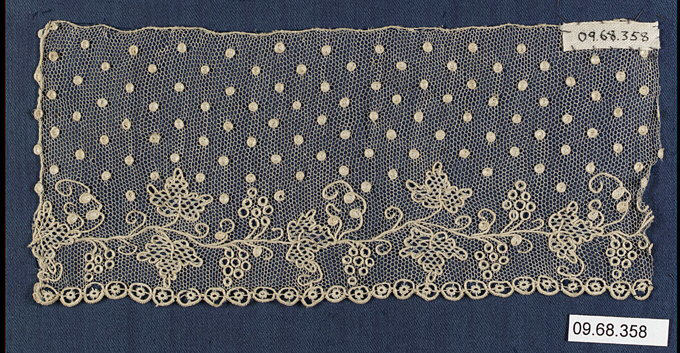
To understand the gravitas of this study, one must first appreciate the technical and historical weight of needle lace. Unlike bobbin lace, which is braided, needle lace is constructed stitch by stitch with a needle and thread, often over a parchment pattern that is later dissolved. This technique, perfected in 16th-century Venice and later adopted across Europe, the Middle East, and Asia, is a testament to human patience and precision. Each loop, each buttonhole stitch, is a deliberate act of creation. In the context of “Fragment,” Katherine Fashion Lab elevates this painstaking process from mere decoration to a conceptual framework.
The choice of needle lace is strategic. It is inherently fragile yet paradoxically durable; it can be repaired, re-embroidered, and passed down through generations. This duality mirrors the experience of global heritage itself—a patchwork of traditions that are constantly being mended, reinterpreted, and sometimes torn apart. The lab’s artisans, trained in both European and Asian lace-making traditions, have sourced threads from silk cocoons in Japan, linen from Flanders, and even recycled metallic filaments from antique saris. This material syncretism is not decorative; it is a deliberate narrative device, embedding the DNA of multiple cultures into a single, gossamer-thin surface.
The Fragment as a Structural and Philosophical Principle
In “Fragment,” the garment is not a whole but a collection of partial forms. A bodice might be composed of five separate lace medallions, each representing a distinct cultural motif—a Celtic knot, a Mughal floral arabesque, a Chinese dragon scale, a Venetian punto in aria, and a North African geometric pattern. These medallions are not sewn together seamlessly; they are connected by visible, hand-stitched seams that resemble scar tissue. This is a radical departure from the couture ideal of the “invisible finish.” Here, the fragment is celebrated, not hidden. The seams become the story, the points of fracture where heritage collides and coalesces.
This approach challenges the conventional Western narrative of fashion as a linear progression toward perfection. Instead, Katherine Fashion Lab proposes that beauty lies in the incomplete, the broken, and the reassembled. The study draws on the Japanese aesthetic of kintsugi—the art of repairing broken pottery with gold lacquer—but applies it to textile form. The gold threads in the lace are not merely ornamental; they are the “golden seams” that honor the history of each fragment, acknowledging that the whole is more meaningful because of its prior disintegration.
Global Heritage: A Tapestry of Borrowed and Lost Traditions
The “Global Heritage” origin of this study is not a superficial nod to multiculturalism. It is a rigorous investigation into how needle lace has been a vehicle for cultural exchange and, at times, cultural erasure. The lab’s research team spent months in archives in Venice, Istanbul, and Varanasi, studying how lace patterns traveled along trade routes, were adapted by colonized peoples, and sometimes were lost altogether. One fragment in the collection, for instance, is a reconstruction of a 17th-century “reticella” lace pattern that was originally made in Goa, India, by Portuguese nuns using local cotton. The pattern, a fusion of European geometric grids and Indian floral motifs, was nearly extinct. The lab’s artisans recreated it from a single surviving photograph, using thread dyed with indigo and pomegranate rind—a nod to the subcontinent’s pre-colonial dyeing traditions.
This act of reclamation is central to the study. The fragment is not a souvenir of a lost past; it is a living document. Each piece of lace in the collection is accompanied by a “heritage passport”—a small booklet that traces the pattern’s origin, the cultural context of its motifs, and the hands that made it. This transforms the garment from a commodity into an artifact of global memory. The consumer, or more accurately the “custodian,” is invited to engage with the piece not as a fashion statement but as a responsibility.
Contextualizing the Standalone Study: A Departure from the Commercial
By framing “Fragment” as a standalone study, Katherine Fashion Lab deliberately removes the collection from the pressures of commercial viability. There is no lookbook, no runway show, no retail price point. Instead, the study is presented in a white cube gallery space, where each fragment is mounted on a lightbox, illuminated from behind to reveal the intricate structure of the lace. The viewer is encouraged to walk around each piece, to see the reverse side—the knots, the loose ends, the tiny imperfections that are typically hidden in couture. This is a radical act of transparency, both literal and metaphorical.
The standalone format also allows for a deeper intellectual engagement. The lab has published a companion monograph that includes essays by textile historians, anthropologists, and conservationists. One essay, for example, examines how the “fragment” aesthetic parallels the digital age’s fragmentation of identity—how we are all, in a sense, needle-lace beings, stitched together from bits of culture, memory, and aspiration. Another essay argues that the study is a form of “slow fashion” in its most extreme iteration: a single fragment can take an artisan six months to complete, and the entire study represents over 10,000 hours of labor. This is not a product; it is a protest against the disposability of modern apparel.
The Future of Couture as Curated Memory
“Fragment” by Katherine Fashion Lab is not a collection to be worn in the traditional sense. It is a meditation on what couture can become when it is untethered from the body and tethered to history. The needle lace, with its delicate yet resilient structure, becomes a metaphor for how we hold onto the past—not as a seamless narrative, but as a series of precious, fragile, and often broken pieces that we must carefully stitch together with our own hands.
For the MBA-level fashion professional, this study offers a compelling case for redefining luxury. Luxury, in this context, is not about rarity or price; it is about depth of meaning, ethical provenance, and the preservation of intangible heritage. The fragment, in its incompleteness, challenges the industry to move beyond the polished surface and embrace the messy, beautiful complexity of global culture. It is a call to action for curators, designers, and consumers alike: to become custodians of fragments, not just collectors of wholes.
In the end, “Fragment” is a masterclass in how material, technique, and concept can converge to create a work of art that is both deeply personal and universally resonant. It is a reminder that the most powerful fashion does not simply cover the body; it reveals the soul of a world in pieces, waiting to be reassembled with care.