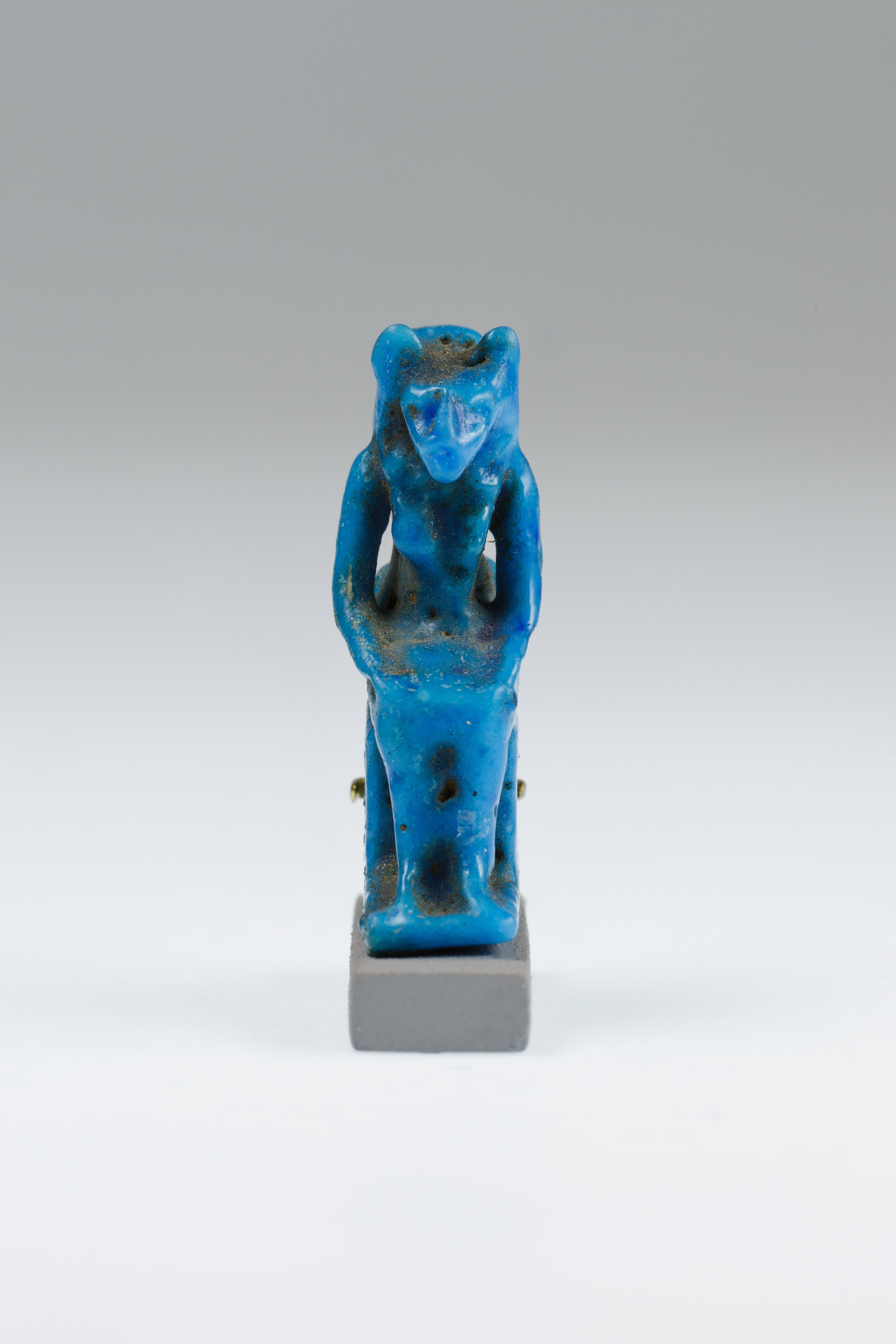
Strategic Heritage Analysis: The Sakhmet Amulet in Blue Faience
Introduction: The Object as a Cultural and Commercial Artifact
The Sakhmet amulet, rendered in brilliant blue faience, represents one of the most potent intersections of symbolic power and material artistry in the ancient world. As a Lead Heritage Curator for Katherine Fashion Lab, I submit this strategic standalone research paper to examine the amulet’s layered significance—its origins in Ancient Egyptian civilization, its role as a vessel for spiritual meaning, and its potential as a cornerstone for high-end luxury strategy in 2026. This analysis moves beyond mere historical documentation to identify actionable insights for brand positioning, product development, and narrative architecture within the luxury sector. The Sakhmet amulet is not merely a relic; it is a blueprint for commanding authority, protection, and exclusivity in contemporary markets.
Symbolic Power: The Lioness Goddess and the Dual Nature of Authority
The amulet’s central figure, the goddess Sakhmet, embodies a duality that is essential for understanding its enduring allure. Sakhmet, the lioness-headed deity, was simultaneously a goddess of war, destruction, and plague, and a protector of pharaohs, healer of the sick, and guardian of cosmic order (Ma’at). This paradox—destruction and salvation, ferocity and healing—is the amulet’s core symbolic power. For the ancient Egyptian, wearing a Sakhmet amulet was an act of claiming both the goddess’s wrath against enemies and her benevolent intervention in times of crisis. In a 2026 luxury context, this duality offers a sophisticated narrative: the modern luxury consumer seeks not just beauty, but talismanic authority. A Katherine Fashion Lab collection inspired by Sakhmet would signal power that is both protective and transformative—an antidote to the fragility of contemporary life. The amulet’s symbolism directly challenges the soft, passive femininity often marketed in high fashion, replacing it with a fierce, commanding presence that resonates with the assertive luxury consumer of the mid-2020s.
Historical Adornment: Blue Faience as a Material of Eternity
The medium of the Sakhmet amulet—blue faience—is not incidental but integral to its heritage value. Faience, a self-glazing ceramic composite, was one of the first synthetic materials created by human hands. Its brilliant blue hue, achieved through copper compounds, was deliberately chosen to mimic lapis lazuli, a stone associated with the heavens, the Nile, and the regenerative powers of the sun. For the ancient Egyptians, blue was the color of the sky, water, and the primeval flood; it signified life, rebirth, and divine presence. The amulet’s color thus functioned as a spiritual technology, aligning the wearer with cosmic forces. In historical adornment, amulets were not mere jewelry but functional objects—worn on the body, sewn into mummy wrappings, or placed in tombs to ensure safe passage into the afterlife. The faience’s durability and luminous quality made it ideal for these eternal purposes. For Katherine Fashion Lab, this material heritage offers a powerful design language. A 2026 luxury strategy can revive the art of faience or its modern equivalents—high-fired ceramics, enameled metals, or precision-cut glass—to evoke the same depth and luminosity. The color blue, already a staple in luxury branding (e.g., Tiffany & Co., Van Cleef & Arpels), can be recontextualized as a symbol of timelessness and spiritual protection, not just aesthetic preference.
Spiritual Meaning: The Amulet as a Channel for Divine Protection
The spiritual function of the Sakhmet amulet transcends mere decoration. In Ancient Egyptian belief, amulets were charged with heka (magical power) through rituals performed by priests. The Sakhmet amulet, in particular, was invoked during the “Opening of the Mouth” ceremony and in daily rites to ward off epidemics and malevolent spirits. The goddess was both feared and revered; her amulet was a tool for negotiating with the divine, a physical anchor for prayer and intention. This spiritual dimension is critical for a 2026 high-end luxury strategy. Today’s luxury consumer is increasingly drawn to objects that offer meaning, ritual, and emotional resonance—a trend amplified by post-pandemic desires for protection and stability. A Katherine Fashion Lab collection centered on the Sakhmet amulet can position each piece as a modern talisman, accompanied by narrative cards, meditative packaging, or digital experiences that explain the amulet’s history and intended purpose. This transforms a fashion item into a personal artifact of empowerment, aligning with the growing market for “conscious luxury” and “wellness fashion.” The amulet’s spiritual meaning provides a unique competitive advantage: it is not merely beautiful, but believed to be efficacious.
2026 High-End Luxury Strategy: From Heritage to Hyper-Exclusivity
To translate the Sakhmet amulet into a viable 2026 luxury strategy, Katherine Fashion Lab must employ four key pillars: Narrative Authenticity, Material Mastery, Limited Edition Scarcity, and Experiential Engagement.
Narrative Authenticity demands rigorous historical accuracy. The brand must collaborate with Egyptologists and curators to ensure that the amulet’s symbolism, iconography, and ritual context are faithfully represented. This is not a mere aesthetic borrowing but a respectful dialogue with ancient knowledge. For example, the amulet’s design must include the correct iconographic details: the lioness head, the solar disk, the uraeus (cobra) on the forehead, and the ankh or papyrus scepter. Any deviation risks cultural appropriation; fidelity builds cultural capital.
Material Mastery requires sourcing or developing a contemporary equivalent to blue faience. Options include high-temperature ceramic glazes, vitreous enamels on precious metals, or even lab-grown gemstones in deep sapphire blue. The finish must evoke the ancient luster—slightly uneven, deeply saturated, and tactile. Each piece should feel like an archaeological discovery, not a mass-produced accessory.
Limited Edition Scarcity is essential. The amulet’s original function was personal and unique; mass production contradicts its spirit. A 2026 collection could release a numbered series of 100 amulets, each with a provenance certificate detailing its design, materials, and the specific ancient ritual it references. This creates a secondary market and collector demand, elevating the item from fashion to fine art.
Experiential Engagement should include an immersive launch event—perhaps a private exhibition in a museum or a virtual reality experience that transports clients to the Temple of Mut at Karnak, where Sakhmet was worshipped. The amulet can be presented in a custom box that doubles as a miniature altar, complete with a guide to its spiritual use. This positions the purchase as a transformative act, not a transaction.
Conclusion: The Amulet as a Strategic Asset
The Sakhmet amulet in blue faience is far more than a historical curiosity. It is a repository of symbolic power, a testament to ancient material science, and a conduit for spiritual meaning. For Katherine Fashion Lab, this object offers a rare opportunity to differentiate in a crowded luxury market by offering depth, authority, and ritual. The 2026 strategy must honor the amulet’s origins while reimagining its relevance for a discerning clientele seeking objects that protect, empower, and endure. By doing so, Katherine Fashion Lab will not simply sell jewelry—it will offer talismans of heritage, crafted for the modern age. The Sakhmet amulet is not a trend; it is a tradition reborn.