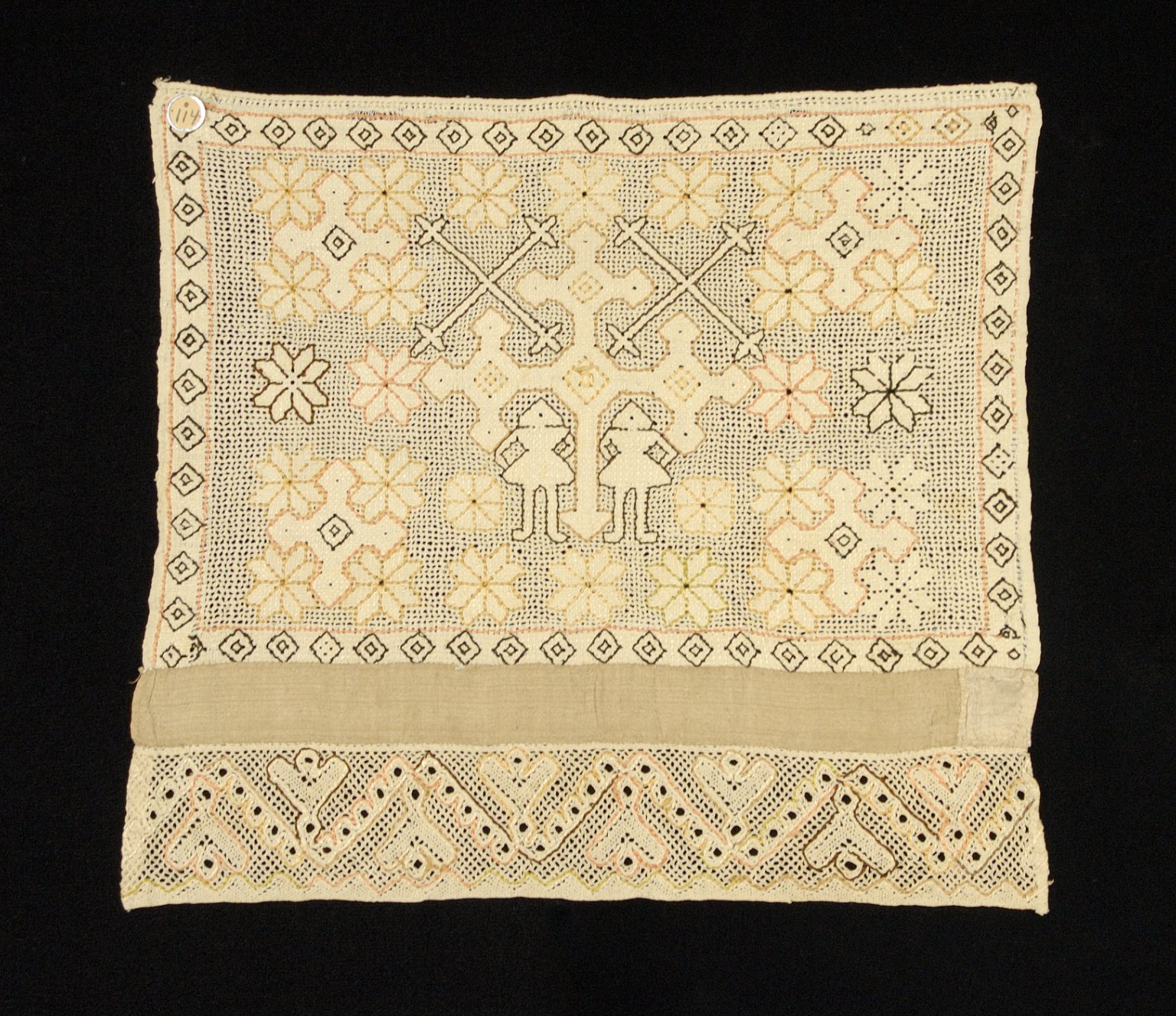
Deconstructing the Border: A Couture Analysis of the Towel as a Heritage Artefact
Within the lexicon of domestic textiles, few items possess the humble ubiquity and profound cultural resonance of the towel border. Often relegated to the realm of pure utility, its decorative terminus—the band of drawnwork, embroidery, or crochet—represents a microcosm of global heritage, artisanal intelligence, and narrative depth. For Katherine Fashion Lab, this standalone study posits the towel border not as a mere functional edge, but as a foundational couture principle: a concentrated site of craftsmanship, material dialogue, and symbolic coding that challenges conventional hierarchies between the domestic and the haute, the vernacular and the avant-garde. Our analysis dissects its constituent elements—origin, materiality, and technique—to extract a new framework for luxury.
Origin: The Global Tapestry of the Threshold
The towel border is a truly global heritage artefact, its variations mapping onto geographies of need, ritual, and identity. From the intricate hardanger of Norwegian linen to the vibrant cross-stitch of Palestinian tatreez, from the stark elegance of Japanese sashiko-inspired reinforcement to the elaborate whitework of Eastern European trousseaus, the border serves as a cultural signature. It operates on a threshold, both literally—marking the edge of the textile—and metaphorically, signifying transitions between the body and the world, wetness and dryness, purity and use. This global omnipresence underscores a universal human impulse to adorn even the most utilitarian objects, embedding daily rituals with meaning and beauty. For couture, this recontextualizes "inspiration" from exoticized appropriation to a studied reverence for localized vernacular languages of design, each stitch encoding generations of knowledge.
Material Dialectic: The Rigor of Linen, the Fluidity of Silk
The material composition of the classic heritage towel—a linen ground with silk embellishment—establishes a masterful dialectic central to couture philosophy. Linen, derived from the flax plant, provides the structural integrity: a strong, absorbent, and enduring canvas. Its natural slubs and textured weave speak of an honest, tactile materiality. It is fabric as foundation, representing resilience and practicality.
Conversely, silk appears as the agent of luxury and expression within the border. Its luminous sheen and fluid drape contrast deliberately with linen’s matte austerity. This is not mere decoration; it is a strategic deployment of material value. The silk thread, often used in embroidery or as the weft in drawnwork, captures light, draws the eye, and elevates the functional zone of the border into a field of visual prestige. This conscious pairing—the robust and the delicate, the humble and the precious—is a quintessential couture strategy. It teaches us that true luxury lies not in uniform opulence, but in the intelligent, contrasting dialogue between materials, where each is allowed to express its inherent nature to create a richer, more nuanced whole.
Technique as Language: Drawnwork, Embroidery, and Crochet
The techniques employed in border creation constitute a sophisticated language of their own, each with distinct grammatical rules and expressive potential.
Drawnwork, or pulled thread work, is an exercise in negative space and structural poetry. By selectively removing warp or weft threads from the linen ground and manipulating the remaining ones into geometric patterns, the artisan creates lace-like effects. This is a technique of revelation and subtraction, proving that ornamentation can arise from the fabric's very deconstruction. It speaks to a couture mindset where fabric is not a passive surface but an active, participatory medium.
Embroidery is the narrative layer. Whether it is the symbolic motifs of Slavic folklore (birds for happiness, roses for love) or the abstract geometries of Anatolian patterns, embroidery transforms the border into a storytelling device. Each stitch is a deliberate, time-intensive deposit of meaning and skill. In couture terms, it represents the ultimate value of the hand, the unique signature that cannot be replicated by machine, embedding the garment with a palpable human history.
Crochet, often used to create a separate edging then attached, introduces a dimension of three-dimensionality and intricate, self-supporting structure. It represents modular construction and mathematical complexity, building form from a single line of thread. This technique expands the border into the space beyond the fabric's edge, challenging the two-dimensional plane and offering couture lessons in architectural embellishment and textured silhouette definition.
Couture Synthesis: From Domestic Border to Conceptual Framework
For Katherine Fashion Lab, the towel border is far more than a nostalgic motif; it is a generative conceptual framework. Its analysis yields core couture principles:
The Philosophy of the Edge: In couture, the edge—the hem, neckline, cuff—is a critical site of focus and finishing. The heritage border dedicates disproportionate artistic energy to this terminus, teaching us to treat every edge as a premier opportunity for declaration and detail.
Ornament with Intent: Every drawn thread, every silk stitch in a towel border served a purpose—to reinforce, to identify, to protect (through symbolism), or to display skill. This moves ornamentation beyond arbitrary appliqué to integral, intelligent design. Couture embellishment must be equally purposeful, its beauty rooted in technical and narrative reasoning.
The Valorization of the Vernacular: This study dismantles the hierarchy that places "folk art" below "high fashion." The precision, symbolism, and endurance of these borders represent a pinnacle of craft. Couture can engage in a dialogue with this heritage not through pastiche, but through a deep understanding of its material and technical logic, translating its ethos into contemporary expressions.
In conclusion, the humble towel border emerges from this standalone study as a profound treatise on material contrast, technical mastery, and symbolic communication. It reminds us that profound beauty and intelligence reside in the objects of everyday life, waiting to be re-interpreted through the lens of high craft. For the modern couturier, it offers a timeless lesson: that the greatest luxury is often found in the meticulous, meaningful, and masterful treatment of the seemingly mundane.