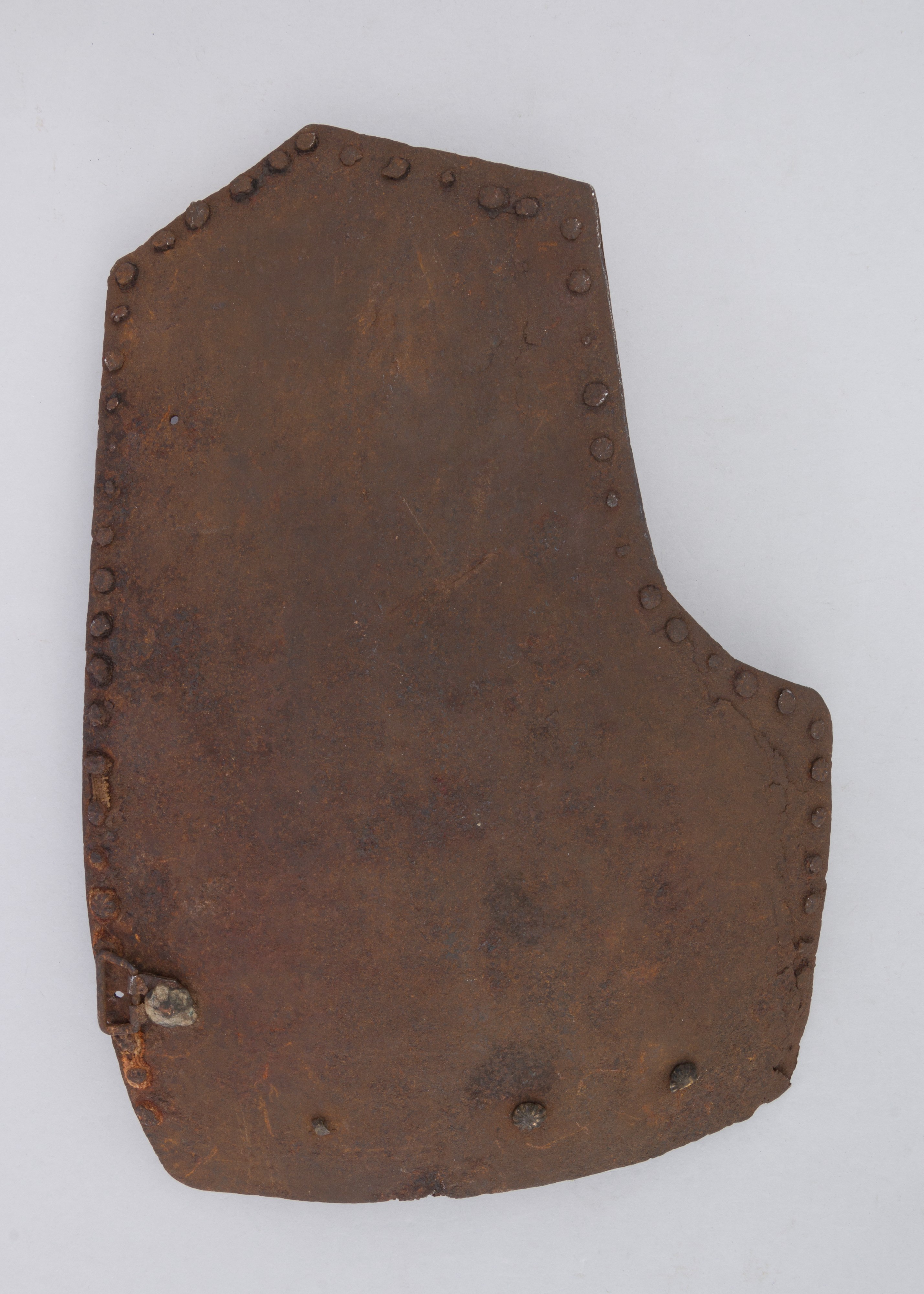
The Brigandine Plate: A Study in Italian Renaissance Armor as Proto-Couture
In the lexicon of fashion history, the term “couture” is often reserved for the bespoke, hand-crafted garments of the late 19th and 20th centuries. Yet, a rigorous analysis of material culture reveals that the principles of haute couture—meticulous craftsmanship, structural innovation, and a dialogue between form and function—were practiced centuries earlier in the armories of Renaissance Italy. At Katherine Fashion Lab, we examine the brigandine plate, a distinctive form of body armor originating in 15th-century Italy, as a standalone artifact of extraordinary design intelligence. This analysis deconstructs the brigandine’s material composition—iron alloy, copper alloy, and bast fiber textile—to illuminate its role not merely as a protective shell, but as a sophisticated garment that prefigured the structural logic of modern fashion.
Historical Context: The Italian Armorer as Couturier
The Italian Renaissance was a crucible of artistic and technological innovation, where the lines between artisan, engineer, and artist blurred. Armorers in Milan, Brescia, and Florence were not mere metalworkers; they were structural designers who understood anatomy, ergonomics, and the psychology of power. The brigandine, unlike the rigid plate armor of the knight, was a composite garment—a textile jacket lined with overlapping small iron plates, often riveted with copper alloy details. This hybrid construction allowed for unprecedented mobility, a critical advantage in the evolving battlefield tactics of the 15th century, where infantry and cavalry required both protection and agility.
From a couture perspective, the brigandine represents an early exploration of soft tailoring combined with hard structural elements. The armorer acted as a couturier, taking precise measurements of the wearer’s torso to ensure a close, almost second-skin fit. The result was a garment that moved with the body, distributing weight evenly while maintaining a formidable silhouette. This is the same principle that drives modern corsetry, tailored blazers, and performance wear.
Material Analysis: The Triad of Iron, Copper, and Bast Fiber
To understand the brigandine’s genius, one must examine its three core materials as a strategic triad, each selected for its specific functional and aesthetic properties.
Iron Alloy: The primary structural component, the iron alloy plates, were not uniform slabs but carefully shaped scales, often overlapping from top to bottom, like roof tiles. This configuration allowed for deflection of blows, as a sword or arrow would slide across the layered surface rather than penetrating directly. The iron was typically hardened through quenching and tempering, a metallurgical process that created a balance between strength and flexibility. In couture terms, the iron plates functioned like boning in a corset—hidden yet essential, providing the garment’s architectural integrity without sacrificing movement.
Copper Alloy: The copper alloy, often brass or bronze, served multiple roles. First, it was used for the rivets that secured the plates to the textile backing, creating a durable bond that could withstand repeated stress. Second, copper alloy was employed for decorative borders, edging, and sometimes the exposed rivet heads, which were arranged in geometric patterns. This was not mere ornamentation; it was a strategic visual language. The gleaming copper against the muted iron and textile signaled wealth, status, and the wearer’s connection to a sophisticated urban culture. In modern couture, this mirrors the use of metal hardware on a luxury handbag or a Chanel jacket—functional elements elevated to design signatures.
Bast Fiber Textile: The outermost layer was typically a textile woven from bast fibers—flax, hemp, or nettle. These fibers were chosen for their tensile strength, breathability, and ability to accept dye. The textile was not merely a cover; it was the interface between the metal and the body, absorbing sweat, reducing chafing, and providing a canvas for heraldic colors or personal emblems. The bast fiber also acted as a shock absorber, dissipating the force of a blow across a wider area. In contemporary fashion, this is analogous to the lining of a tailored suit—invisible but essential for comfort and longevity. The choice of bast fiber over wool or silk underscores the garment’s pragmatic luxury: it was expensive enough to signify status but robust enough for the rigors of combat.
Structural Innovation: The Art of Overlap and Articulation
The brigandine’s most sophisticated design feature is its system of overlapping plates. Unlike a solid breastplate, which restricts torso rotation, the brigandine’s plates are arranged in horizontal rows, each row overlapping the one below. This creates a flexible exoskeleton that allows the wearer to bend, twist, and raise their arms. The plates are riveted at their top edges only, leaving the lower edges free to slide over the plate beneath. This is a direct precursor to the articulated joints found in modern armor and even in the panel construction of a tailored dress, where fabric is cut and sewn to follow the body’s curves.
From a couture analysis standpoint, the brigandine demonstrates a profound understanding of tension and release. The rivets create fixed points of tension, while the sliding plates allow for release and movement. This is the same principle used in draping, where fabric is pinned at strategic points to create volume or shape. The armorer’s challenge was to balance protection (which requires rigidity) with mobility (which requires flexibility). The solution—a layered, riveted system—is a masterclass in material economy, using minimal weight to achieve maximum coverage.
Aesthetic Considerations: The Silhouette of Power
Beyond function, the brigandine was a garment of visual authority. Its silhouette—a close-fitting torso that flared slightly at the waist—created a V-shaped upper body, emphasizing the shoulders and narrowing the waist. This is the same silhouette that would dominate Western fashion for centuries, from the doublet of the 16th century to the power suit of the 1980s. The copper alloy rivets, often arranged in symmetrical patterns, added a rhythmic visual texture that broke up the monotony of the iron and textile, drawing the eye across the garment’s surface.
The bast fiber textile was often dyed in deep, saturated colors—crimson, indigo, or black—using expensive natural dyes. This color choice was not arbitrary; it signaled the wearer’s social and political affiliations. A crimson brigandine might indicate allegiance to a powerful merchant family or a military order, much as a modern couture gown might be commissioned in a specific color to align with a brand’s seasonal palette.
Conclusion: The Brigandine as Proto-Couture Artifact
The Italian brigandine plate is far more than a relic of medieval warfare. It is a sophisticated garment system that embodies the core tenets of couture: bespoke fit, innovative material use, structural integrity, and symbolic expression. The iron alloy provides the skeleton, the copper alloy the joints and ornament, and the bast fiber textile the skin. Together, they create a wearable architecture that anticipates the corset, the tailored jacket, and the performance garment.
At Katherine Fashion Lab, we view the brigandine as a benchmark for design excellence. Its creators understood that true protection and true elegance require the same thing: a deep, almost intuitive knowledge of the human form. In this standalone study, the brigandine stands as a testament to the enduring power of craftsmanship, material intelligence, and the unbroken line between armor and attire. It is a garment that not only defended the body but also defined it—a lesson every couturier, from the Renaissance to the present, must learn.