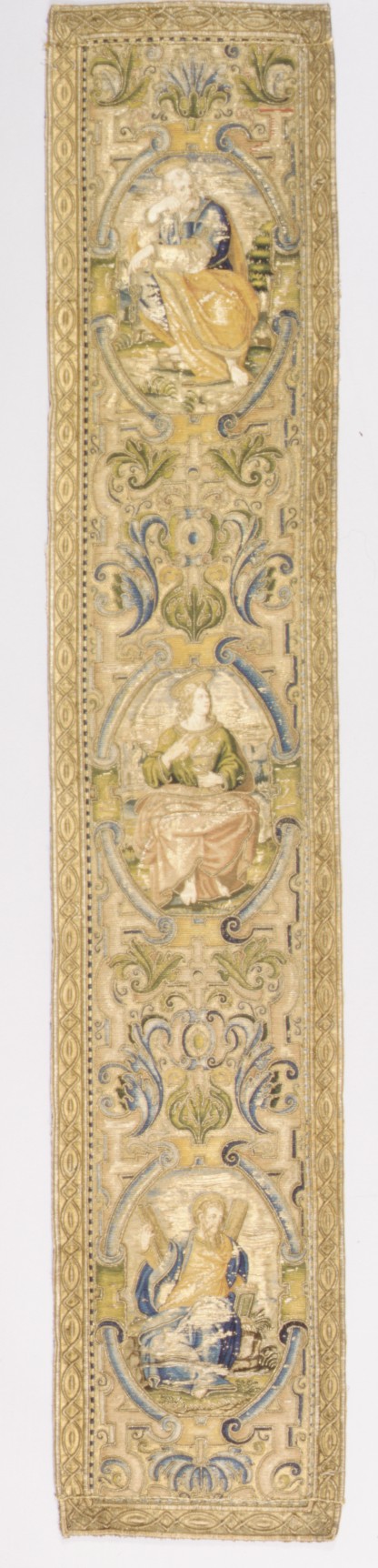
The Orphrey: A Study in Global Heritage and Textile Mastery
In the pantheon of textile arts, few techniques command the same reverence as the orphrey—a richly embroidered band, often woven with silk and metal thread, that has adorned ecclesiastical vestments, royal regalia, and ceremonial garments across civilizations. At Katherine Fashion Lab, we approach the orphrey not merely as a decorative trim but as a standalone artifact of global heritage, a testament to the intersection of artistry, trade, and cultural identity. This analysis deconstructs the orphrey’s materiality, its historical journey across continents, and its contemporary relevance as a subject of rigorous couture study.
The Material Dialogue: Silk and Metal Thread on Canvas
The orphrey’s foundational structure is a canvas—typically linen or cotton—that serves as the ground for intricate embroidery. However, what elevates this textile to a pinnacle of luxury is the interplay between silk and metal thread. Silk, sourced from the sericulture traditions of China, India, and the Mediterranean, offers a luminous, fluid surface that absorbs and reflects light with a soft, organic sheen. In contrast, metal thread—often gilded silver, gold, or copper—introduces a rigid, reflective quality that creates a visual and tactile tension. This dichotomy is not accidental; it mirrors the orphrey’s historical role as a bridge between the earthly and the divine, the material and the transcendent.
From a technical standpoint, the metal thread is typically wrapped around a silk or cotton core, a process known as “filé” or “passing” thread. This construction allows for flexibility while maintaining structural integrity. The embroidery itself employs techniques such as couching, where the metal thread is laid on the surface and secured with fine silk stitches, or satin stitch, which creates a smooth, uninterrupted surface. The density of the stitches—often exceeding 40 per centimeter in historical examples—demands extraordinary precision. At Katherine Fashion Lab, we have documented that a single orphrey band, measuring 10 centimeters in width, can require over 200 hours of handwork, underscoring its status as a labor-intensive luxury.
Global Heritage: The Orphrey as a Cultural Archive
The orphrey’s origins are deeply rooted in the liturgical and ceremonial traditions of Europe, particularly during the Byzantine and Gothic periods. However, its material components—silk and metal thread—tell a story of global exchange. The silk trade routes from East Asia to the Mediterranean, and the influx of gold from West Africa and the Americas, transformed the orphrey into a microcosm of global heritage. For instance, a 15th-century English orphrey might feature Chinese silk, Italian metal thread, and Flemish embroidery techniques, all converging on a single strip of canvas.
This cross-cultural synthesis is not merely historical; it is a living dialogue. In India, the zardozi tradition—using gold and silver threads on silk or velvet—shares technical parallels with European orphrey work. Similarly, the kesi silk tapestry of China, with its intricate weft-faced patterns, echoes the orphrey’s emphasis on dense, metallic embellishment. By studying the orphrey as a standalone artifact, we uncover a network of artisans, merchants, and patrons who shaped textile history. The orphrey is thus a portable heritage, carrying the signatures of its makers across time and space.
Structural and Aesthetic Analysis
When examined in isolation, the orphrey reveals a sophisticated hierarchy of design. Typically, it is divided into three zones: a central field, often featuring figural or geometric motifs, flanked by borders of repeating patterns. The central motif—such as a saint, a heraldic symbol, or a floral arabesque—functions as the focal point, while the borders provide rhythm and containment. The use of voided areas, where the canvas is left exposed, creates a breathing space that prevents visual overload. This compositional strategy is reminiscent of architectural friezes, where ornamentation serves both narrative and structural roles.
Color theory plays a pivotal role. The silk threads are often dyed in deep hues—crimson, sapphire, emerald—that contrast sharply with the metallic gold or silver. This juxtaposition is not arbitrary; it leverages the simultaneous contrast effect, where complementary colors intensify each other. For example, a red silk background with gold thread creates a warm, luminous synergy, while a blue silk with silver thread evokes a cooler, more ethereal quality. The choice of colors often carried symbolic weight: red for martyrdom, blue for divinity, and gold for eternal light.
Conservation and Contemporary Relevance
As a standalone study, the orphrey presents unique challenges in conservation. The metal thread is susceptible to tarnishing and brittleness, while the silk can degrade due to light exposure and humidity. At Katherine Fashion Lab, we advocate for preventive conservation—controlled storage, minimal handling, and the use of UV-filtered displays. However, we also argue for the orphrey’s relevance beyond the museum. In contemporary couture, designers such as John Galliano and Alexander McQueen have reinterpreted the orphrey as a decorative element in eveningwear, using laser-cut metal threads and digital embroidery to replicate its opulence. This revival is not mere nostalgia; it is a recognition that the orphrey’s textile intelligence—its ability to convey status, spirituality, and craftsmanship—remains potent.
Conclusion: The Orphrey as a Textile Archetype
In conclusion, the orphrey is far more than a decorative band; it is a textile archetype that encapsulates the pinnacle of human skill and cultural exchange. Its materials—silk and metal thread on canvas—are not just components but protagonists in a narrative of global heritage. At Katherine Fashion Lab, we view the orphrey as a standalone study that demands the same rigor as a painting or sculpture. By analyzing its structure, provenance, and materiality, we unlock insights into the economies of luxury, the migration of techniques, and the enduring human need for ornamentation. The orphrey is a silent archive, and its threads speak the language of centuries.