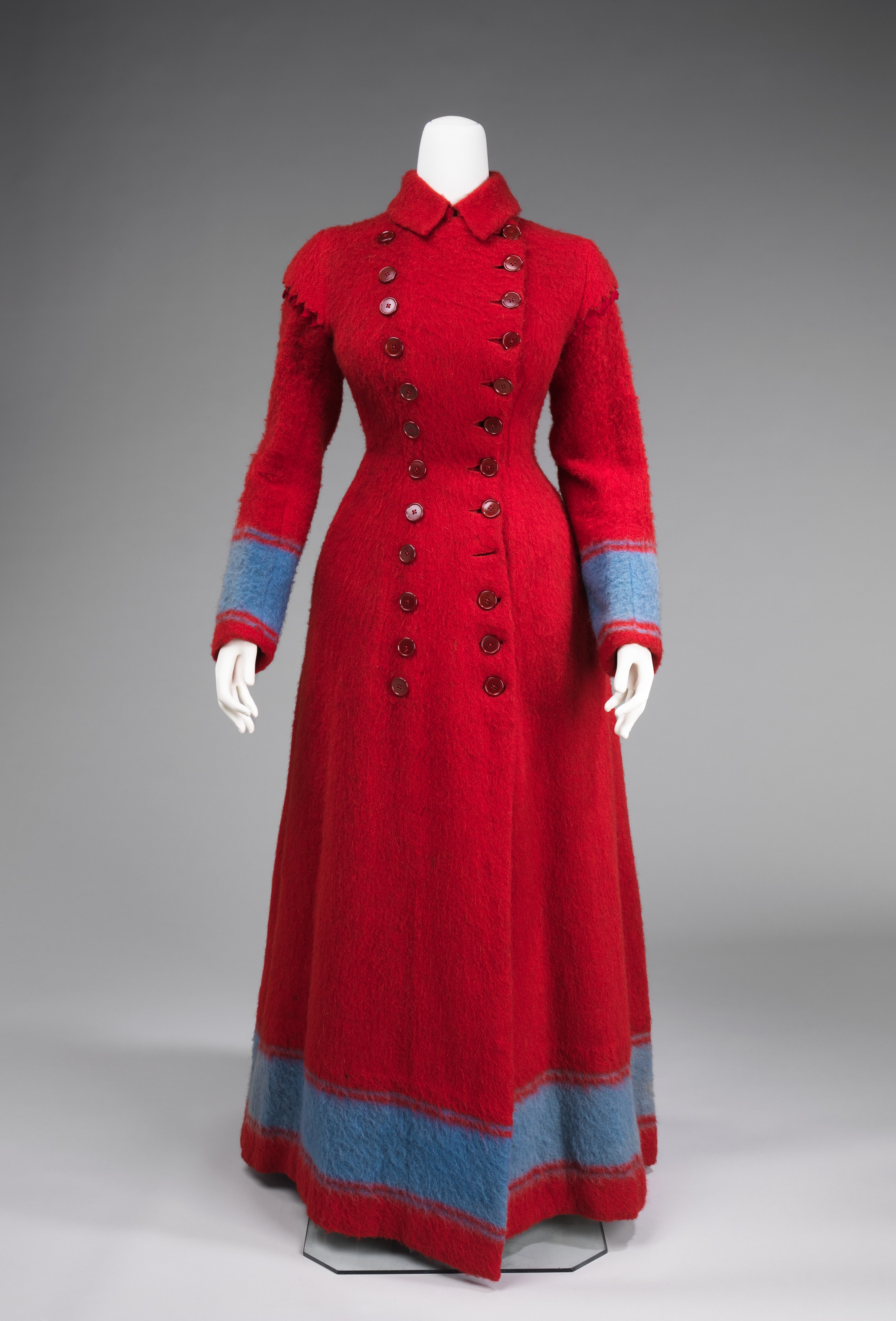
The Dressing Gown: A Couture Analysis of Material, Form, and Function
The dressing gown, often relegated to the periphery of fashion discourse as a mere item of loungewear, deserves a more rigorous examination within the context of couture. At Katherine Fashion Lab, we approach this garment not as a casual afterthought, but as a profound statement of personal ritual, material mastery, and architectural form. This analysis focuses on a specific artifact: a wool dressing gown of probable European origin, studied as a standalone piece. We dissect its construction, its historical lineage, and its potential to transcend utility into the realm of high art.
Material Provenance: The Significance of Wool
The choice of wool is the first and most critical element of this garment’s identity. Unlike silk, which suggests opulence and sensuality, or cotton, which implies simplicity and hygiene, wool brings a distinct narrative of warmth, durability, and tactile gravitas. In a couture context, wool is a material of structural integrity. It holds shape, drapes with a controlled weight, and possesses a natural memory that allows it to conform to the wearer’s body over time. This European wool, likely sourced from merino or lambswool, presents a fine, dense weave that resists pilling and offers a subtle, matte sheen. The fiber’s inherent crimp provides insulation without suffocating the skin, making it ideal for a garment designed for both repose and movement. From a sustainability perspective, wool is a renewable, biodegradable resource, aligning with contemporary couture’s shift toward enduring, responsible luxury. The material alone elevates the dressing gown from a functional cover to a textile investment.
Architectural Silhouette: Beyond the Robe
The dressing gown’s silhouette is deceptively complex. At first glance, it appears to be a simple, enveloping shape—a long, loose-fitting coat. However, a closer analysis reveals a sophisticated interplay of volume and restraint. The garment in question features a shaped collar that folds into a deep lapel, creating a visual anchor around the neckline. This is not a mere shawl collar; it is a tailored element that frames the face and shoulders, lending a sense of dignity to the wearer. The sleeves are cut with a generous width, allowing for ease of movement, but are finished with a narrow cuff that prevents the fabric from pooling at the wrists. This balance between amplitude and precision is the hallmark of couture tailoring. The length, falling just above the ankle, creates a vertical line that elongates the body, while the absence of severe darts or seams preserves the garment’s fluidity. The overall effect is one of controlled drape—a garment that moves with the body rather than against it, suggesting a quiet authority.
Construction and Craft: The Invisible Art
In a standalone study, the internal construction of this dressing gown reveals the true cost of couture. The seams are finished with a French seam or a hand-rolled edge, ensuring that no raw edges are visible, even on the interior. This is a detail that speaks to the garment’s intended longevity; it is meant to be worn and cared for over decades, not seasons. The waist is secured by a self-fabric belt, but the belt loops are reinforced with a hidden interfacing that prevents distortion under tension. The pockets, set into the side seams, are cut on the bias to prevent gaping, and are lined with a fine silk charmeuse that offers a moment of sensory contrast against the wool’s weight. The buttons, if present, are likely horn or mother-of-pearl, attached with a shank to allow for the fabric’s thickness. Every stitch, every seam allowance, is a testament to the invisible labor that defines couture. The garment does not scream its value; it whispers it through the integrity of its construction.
Cultural and Functional Context: The Ritual of Dressing
The dressing gown’s origins are deeply rooted in European domestic life, where it served as a transitional garment—worn between sleep and society, between the private and the public. In the 19th and early 20th centuries, it was a symbol of leisure and status, often worn by gentlemen in their studies or by ladies in their boudoirs. Today, its function has expanded. This wool dressing gown, studied in isolation, becomes a portable sanctuary. It is not merely for lounging; it is for reading, for writing, for contemplation. The weight of the wool provides a grounding sensation, while the generous cut allows for unrestricted movement. In an era of remote work and blurred boundaries between home and office, the dressing gown has been redefined as a uniform for focused introspection. It is a garment that demands presence, not performance. It is worn for the self, not for the audience.
Comparative Analysis: Wool Versus Other Couture Materials
To fully appreciate this garment, it is useful to compare it to dressing gowns in other materials. A silk dressing gown, for example, prioritizes sensuality and fluidity; it slides over the skin and catches light, creating a shimmering, almost theatrical effect. A cashmere version offers unparalleled softness but lacks the structural resilience of wool. A linen dressing gown is breathable but prone to wrinkling, which can read as casual or unkempt. Wool, in contrast, offers a perfect middle ground: it is warm without being heavy, structured without being stiff, and luxurious without being ostentatious. The European wool in this garment has a slight halo, a soft fuzziness that develops with wear, adding to its character. This is a material that ages gracefully, developing a patina that tells the story of its use. In couture, this aging process is not a flaw but a feature—a mark of authenticity and lived experience.
Stylistic Versatility and the Modern Wardrobe
While the dressing gown is often viewed as a single-purpose garment, this wool iteration possesses remarkable versatility. It can be layered over a simple linen shirt and trousers for a look that is both relaxed and intentional. It can be worn open, like a duster coat, over a silk slip dress for an evening of quiet elegance. It can even be cinched tightly at the waist, transforming it into a dramatic, floor-length tunic. The neutral tones of natural wool—charcoal, oatmeal, or deep navy—ensure that it integrates seamlessly into a curated wardrobe. It is a blank canvas for personal expression, allowing the wearer to project an image of understated confidence. In a world dominated by fast fashion and disposable trends, the wool dressing gown stands as a counterpoint: a slow-fashion artifact that rewards patience and care.
Conclusion: The Dressing Gown as Couture Statement
In conclusion, this wool dressing gown of probable European origin is far more than a comfortable robe. It is a study in material intelligence, architectural form, and cultural significance. Through its deliberate construction, its tactile richness, and its ability to shape the wearer’s experience, it earns its place in the couture canon. At Katherine Fashion Lab, we recognize that true luxury is not about visibility but about presence. This garment is a quiet, powerful statement—a testament to the idea that the most intimate items in our wardrobe can be the most profound. It is a garment for the discerning individual who understands that style begins not in the public eye, but in the private moments of self-care and reflection. The dressing gown, in wool, is not just clothing; it is a ritual, a refuge, and a work of art.