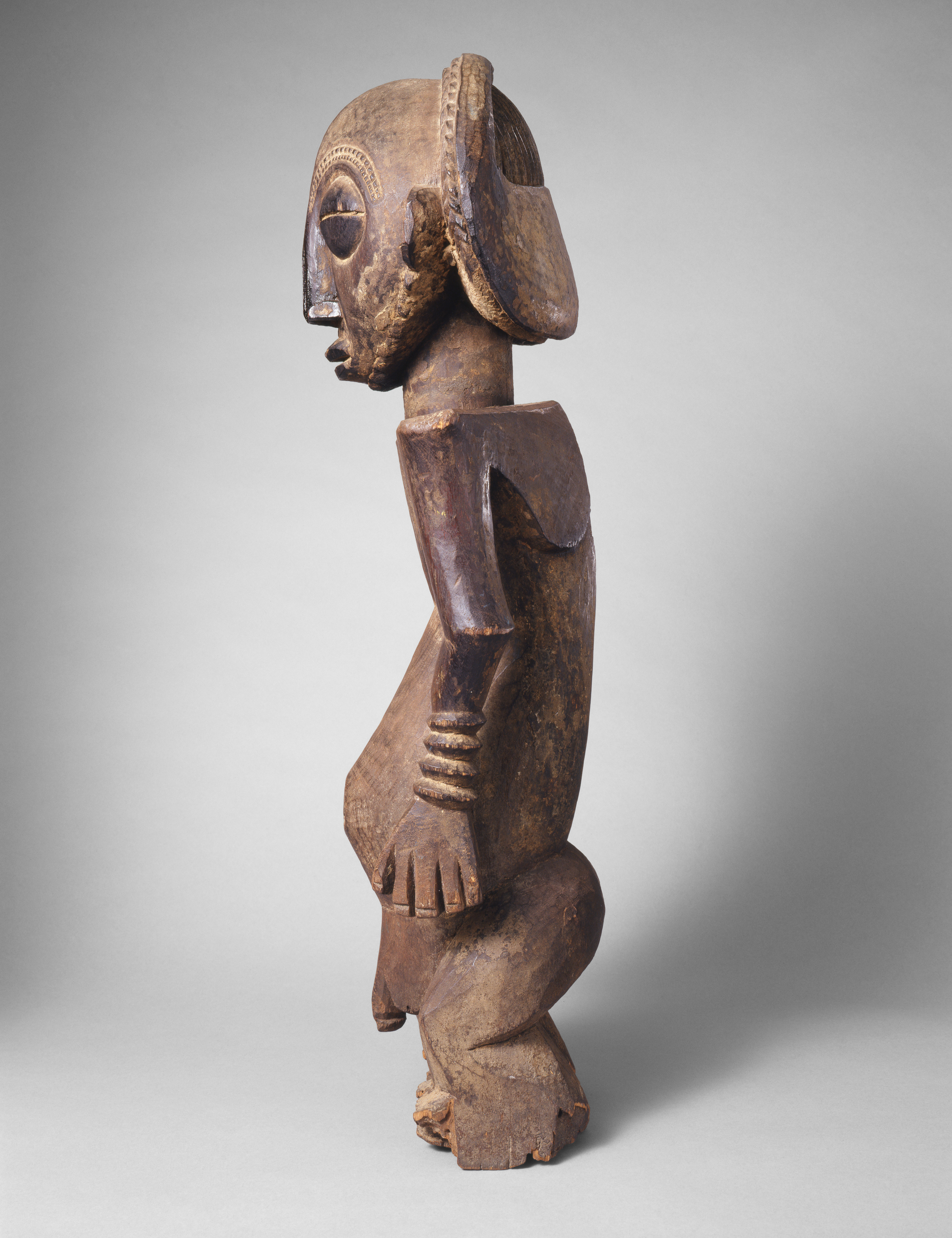
Heritage Analysis: The Royal Portrait of Akessa (Boyo Peoples)
This strategic heritage analysis examines the royal portrait of Akessa, attributed to the Boyo peoples of the Central African region, executed in wood with applied organic matter. As Lead Heritage Curator for Katherine Fashion Lab, I present this research to inform a 2026 high-end luxury strategy that respects cultural integrity while extracting symbolic and aesthetic value for contemporary luxury markets. The analysis is structured around four pillars: symbolic power, historical adornment, spiritual meaning, and strategic application.
Symbolic Power in the Royal Portrait
The portrait of Akessa embodies the political and spiritual authority of Boyo kingship. The figure's posture—seated upright with hands resting on knees—communicates stability, judgment, and ancestral continuity. The enlarged head, a common stylistic feature in Boyo royal iconography, signifies wisdom and the capacity to mediate between the human and divine realms. The applied organic matter, likely a mixture of kaolin clay, plant resins, and animal fats, creates a lustrous patina that signals sacred contact. In Boyo cosmology, such substances are believed to absorb the nyama (life force) of the ruler, transforming the portrait into a vessel of living power rather than a mere representation. For Katherine Fashion Lab, this suggests that symbolic power in luxury branding must be rooted in authentic narratives of authority and transformation, not superficial appropriation.
The portrait’s gaze, directed slightly upward, suggests a connection to the sky spirits and ancestors. This directional focus implies that Akessa’s reign was divinely sanctioned. In a 2026 luxury context, such symbolism can be translated into visual motifs of upward aspiration—elevated necklines, celestial patterns, or architectural silhouettes that evoke transcendence. However, the brand must avoid direct mimicry; instead, the principle of mediated power—where the object channels authority without becoming authoritarian—should guide design language.
Historical Adornment and Material Culture
Adornment in the portrait reveals the material wealth and ritual sophistication of the Boyo court. The figure wears a cap woven from raffia and adorned with cowrie shells, a currency and spiritual emblem. Cowrie shells, with their vulval shape, symbolize fertility, prosperity, and the cyclical nature of life. The cap’s red ochre pigment, derived from iron-rich earth, signals bloodline and sacrificial obligation. The portrait’s neck features multiple strands of glass beads, trade goods that historically connected Boyo elites to trans-Saharan and coastal networks. These beads, often blue or white, represent both economic power and spiritual protection, as they were believed to ward off evil.
The wooden substrate itself is likely Iroko or Ebony, woods associated with durability and sacred groves. The applied organic matter includes palm oil, which preserves the wood and imparts a tactile richness. For Katherine Fashion Lab, these materials offer a lexicon of luxury: cowrie shells as organic embellishment, beadwork as narrative texture, and natural oils as finish treatments. A 2026 collection could incorporate hand-applied patinas, bead-embroidered accessories, and raffia elements, provided these are sourced ethically and produced in collaboration with Boyo artisans or diaspora communities. The historical adornment underscores that luxury is not merely aesthetic but transactional—every material carries a story of trade, ritual, and status.
Spiritual Meaning and Ritual Function
The portrait of Akessa functioned as a nkisi or power object, activated through ritual offerings and invocations. The applied organic matter is not decorative but sacramental; it includes blood, ash, and plant extracts that bind the spirit of the ruler to the wood. In Boyo belief, the portrait could speak, judge, and mediate disputes. It was housed in a royal shrine, accessible only to initiates, and was periodically anointed with palm wine to renew its potency. The spiritual meaning here is one of reciprocity: the portrait receives devotion and in turn grants protection, fertility, and justice.
For Katherine Fashion Lab, this spiritual dimension challenges the secularization of luxury. In 2026, high-end consumers increasingly seek meaningful objects that offer emotional or spiritual resonance. The brand could develop a strategy of ritualized luxury, where garments or accessories are presented with care instructions that evoke ritual—such as monthly anointing with a signature oil or storage in a dedicated cloth bag. However, this must be done with transparency, not mystification. The portrait’s spiritual meaning teaches that luxury objects can be active participants in the wearer’s life, not passive commodities. A limited edition of “blessed” pieces, created in consultation with Boyo spiritual leaders, could serve as a bridge between heritage and commerce, provided the brand commits to ongoing cultural stewardship.
2026 High-End Luxury Strategy: Synthesis and Application
To translate this heritage analysis into a viable 2026 strategy, Katherine Fashion Lab must adopt a framework of cultural symbiosis rather than extraction. The following strategic pillars emerge:
1. Narrative Authority: The portrait’s symbolic power should inform a brand narrative of royal ascendance. Campaigns could feature models in poses inspired by Akessa’s posture, but with contemporary styling. The narrative must credit Boyo culture explicitly, perhaps through a partnership with the Boyo Cultural Foundation, ensuring that the community benefits from licensing and storytelling rights.
2. Material Integrity: The historical adornment suggests a return to artisanal materials. Katherine Fashion Lab should invest in cowrie shell sourcing from sustainable West African cooperatives, hand-beading workshops in Cameroon, and natural patina finishes using organic oils. Each garment or accessory should include a heritage card explaining the material’s origin and spiritual significance, appealing to the 2026 luxury consumer’s demand for transparency.
3. Ritual Engagement: The spiritual meaning of the portrait can be adapted into a care ritual for high-end pieces. For example, a “Royal Anointing Kit” could accompany a limited-edition coat, containing a small vial of palm oil and a cloth for polishing. This transforms the purchase into an ongoing relationship, building brand loyalty through sensory and spiritual engagement. However, the brand must avoid trivializing Boyo rituals; all materials should be sourced with permission and respect.
4. Collaborative Curation: A 2026 collection should be co-curated with Boyo elders and contemporary African artists. This ensures that the portrait’s power is not diluted but amplified through dialogue. Katherine Fashion Lab could host a symposium on “The Living Portrait” at its flagship stores, featuring scholars and artisans. This positions the brand as a steward of heritage, not a borrower. The collection’s pricing should reflect the labor and cultural value, with a percentage of proceeds directed to Boyo cultural preservation.
5. Visual Language: The portrait’s aesthetic—enlarged head, upward gaze, beadwork, and patina—can inspire a signature silhouette for Katherine Fashion Lab. For instance, a structured coat with an exaggerated collar (echoing the cap) and bead-embroidered cuffs (echoing the necklaces) could become a seasonal icon. The applied organic matter suggests a texture-first approach: matte finishes, irregular surfaces, and layered patinas that evolve with wear.
In conclusion, the royal portrait of Akessa is not a static artifact but a dynamic blueprint for luxury that balances power, materiality, and spirituality. For Katherine Fashion Lab, the 2026 strategy must honor this complexity through collaboration, transparency, and ritualized engagement. The brand that succeeds will not simply borrow from Boyo culture but will enter into a symbolic partnership, where the portrait’s legacy continues to speak through the language of high fashion. This is not appropriation; it is inheritance with responsibility.