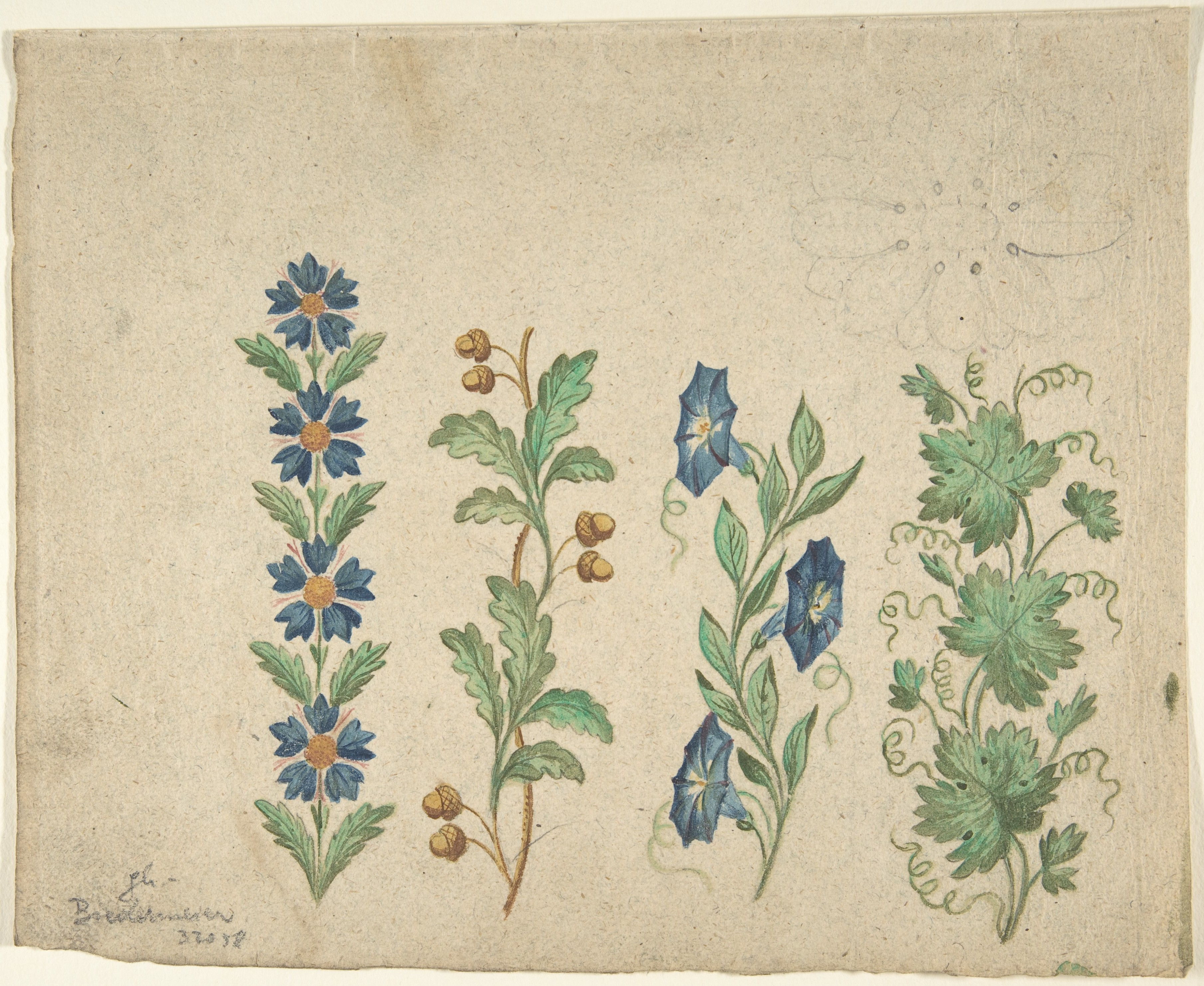
Embroidery as Cartography: The Global Heritage of Stitch in Katherine Fashion Lab’s Watercolor Studies
In the rarefied realm of couture analysis, the study of embroidery often bifurcates into two distinct disciplines: the technical mastery of thread manipulation and the conceptual narrative embedded within each stitch. Katherine Fashion Lab’s latest standalone study—a series of watercolor renderings over traces of black chalk—transcends this dichotomy. These works are not mere preparatory sketches; they are autonomous artifacts that interrogate embroidery as a global language of heritage, identity, and artisanal memory. By employing the ephemeral medium of watercolor atop the skeletal structure of black chalk, the Lab achieves a paradoxical permanence: the fluidity of pigment captures the transient beauty of handwork, while the chalk’s ghostly underdrawing anchors the designs in the tangible history of craft.
The Material Dialogue: Watercolor, Chalk, and the Illusion of Thread
The choice of watercolor over traces of black chalk is a deliberate provocation against the conventional hierarchy of couture materials. Watercolor, with its inherent translucency and unpredictability, mimics the organic movement of silk floss or metallic thread as it catches light. Yet, it also introduces a vulnerability—a controlled bleeding of pigment that suggests the impermanence of hand-stitched garments over centuries. The black chalk, applied in faint, almost archaeological strokes, serves as the cartographic skeleton of the design. It delineates the pathways of imagined embroidery: the curvilinear vines of Mughal *zardozi*, the geometric precision of Hungarian *Kalocsa*, the abstracted floral motifs of Chinese *Su Xiu*. This duality—the chalk as historical trace, the watercolor as living fluidity—creates a tension that is central to the Lab’s philosophy: embroidery is never static; it is a dialogue between tradition and reinvention.
From a technical standpoint, the watercolor medium allows Katherine Fashion Lab to explore gradations of density and opacity that thread alone cannot achieve. A single brushstroke can convey the weight of gold bullion, the lightness of organza, or the shadow of a sequin. The black chalk’s faint presence—often visible only upon close inspection—becomes a metaphor for the invisible labor of artisans whose names are lost to history. This is not a sketch for production; it is a study of embroidery’s soul, rendered in a medium that refuses to be pinned down.
Global Heritage as a Design Lexicon
The subject of these studies—Designs for Embroidery—is approached through a lens of global heritage, but not as a mere compilation of motifs. Katherine Fashion Lab deconstructs embroidery traditions from disparate cultures and re-synthesizes them into a coherent visual vocabulary. Consider the interplay of Indian *phulkari* (floral embroidery from Punjab) with Japanese *sashiko* (white-on-blue running stitches). In one watercolor study, the chalk underdrawing reveals a lattice of intersecting diagonals—a nod to *sashiko*’s functional mending origins—while the watercolor overlays bursts of crimson and saffron, echoing *phulkari*’s exuberant floral fields. The result is not a hybrid but a third space: a design that speaks to the shared human impulse to adorn, repair, and narrate through thread.
This approach is underpinned by rigorous research. The Lab’s archive references Mesoamerican *tenango* (animal and floral motifs from the Otomí people), Eastern European *Richelieu* (cutwork embroidery), and Persian *golabetooni* (curvilinear floral patterns). Yet, the studies avoid mimicry. Instead, they distill these traditions into archetypal forms: the spiral, the diamond, the vine, the star. The black chalk traces these forms with a draftsman’s precision, while the watercolor infuses them with emotional resonance. A single study might juxtapose the stark geometry of Nordic *Hardanger* (white-on-white counted thread work) with the organic asymmetry of Moroccan *Tatreez* (cross-stitch from Palestine). The dialogue is not about appropriation but about kinship—a recognition that embroidery, across continents, is a language of patience and precision.
Standalone Study as a Couture Manifesto
The designation of these works as standalone studies is critical. In traditional couture, embroidery designs are typically subordinate to the garment; they are patterns to be executed on fabric, often lost within the folds of a gown. Katherine Fashion Lab subverts this hierarchy by elevating the study to an autonomous artwork. Each watercolor-on-chalk piece is a complete statement, intended to be viewed as a finished composition rather than a blueprint. This shift has profound implications for the couture industry: it positions embroidery not as decoration but as primary narrative. The garment becomes secondary; the stitch becomes the protagonist.
In one exemplary study, the black chalk outlines a series of concentric arches—reminiscent of Islamic muqarnas (vaulting) or Gothic tracery—while the watercolor washes in layers of indigo, ochre, and verdigris. The effect is architectural, suggesting a cathedral of thread. Yet, the edges of the chalk are deliberately left unfinished, as if the design is still being woven. This incompleteness is a strategic choice: it invites the viewer to participate in the act of creation, to imagine the missing stitches. The standalone study becomes a collaborative space between artist and audience, challenging the passive consumption of couture.
The Analytical Framework: Thread as Time
From an MBA-level perspective, these studies can be analyzed through the lens of cultural equity and artisanal sustainability. Each watercolor represents a value chain of knowledge: the chalk traces are the raw material of heritage, the watercolor is the value-added craftsmanship, and the final study is the product—a luxury artifact that transcends fashion cycles. By grounding the designs in global heritage, Katherine Fashion Lab positions itself as a curator of intangible cultural heritage, not just a creator of garments. This is a strategic differentiation in a saturated market: the studies offer emotional provenance, a story that cannot be replicated by fast fashion.
Moreover, the choice of watercolor over chalk mirrors the fragility of traditional embroidery skills. As these techniques face extinction due to mechanization, the Lab’s studies become archives of endangered knowledge. The black chalk is the memory; the watercolor is the living practice. Together, they argue for the preservation of handwork as a luxury imperative, not a nostalgic indulgence. For the discerning client, owning a standalone study is akin to owning a piece of cultural cartography—a map of human creativity that spans centuries and continents.
Conclusion: The Stitch Unbound
Katherine Fashion Lab’s watercolor studies over black chalk are a radical redefinition of embroidery design. They strip thread of its materiality and reimagine it as pure visual language, filtered through the prism of global heritage. The standalone format liberates the design from the garment, allowing it to speak with its own voice—a voice that echoes the hands of countless artisans across time. In these studies, embroidery is no longer a craft; it is a philosophy of connection, a testament to the enduring human need to leave a mark. The watercolor bleeds, the chalk fades, but the design remains—a whisper of thread on paper, waiting to be stitched into eternity.