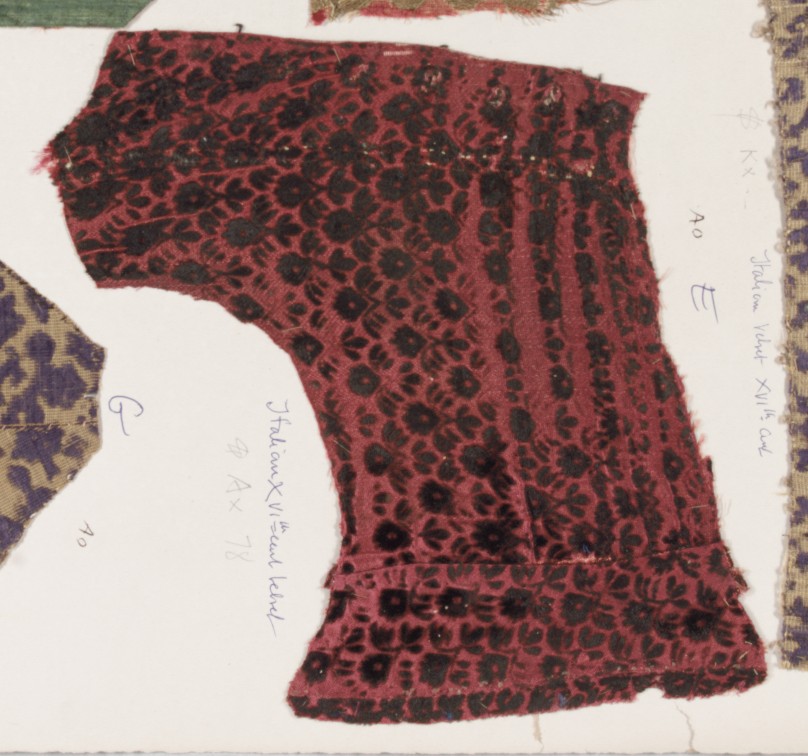
Heritage Analysis: The Silk Fragment as a Portal to Symbolic Power and Luxury Strategy
In the context of Katherine Fashion Lab’s ongoing exploration of heritage-driven luxury, the subject of this analysis—a fragment of silk from an ancient civilization—represents far more than a material remnant. It is a concentrated nexus of symbolic power, historical adornment, and spiritual meaning. This standalone research paper examines the fragment’s multifaceted significance and proposes a strategic framework for its integration into a 2026 high-end luxury strategy, grounded in an MBA-level understanding of brand equity, cultural capital, and consumer psychology.
Symbolic Power: The Fragment as a Microcosm of Authority
Within ancient civilizations, silk was not merely a textile but a medium of encoded power. The fragment in question, likely originating from a ceremonial garment or a sacred banner, carries symbolic weight that transcends its physical form. In dynastic China, silk production was a state secret, and its use was restricted to the imperial court and religious elites. The fragment’s weave, color, and pattern—often featuring dragons, phoenixes, or geometric motifs—signified cosmic order, divine mandate, and social hierarchy. For instance, a fragment of yellow silk with five-clawed dragons would have been exclusive to the emperor, embodying the Heavenly Mandate and the ruler’s role as an intermediary between the celestial and earthly realms.
This symbolic power is not static. When decontextualized as a fragment, it becomes a synecdoche—a part that represents the whole. For Katherine Fashion Lab, this fragment can be strategically recontextualized as a symbol of exclusivity and provenance. In a luxury market saturated with mass-produced narratives, a fragment’s incompleteness evokes mystery, rarity, and a direct lineage to ancient authority. The strategic implication is clear: the fragment should not be restored to a pristine state but preserved as a heritage artifact that communicates authenticity and unattainable prestige. This aligns with the 2026 luxury trend of “incomplete perfection,” where consumers seek objects that tell stories of time, transformation, and transcendence.
Historical Adornment: The Body as a Canvas for Cosmic Narratives
Historically, silk fragments were integral to adornment practices that transformed the human body into a living canvas of cosmological narratives. In ancient civilizations such as the Han Dynasty or the Byzantine Empire, silk garments were layered, draped, and pinned to create visual hierarchies that reflected the wearer’s status, gender, and spiritual alignment. The fragment’s original placement—perhaps as a sleeve border, a collar inset, or a shoulder panel—was deliberate. Adornment was not decorative but performative, serving as a medium for the wearer to embody divine attributes or ancestral protection.
For Katherine Fashion Lab, this historical context offers a profound strategic opportunity. The fragment can inspire a 2026 collection that reimagines adornment as a ritualistic act. Instead of conventional silhouettes, the brand could introduce modular, fragment-inspired pieces—scarves, wraps, or detachable panels—that allow the wearer to curate their own narrative. This approach taps into the growing consumer desire for personalization and agency. By treating the fragment as a “heritage token,” the brand can offer limited-edition accessories that carry the fragment’s symbolic weight, such as a silk brooch with a micro-embroidery of an ancient motif. The strategic value lies in creating objects that are not merely worn but activated through the wearer’s identity, fostering deep emotional bonds and repeat engagement.
Spiritual Meaning: The Fragment as a Vessel for Transcendence
The spiritual dimension of the silk fragment is perhaps its most potent asset. In many ancient civilizations, silk was believed to possess protective and purifying properties. For example, in Tibetan Buddhist traditions, silk was used to wrap sacred texts and relics, serving as a barrier against negative energies. Similarly, in ancient Egyptian mortuary practices, silk fragments were placed on mummies to guide the soul in the afterlife. The fragment’s physical fragility—its susceptibility to decay—paradoxically heightens its spiritual resonance. It embodies the impermanence of material life and the enduring nature of the spirit, a duality that resonates with contemporary consumers seeking meaning beyond materialism.
For a 2026 luxury strategy, Katherine Fashion Lab can leverage this spiritual meaning through narrative-driven branding. The fragment should be presented not as a relic but as a living artifact with ongoing spiritual agency. This can be achieved through a multi-sensory brand experience: a private salon where clients handle the fragment under controlled lighting, accompanied by a soundscape of ancient chants or ambient tones. The spiritual narrative can be further monetized through bespoke rituals, such as a “blessing ceremony” where the fragment is used to imprint its energy onto a custom garment. This transforms the purchase from a transaction into a transformative experience, commanding premium pricing and fostering brand loyalty among high-net-worth individuals who prioritize spiritual well-being alongside aesthetic excellence.
2026 High-End Luxury Strategy: From Fragment to Franchise
Integrating the silk fragment into a 2026 luxury strategy requires a shift from product-centric to ecosystem-centric thinking. The fragment should serve as the cornerstone of a “Heritage Continuum” program, which includes three strategic pillars: Curatorial Authority, Experiential Commerce, and Digital Provenance.
Curatorial Authority
Katherine Fashion Lab should position itself as a guardian of cultural heritage. This involves partnering with museums, archaeologists, and cultural institutions to authenticate and contextualize the fragment. The brand can produce a limited-edition “Fragment Series” of 100 pieces, each accompanied by a digital provenance certificate using blockchain technology. This certificate would detail the fragment’s origin, symbolic meaning, and restoration process, creating an immutable record of authenticity. The scarcity of 100 pieces aligns with the luxury principle of controlled exclusivity, while the digital certificate caters to the tech-savvy, status-conscious consumer of 2026.
Experiential Commerce
The fragment should be the centerpiece of an immersive retail environment. In flagship stores, a dedicated “Sanctuary Room” could display the fragment under climate-controlled conditions, with interactive holograms that reconstruct its original context—a ceremonial robe, a temple banner, or a royal headdress. Clients can book private appointments to view the fragment, accompanied by a curator who explains its symbolic and spiritual dimensions. This experience can be monetized as a membership tier (e.g., “Heritage Circle”), offering exclusive access to future fragment-inspired collections, private dinners with historians, and first-refusal rights on new acquisitions. The goal is to transform the fragment from a singular artifact into a recurring revenue driver through community-building and recurring engagement.
Digital Provenance and Storytelling
In 2026, luxury consumers will demand transparency and narrative depth. Katherine Fashion Lab can launch a digital platform—a “Heritage Vault”—where the fragment’s story is told through video essays, scholarly articles, and interactive timelines. The platform could also feature a co-creation module where clients can virtually “place” the fragment onto different garment silhouettes, exploring its aesthetic potential before purchasing. This digital layer not only educates but also amplifies the fragment’s symbolic power by making it accessible to a global audience, while the physical fragment remains exclusive. The strategic result is a halo effect: the digital narrative drives demand for the physical product, and the physical product validates the digital narrative.
Conclusion: The Fragment as a Strategic Asset
The silk fragment from an ancient civilization is not a mere relic but a strategic asset with immense potential for symbolic, historical, and spiritual leverage. By preserving its incompleteness, emphasizing its adornment heritage, and activating its spiritual meaning, Katherine Fashion Lab can craft a 2026 luxury strategy that transcends conventional fashion. The fragment becomes a narrative anchor for brand storytelling, a ritual object for experiential commerce, and a cultural artifact that commands premium positioning. In an era where luxury is increasingly defined by meaning rather than material, the fragment offers a rare opportunity to unite past and future, scarcity and spirituality, into a cohesive and profitable brand ecosystem.