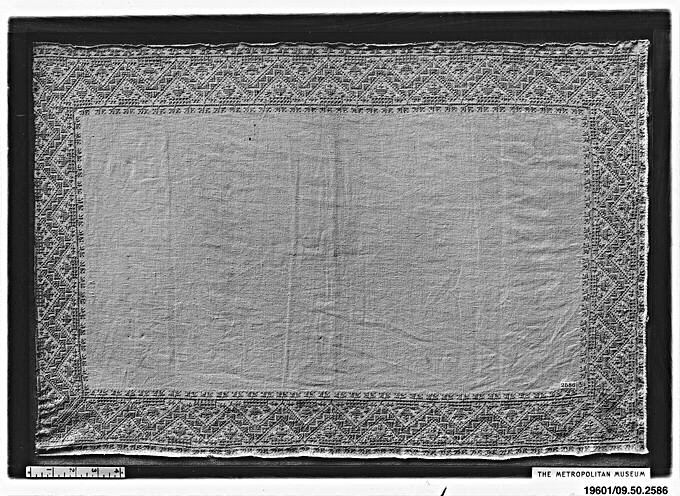
The Panel: A Study in Textural Dialogue and Global Lineage
Introduction: The Standalone Statement
In the rarefied sphere of haute couture, the standalone study occupies a unique position. It is neither a component of a larger collection nor a mere prototype; it is a distilled thesis, a concentrated exploration of form, material, and narrative. Katherine Fashion Lab’s latest offering, simply titled “Panel,” exemplifies this genre with a rigor that commands respect. This is not a garment intended for the runway’s fleeting spectacle but an artifact designed for sustained contemplation. It is a declaration of the house’s mastery over the intangible: the dialogue between heritage and modernity, between the weight of tradition and the lightness of innovation.
Material Alchemy: Silk on Linen
The foundation of “Panel” is a deliberate juxtaposition of two archetypal natural fibers: silk and linen. The choice is far from arbitrary. Linen, with its inherent structural integrity and subtle, irregular slubs, provides a grounding, almost architectural canvas. It speaks of earth, of the rigorous discipline of ancient weaving techniques from the flax fields of Northern Europe to the Nile Delta. In contrast, the silk overlay—a diaphanous, liquid layer of charmeuse and organza—introduces a counter-narrative of fluidity and opulence, evoking the storied silk routes from Chang’an to Constantinople.
The technical execution is where the true artistry emerges. The silk is not simply laid atop the linen; it is integrated through a process of selective bonding and floating threads. At certain points, the silk is fused to the linen with microscopic precision, creating areas of opaque, monolithic color. At others, it is left to float, forming micro-pleats and air pockets that catch light and shadow. This technique, patented within the lab, allows the panel to shift between states—from a solid, painterly surface to a dynamic, almost kinetic textile. The result is a material that breathes, that possesses a memory of its own motion. The color palette, a restrained spectrum of ivory, charcoal, and a single, startling streak of deep indigo, reinforces this duality. The indigo, a dye with its own global heritage (from West African indigo pots to Japanese *aizome*), acts as a visual anchor, a gravitational center around which the neutral tones orbit.
Structural Narrative: The Architecture of the Panel
The form of “Panel” is deceptively simple: a single, large rectangular swath of fabric, approximately 120 cm by 180 cm, suspended from two asymmetrical, hand-carved wooden rings. Yet within this geometric restraint lies a universe of structural complexity. The panel is not flat; it is a topographical study. Through a series of hidden darts, internal boning channels, and carefully placed weights sewn into the linen hem, the fabric is coaxed into a series of gentle, rolling folds and sharp, angular breaks.
This is not drapery in the conventional sense; it is a controlled collapse. The folds do not fall randomly but follow a predetermined grid, a subtle echo of architectural blueprints. At the top, where the silk meets the wooden rings, the fabric gathers into a series of compressed, fan-like pleats, reminiscent of the fluting on a classical column. As the eye travels downward, these pleats gradually release, widening into broad, sweeping planes that suggest both a windswept landscape and the folds of a toga. The lower third of the panel is where the most dramatic tension resides. The linen, weighted and stiffened, resists the silk’s fluidity, creating a cascade of ripples that feel both geological and organic. The panel’s edges are left raw, the linen’s threads beginning to fray in a controlled manner, a deliberate nod to the impermanence of all crafted things.
Global Heritage: A Cartography of Craft
“Panel” is a cartographic exercise, mapping a lineage of techniques across continents. The wooden rings, sourced from a cooperage in the French Jura, are carved with a repeating pattern of concentric circles—a motif that appears in the textile art of the Dogon people of Mali, the Celtic knotwork of the British Isles, and the mandala designs of South Asia. This is not appropriation but a conscious, scholarly reference to the universality of the circle as a symbol of infinity and cyclical time.
The stitching itself is a global lexicon. The primary seams are executed in a Japanese *sashiko* style, a running stitch traditionally used for reinforcement and mending, here elevated to a decorative element. The threads are a blend of silk and linen, dyed with madder root from the Caucasus and indigo from Gujarat. Interspersed are small, almost invisible knots and loops, a technique borrowed from the *ajour* embroidery of the Balkans, which creates delicate openwork patterns that allow the linen to peek through the silk. The entire piece is finished with a single, continuous thread of unbleached silk, a nod to the Japanese concept of *mottainai*—the regret of waste—ensuring that no material is left unutilized.
This global heritage is not presented as a static archive but as a living, evolving language. The panel does not mimic a specific historical garment; it synthesizes techniques from disparate cultures into a coherent, contemporary statement. It asks the viewer to consider how a single piece of fabric can hold the memory of a thousand hands, from the weavers of ancient Kente cloth in Ghana to the silk farmers of the Italian Renaissance.
Contextual Resonance: The Standalone Study as a Manifesto
In the context of Katherine Fashion Lab’s broader oeuvre, “Panel” serves as a manifesto. It is a rejection of the fast-fashion cycle of consumption and disposal, a return to the ethos of the *objet d’art*. The standalone study format allows the lab to explore materials and techniques without the commercial pressure of a full collection. This piece is designed to be worn as a cape, a shawl, or a wall hanging—its function is deliberately ambiguous, inviting the wearer or collector to define its purpose.
The intellectual rigor of “Panel” is its most compelling feature. It demands a slow, attentive gaze. It rewards the viewer who understands the labor of a single hand-sewn pleat or the cultural weight of a dyeing technique. In an era of digital saturation and ephemeral trends, Katherine Fashion Lab offers a counterpoint: a tactile, temporal object that embodies the tension between the global and the local, the ancient and the avant-garde. “Panel” is not just a study of fabric; it is a study of how we carry the past into the future, one thread at a time. It is a quiet, powerful assertion that couture, at its highest level, is a form of intellectual and cultural cartography.