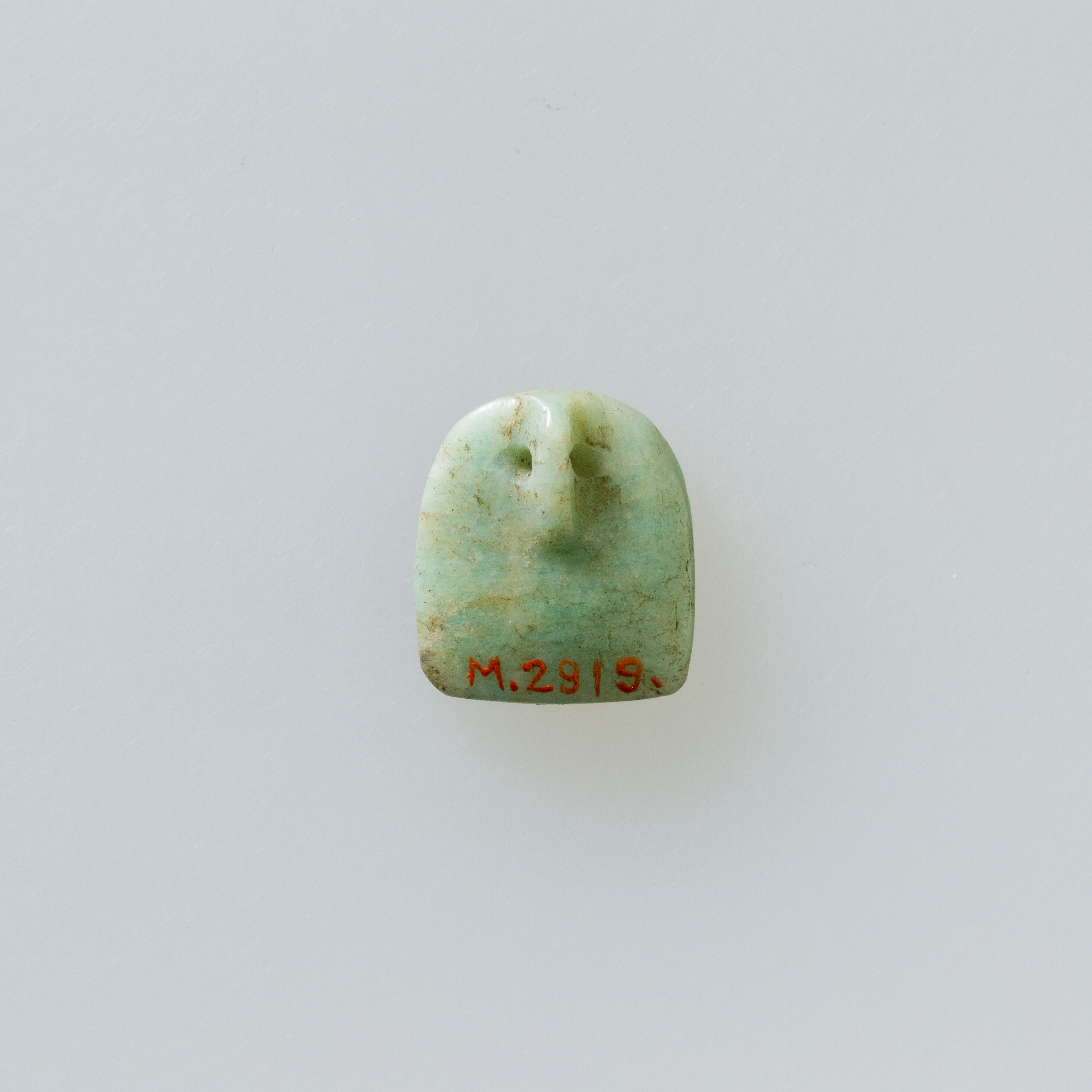
Strategic Heritage Analysis: Shield-Shaped Feldspar Amulet
Executive Summary
This report presents a comprehensive heritage analysis of a shield-shaped amulet or attachment, crafted from feldspar and originating from an ancient civilization. The artifact features four holes connected by diagonals, suggesting a sophisticated symbolic and functional design. For Katherine Fashion Lab, this piece offers a unique opportunity to integrate ancient symbolic power, historical adornment, and spiritual meaning into a high-end luxury strategy for 2026. The analysis focuses on three core dimensions: the artifact's symbolic and spiritual significance, its role in historical adornment, and a strategic roadmap for leveraging its heritage in contemporary luxury fashion.
Symbolic Power and Spiritual Meaning
The Shield as a Universal Symbol of Protection
The shield shape is one of the most enduring symbols across ancient civilizations, representing protection, defense, and sovereignty. In Mesopotamian, Egyptian, and early Indo-European cultures, shields were not merely utilitarian; they were imbued with divine energy, often inscribed with protective deities or cosmic symbols. The feldspar medium amplifies this symbolism. Feldspar, a mineral associated with the earth's crust, was revered in ancient societies for its grounding properties and connection to celestial bodies. Its translucent, moon-like sheen linked it to lunar deities, fertility, and cyclical renewal. Thus, the amulet likely served as a talisman for warriors, travelers, or spiritual leaders, offering both physical and metaphysical shielding.
The Four Holes and Diagonal Connections
The four holes, connected by diagonals, introduce a complex geometric language. In ancient cosmology, the number four often represented stability, cardinal directions, and the four elements (earth, air, fire, water). The diagonal connections, however, suggest a dynamic interaction—a crossing of forces, a union of opposites, or a path of spiritual ascension. This pattern may represent a cosmic grid or a protective lattice, channeling energy from the wearer outward to repel negative influences. Alternatively, it could symbolize the four seasons or the cyclical nature of life, death, and rebirth. The diagonal lines create an X-shape, which in many cultures (e.g., ancient Egypt, Mesoamerica) signified intersection, balance, and the meeting of mortal and divine realms.
Spiritual Function in Ritual and Daily Life
Such amulets were often worn close to the heart or attached to garments, belts, or armor. The four holes suggest a system of attachment—perhaps threaded with leather, sinew, or precious metal cords—allowing the amulet to be suspended or sewn onto ceremonial attire. In spiritual practice, the amulet would have been activated through ritual, such as anointing with oils, exposure to moonlight, or chanting. The feldspar's natural iridescence was believed to capture and reflect spiritual light, making it a conduit for divine protection. For the wearer, the amulet was not passive; it was an active participant in their spiritual journey, warding off evil spirits, ensuring safe passage, and attracting benevolent forces.
Historical Adornment and Cultural Context
Adornment as Identity and Status
In ancient civilizations, adornment was a primary means of expressing social hierarchy, tribal affiliation, and personal power. The shield-shaped feldspar amulet would have been a marker of elite status, worn by chieftains, priests, or warrior elites. The material itself—feldspar—was less common than jade or turquoise but highly prized for its subtle luminosity and durability. The precision of the four holes, drilled with stone-tipped tools, indicates advanced craftsmanship and significant labor investment, further elevating the amulet's value. Adornment was not merely decorative; it was a language of power, communicating the wearer's connection to the divine and their role as protector of the community.
Comparative Analysis with Other Ancient Amulets
Similar shield-shaped amulets have been found in the Indus Valley, ancient China, and pre-Columbian Americas. In the Indus Valley, feldspar amulets with geometric perforations were used in trade and ritual, often buried with the dead to guide the soul. In ancient China, shield-shaped jade amulets (bi discs) were associated with heaven and earth, while the diagonal connections mirrored the trigrams of the I Ching. This cross-cultural resonance suggests that the shield-shaped feldspar amulet belongs to a universal archetype of protection, order, and spiritual navigation. For Katherine Fashion Lab, this archetype offers a rich narrative that transcends time and geography, appealing to a global luxury clientele.
Technical and Aesthetic Significance
The diagonal connections between the four holes are not merely functional; they create a visual rhythm that draws the eye across the amulet's surface. This design principle—using negative space and linear tension—prefigures modernist abstraction. The feldspar's natural variations in color (from pale white to smoky gray) add an organic, one-of-a-kind quality. In historical context, such amulets were often combined with other materials—gold, silver, or carved bone—to create composite adornments. The holes likely allowed for the attachment of tassels, beads, or small bells, producing sound and movement during rituals, further enhancing the amulet's sensory and spiritual impact.
2026 High-End Luxury Strategy for Katherine Fashion Lab
Brand Positioning Through Heritage Narrative
For Katherine Fashion Lab, the shield-shaped feldspar amulet represents a blueprint for a luxury collection that fuses ancient wisdom with contemporary minimalism. The 2026 strategy should position the brand as a curator of cultural memory, offering pieces that are not accessories but talismanic artifacts. The amulet's symbolism of protection, balance, and cosmic order aligns with growing consumer demand for meaningful, spiritually resonant luxury. By framing each piece as a "modern talisman," Katherine Fashion Lab can differentiate itself in a crowded market, appealing to discerning clients who seek authenticity and depth.
Product Design and Material Innovation
The strategic application of this heritage analysis involves reinterpreting the amulet's form and function in high-end materials. Consider the following product lines:
- The Shield Collection: Necklaces, brooches, and cufflinks featuring shield-shaped pendants in feldspar, moonstone, or labradorite, with four holes connected by diagonal gold or platinum threads. The diagonal connections can be reinterpreted as fine chains or engraved lines, evoking the original's geometric precision.
- The Diagonal Grid Motif: Incorporate the four-hole diagonal pattern into textile designs, leather goods, and hardware. This motif can be embossed on handbags, woven into silk scarves, or laser-cut into metal closures, creating a cohesive visual language across the collection.
- Customizable Attachment Systems: Offer clients the ability to personalize their amulet's attachment—choosing between leather cords, silk ribbons, or diamond-set chains—mirroring the ancient practice of threading the holes with meaningful materials.
Marketing and Experiential Strategy
To communicate the amulet's spiritual and symbolic power, Katherine Fashion Lab should invest in storytelling-driven marketing. This includes:
- Heritage Video Series: Short documentaries exploring the amulet's ancient origins, featuring archaeologists, historians, and spiritual practitioners. These films can be shared on social media and the brand's website, positioning Katherine Fashion Lab as a thought leader in heritage luxury.
- Immersive Retail Experiences: In flagship stores, create "sanctuary spaces" where clients can learn about the amulet's symbolism and even participate in a guided meditation or ritual, connecting the piece to personal intention-setting. This experiential approach elevates the purchase from transaction to transformation.
- Limited Edition "Talisman" Drops: Release the shield collection in numbered, limited editions, each accompanied by a certificate of authenticity that includes the amulet's historical and spiritual context. This scarcity and narrative depth justify premium pricing and foster collector loyalty.
Collaborations and Cultural Alliances
Strategic partnerships with museums, cultural institutions, and contemporary artists can further legitimize the collection. For example, a collaboration with a museum specializing in ancient civilizations could result in an exclusive capsule collection, with proceeds supporting archaeological preservation. Alternatively, partnering with a spiritual wellness brand (e.g., a luxury crystal or meditation company) could create co-branded experiences, such as "The Protective Shield" workshop series.
Pricing and Positioning
Given the feldspar amulet's historical rarity and spiritual depth, the 2026 collection should be positioned at the ultra-high-end tier, with prices starting at $5,000 for simple pendants and reaching $50,000 for bespoke, multi-stone pieces set in precious metals. The brand's communication should emphasize investment value—not just in materials, but in cultural capital. Each piece is an heirloom, a conversation starter, and a personal talisman, offering intangible returns in meaning and connection.
Conclusion
The shield-shaped feldspar amulet, with its four holes and diagonal connections, is a profound artifact of ancient symbolic power, spiritual protection, and refined adornment. For Katherine Fashion Lab, this heritage analysis provides a strategic foundation for a 2026 luxury collection that transcends fashion trends. By honoring the amulet's original purpose—as a guardian of the wearer and a conduit for cosmic energy—the brand can create pieces that resonate deeply with a modern audience seeking authenticity, spirituality, and timeless beauty. The result is not merely a product line, but a cultural statement: luxury as a vessel for ancestral wisdom.