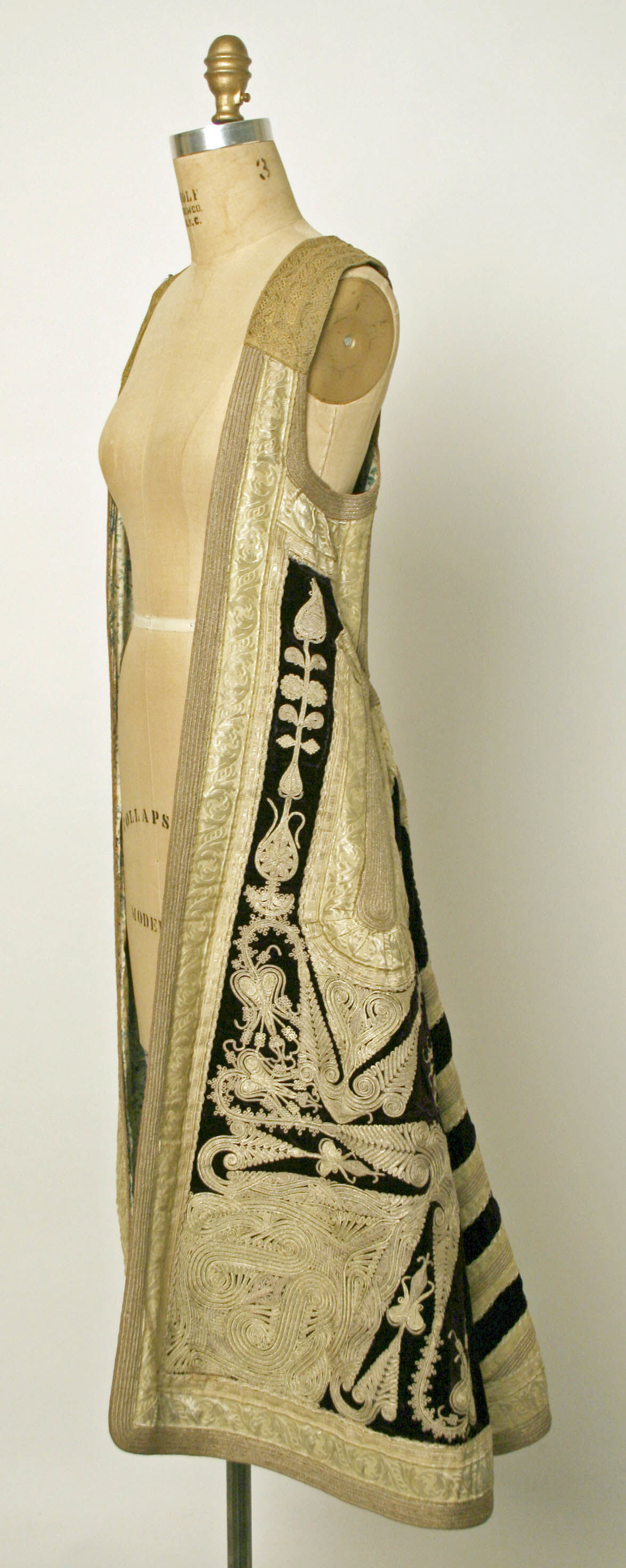
The Pirpiri Kaftan: A Masterclass in Global Heritage and Textile Artistry
In the rarefied sphere of haute couture, where the line between garment and art is deliberately blurred, Katherine Fashion Lab has unveiled a piece that demands rigorous analysis: the Pirpiri Kaftan. More than a mere silhouette, this creation is a thesis on global heritage, executed through a meticulous dialogue between material, technique, and cultural narrative. As a standalone study, the Pirpiri Kaftan transcends seasonal trends, offering a profound meditation on how luxury can honor tradition while asserting a distinct contemporary identity. This analysis deconstructs the garment’s core components—its materiality, construction, and cultural resonance—to reveal why it represents a significant contribution to the canon of modern couture.
Materiality as Narrative: The Silk Velvet and Metal-Wrapped Thread
The foundation of the Pirpiri Kaftan is its audacious choice of primary fabric: silk velvet. This is not a casual selection. Silk velvet, with its deep pile and luminous sheen, is one of the most demanding textiles in couture. Its inherent richness evokes a sense of opulence that is both ancient and timeless. The velvet’s plush surface catches light in a way that creates depth and shadow, lending the kaftan a sculptural quality even in its most relaxed drape. The weight of the silk velvet grounds the garment, ensuring it falls with a deliberate, almost architectural gravity, rather than floating aimlessly.
However, the true tour de force lies in the embroidery executed with metal-wrapped thread. This technique, which involves spiraling fine metallic filaments—often silver or gold—around a silk or cotton core, is a hallmark of artisanal mastery across cultures, from the zardozi of South Asia to the passementerie of Europe. On the Pirpiri Kaftan, the metal-wrapped thread is not used sparingly as an accent; it is integral to the design’s rhythm. The threads are applied in intricate patterns that likely reference organic motifs—perhaps piripiri grass or stylized flora—creating a tactile topography. The contrast between the soft, yielding velvet and the rigid, reflective metallic thread is deliberately jarring, yet harmoniously resolved. The metal catches light in sharp, brilliant flashes against the velvet’s soft absorption, generating a visual and textural tension that keeps the eye moving across the garment. This is not decoration for its own sake; it is a deliberate narrative device, suggesting the interplay between natural abundance and human craftsmanship.
The Lining: A Study in Contrast and Function
While the exterior of the Pirpiri Kaftan commands immediate attention, the lining reveals a sophisticated duality. The garment features a cotton lining in a plain weave, chosen for its breathability and structural integrity. This is a pragmatic counterpoint to the velvet’s weight, ensuring the kaftan remains wearable for extended periods without compromising comfort. Yet, Katherine Fashion Lab elevates this functional element by introducing printed cotton for the lining. The print—likely a geometric or abstract pattern derived from global textile traditions—serves as a hidden narrative. When the kaftan moves, the lining flashes briefly, offering a surprise of color and pattern that contrasts with the monochromatic or tonal richness of the velvet exterior.
This choice is emblematic of a couture philosophy that values the unseen as much as the seen. The printed lining is a private luxury, a detail known only to the wearer and those privileged enough to glimpse it. It also speaks to the garment’s global heritage: the plain weave cotton references the utilitarian textiles of many cultures, while the print could evoke anything from Indonesian batik to West African adire. By layering these references, the lining transforms the kaftan from a single statement into a multi-layered conversation between public display and private intimacy.
Construction and Silhouette: The Kaftan as a Universal Form
The kaftan silhouette is one of fashion’s most enduring archetypes, with roots spanning from ancient Mesopotamia to North Africa, the Middle East, and beyond. Katherine Fashion Lab’s interpretation is not a simple revival; it is a recontextualization. The Pirpiri Kaftan’s construction likely features a generous, flowing cut that respects the traditional voluminous form, yet it is refined through precise tailoring at the shoulders and neckline. The standalone study context suggests the garment is designed to be worn without additional layers, allowing its full material weight and embroidery to be appreciated without distraction.
The seams are likely finished with meticulous hand-stitching, a non-negotiable in couture. The embroidery’s placement is strategic—concentrated along the center front, cuffs, and hem—creating a focal point that draws the eye vertically, elongating the figure. The metal-wrapped thread adds a subtle stiffness to these embroidered zones, which helps the kaftan maintain its shape even as the velvet drapes fluidly. This interplay between structure and flow is a hallmark of high-level design: the garment must feel effortless while being anything but simple to construct. The result is a piece that moves with the wearer, not against them, embodying a sense of regal ease.
Cultural Resonance and Global Heritage
The term “Global Heritage” in the Pirpiri Kaftan’s description is not a marketing platitude; it is a design ethos. The kaftan form itself is a vessel for cross-cultural exchange. The silk velvet evokes the luxury of Renaissance Italian and Ottoman courts. The metal-wrapped thread embroidery references the intricate handiwork of Mughal India and Persian ateliers. The cotton lining, with its printed pattern, nods to the democratic textiles of Africa and Asia. Yet, Katherine Fashion Lab does not simply appropriate these elements; it synthesizes them into a cohesive whole that respects their origins while asserting a new identity.
This is particularly evident in the choice of the name “Pirpiri.” The term likely alludes to the piripiri grass (also known as bulrush or cattail) found in wetlands across the globe, from the Americas to Africa to Eurasia. This plant, with its tall, elegant stalks and feathery tops, is a symbol of resilience and natural grace. By naming the kaftan after it, the designer anchors the garment in the natural world, suggesting that the embroidery’s patterns are an abstraction of organic growth. The piripiri grass also carries cultural significance in various indigenous traditions, often used for weaving and thatching—a subtle nod to textile craft itself. Thus, the garment becomes a tribute to both botanical and cultural biodiversity.
Conclusion: A Standalone Masterwork
The Pirpiri Kaftan by Katherine Fashion Lab is not merely a garment; it is a curatorial statement. As a standalone study, it demands to be examined on its own terms—free from the distractions of seasonal collections or runway theatrics. The deliberate pairing of silk velvet with metal-wrapped thread, the functional yet expressive cotton lining, and the universal silhouette of the kaftan all converge to create a piece that is both deeply rooted in global heritage and startlingly contemporary. The metal threads catch the light like historical artifacts, while the velvet absorbs it like a modern canvas. The printed lining whispers secrets of distant cultures, while the exterior commands the room with silent authority.
In an era where fashion often rushes toward the new, the Pirpiri Kaftan offers a slower, more deliberate luxury. It asks the wearer to appreciate the weight of history in every stitch, the labor of artisans across continents, and the beauty of a form that has transcended millennia. This is couture at its most meaningful: not as a display of wealth, but as a testament to the enduring power of craft, culture, and the human hand. For the connoisseur, the Pirpiri Kaftan is not just an acquisition—it is an education.