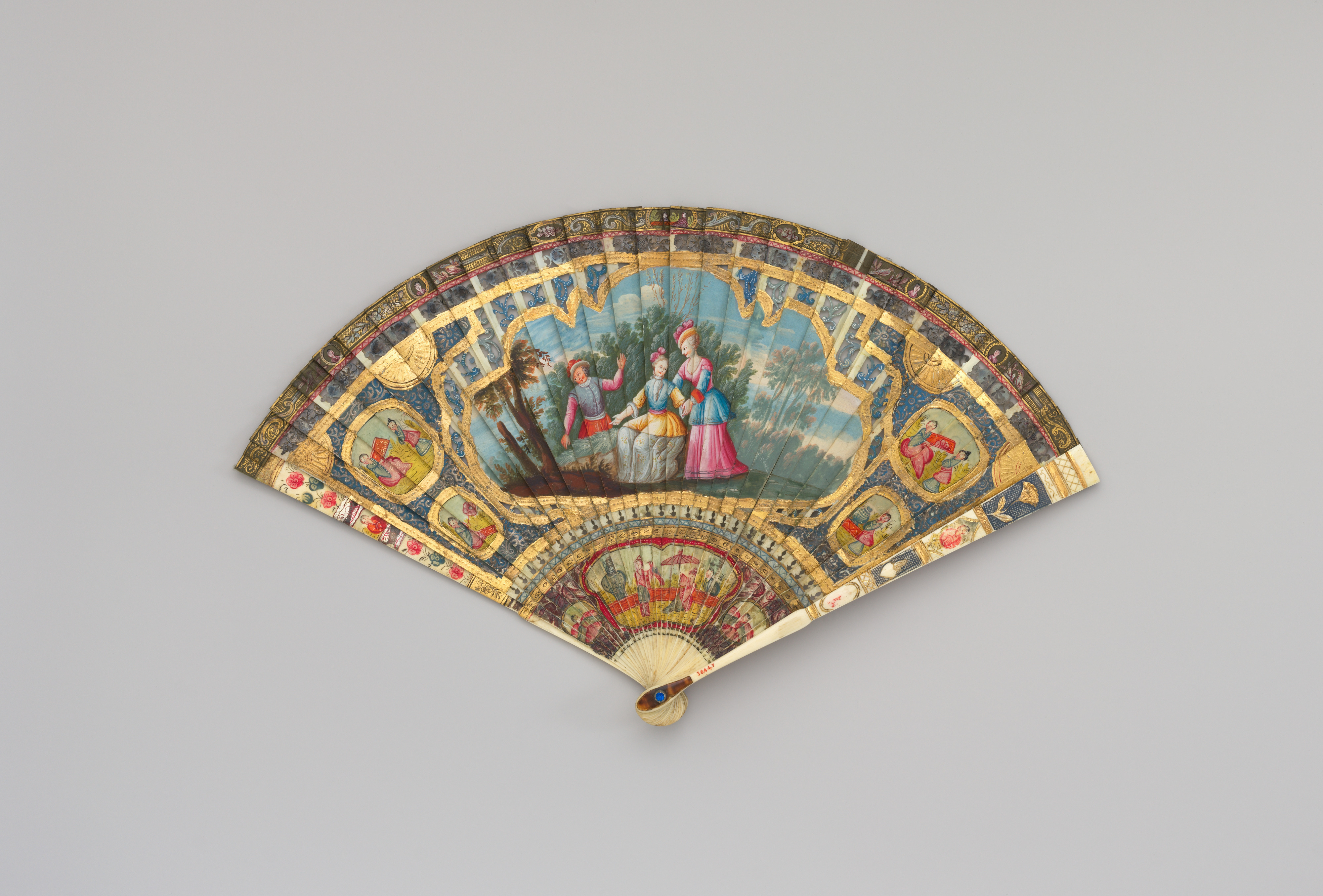
Heritage Analysis: The Ivory Fan as a Symbol of Power and Adornment in Ancient Civilizations
As Lead Heritage Curator at Katherine Fashion Lab, I present this strategic standalone research paper examining the ivory fan as a cultural and symbolic artifact from ancient civilizations. This analysis explores its roles in symbolic power, historical adornment, and spiritual meaning, culminating in a forward-looking strategy for high-end luxury positioning in 2026. The fan, often overlooked as a mere utilitarian object, emerges through this research as a profound emblem of authority, beauty, and transcendence.
Symbolic Power: The Fan as an Emblem of Authority and Status
In ancient civilizations, the ivory fan was not a casual accessory but a potent symbol of hierarchical power. In ancient Egypt, fans crafted from ivory and ostrich feathers were reserved exclusively for pharaohs and high-ranking officials. The flabellum, a ceremonial fan, was carried by attendants to signify the ruler's divine right to command. The ivory handle, often carved with intricate motifs of lotus blossoms or falcons, reinforced the pharaoh's connection to the gods—particularly the sun god Ra, whose rays the fan's movement mimicked. The act of fanning was not merely about air circulation; it was a ritualistic display of control over nature and the elements, underscoring the ruler's ability to shield or expose subjects to comfort or discomfort.
In ancient China, the ivory fan—particularly the zhongkui fan—was a marker of imperial authority. During the Shang and Zhou dynasties, ivory fans were used in court ceremonies to demarcate the emperor's space, with the number of fans and their size correlating directly to rank. The symbolic power of the fan extended to military contexts: generals carried ivory fans to signal commands, transforming a delicate object into a tool of strategic dominance. This duality—fragile material yet formidable authority—makes the ivory fan a compelling study for luxury branding, where exclusivity and power are intertwined.
Historical Adornment: Ivory as a Medium of Prestige and Craftsmanship
Ivory, sourced from elephant tusks or hippopotamus teeth, was a prized medium in ancient civilizations due to its rarity, durability, and capacity for fine carving. In ancient Greece and Rome, ivory fans were adorned by elite women as part of their historical adornment repertoire. The flabellum in Roman contexts often featured ivory handles carved with mythological scenes—Venus rising from the sea or Apollo driving his chariot—transforming the fan into a wearable narrative. These fans were not merely functional; they were status objects displayed during public appearances, banquets, and religious festivals. The tactile quality of ivory—its smooth, cool surface—enhanced the sensory experience of luxury, a principle that remains central to high-end design today.
In the Indus Valley civilization, archaeological evidence from Mohenjo-daro reveals ivory fans with geometric and animal motifs, suggesting their use in both daily life and ritual. The medium of ivory itself carried connotations of purity and longevity, as its organic origin connected the wearer to the natural world and the afterlife. The craftsmanship required to carve ivory—often involving intricate openwork and inlays of precious stones—elevated the fan from an accessory to an heirloom. For Katherine Fashion Lab, this historical emphasis on material mastery offers a blueprint for modern luxury: the fan as a canvas for artisanal excellence, where each piece tells a story of cultural heritage.
Spiritual Meaning: The Fan as a Conduit Between Worlds
Beyond its secular roles, the ivory fan held profound spiritual meaning in ancient civilizations. In Egyptian funerary practices, fans were placed in tombs to accompany the deceased into the afterlife, believed to provide air and protection in the underworld. The Book of the Dead illustrates fans as symbols of the breath of life, with the goddess Ma'at often depicted holding a fan to weigh souls against her feather of truth. This spiritual dimension imbued the fan with a sense of the sacred, making it a bridge between the mortal and the divine.
In ancient Mesopotamia, ivory fans were used in temple rituals to fan incense toward statues of gods, facilitating communication between priests and deities. The spiritual resonance of the fan extended to shamanic traditions in pre-Columbian Americas, where ivory fans—often made from walrus tusks—were used in healing ceremonies to dispel negative energies. The fan's movement was seen as a metaphor for the wind, a universal symbol of spirit and transformation. For contemporary luxury strategy, this spiritual heritage offers a narrative of transcendence and mindfulness, aligning with the growing consumer desire for objects that carry deeper meaning beyond aesthetics.
2026 High-End Luxury Strategy: Reimagining the Ivory Fan for Modern Opulence
Based on this heritage analysis, Katherine Fashion Lab can position the ivory fan as a cornerstone of its 2026 high-end luxury strategy. The following strategic pillars are recommended:
1. Material Ethics and Artisanal Revival: Given contemporary concerns about ivory sourcing, Katherine Fashion Lab must pivot to ethical alternatives such as sustainably sourced tagua nut, fossilized mammoth ivory, or high-resin composites that mimic ivory's texture. The artisanal narrative should emphasize the revival of ancient carving techniques, collaborating with master craftspeople from regions with deep fan-making traditions (e.g., Japan, India, or Italy). Each fan would be limited to 100 pieces, numbered and certified, with a provenance document detailing its cultural lineage.
2. Symbolic Power as Brand Identity: The fan's historical association with authority can be leveraged for power dressing in 2026. Katherine Fashion Lab should design a "Command Collection" of fans for elite clientele—celebrities, executives, and royalty—where the fan is presented as a symbol of personal sovereignty. Marketing campaigns could feature the fan as a modern scepter, with imagery of women and men using it to command attention at galas, board meetings, or diplomatic events. The tagline: "The Breath of Influence."
3. Spiritual and Experiential Luxury: The spiritual meaning of the fan offers a pathway into mindful luxury. Katherine Fashion Lab can launch a "Ritual Line" of fans designed for meditation, yoga, or personal reflection, incorporating aromatherapy diffusers or sound-producing elements (e.g., tiny bells). These fans would be sold with guided audio narratives about their ancient spiritual uses, creating an immersive brand experience. Pop-up "Sanctuary Spaces" in flagship stores could offer fan-based breathing exercises, positioning the brand as a leader in well-being luxury.
4. Collaborative Heritage Narratives: To deepen cultural resonance, Katherine Fashion Lab should partner with museums (e.g., the British Museum or the Louvre) to co-create limited-edition fans inspired by specific ancient artifacts. For example, a fan echoing the ivory flabellum of Tutankhamun could be released alongside a documentary on its history. This strategy enhances brand authority while educating consumers on the fan's heritage, justifying a premium price point of $5,000–$50,000 per piece.
5. Digital and Metaverse Integration: For 2026, Katherine Fashion Lab must embrace digital luxury. The fan can be reimagined as a digital asset in the metaverse, where virtual versions of the Command Collection are sold as NFTs for avatars. These digital fans could unlock exclusive access to virtual events or physical product drops, blending heritage with innovation. The physical fan would include a QR code linking to its digital twin, creating a seamless bridge between tangible and intangible luxury.
Conclusion
The ivory fan from ancient civilizations is far more than a historical artifact; it is a repository of symbolic power, artisanal mastery, and spiritual depth. For Katherine Fashion Lab, this heritage analysis reveals a roadmap for 2026 high-end luxury strategy that respects tradition while embracing innovation. By ethically sourcing materials, celebrating craftsmanship, and weaving narratives of authority and transcendence, the brand can transform the fan into a defining emblem of modern opulence. The fan's legacy—as a whisper of power and a breath of the divine—offers Katherine Fashion Lab a unique opportunity to lead the luxury market with authenticity and vision.