Heritage Analysis: The Flintlock Longrifle as a Blueprint for 2026 High-End Luxury Strategy
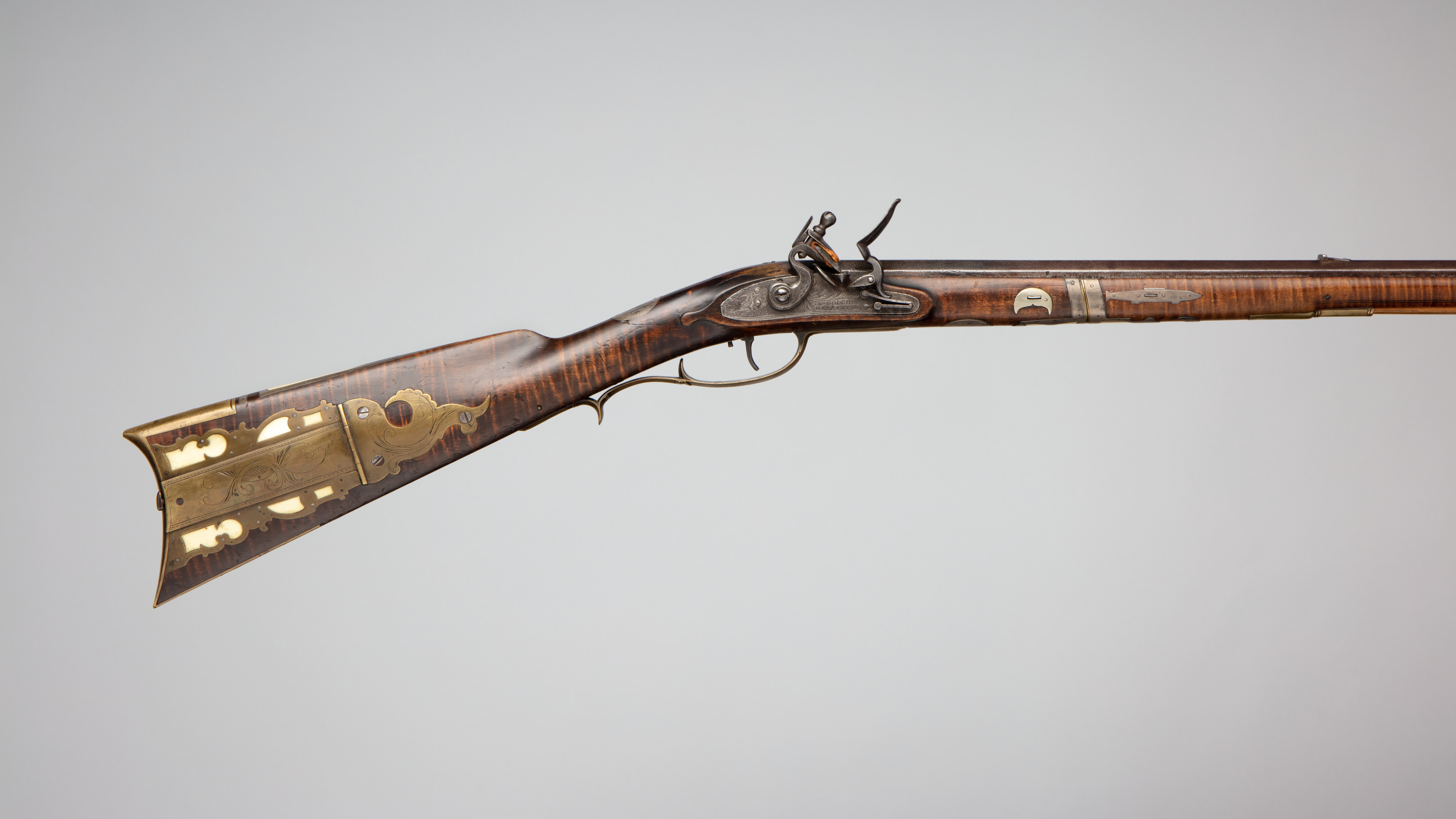
The flintlock longrifle, particularly those crafted in New Berlin, Union County, Pennsylvania, represents a singular convergence of frontier pragmatism, Germanic craftsmanship, and American identity. For Katherine Fashion Lab, this object is not merely a historical weapon but a potent artifact of symbolic power, historical adornment, and spiritual meaning. This analysis deconstructs the longrifle’s material and cultural DNA, translating its core attributes into a strategic framework for 2026 high-end luxury positioning. The objective is to extract enduring principles of authenticity, scarcity, and ritualistic value that transcend the artifact’s original function.
Symbolic Power: The Rifle as an Emblem of Sovereign Individuality
The Pennsylvania longrifle emerged in the 18th century as a tool of survival and a symbol of self-reliance. Unlike European military muskets, which were standardized and issued to conscripts, the American longrifle was a bespoke instrument of the individual. Its extended barrel, rifled bore, and precise mechanism allowed for remarkable accuracy at distances unthinkable for smoothbore weapons. This technical superiority translated directly into symbolic power: the longrifle became the material embodiment of the independent frontiersman, the yeoman farmer, and the revolutionary citizen-soldier.
From Tool to Icon
In the context of Katherine Fashion Lab, this symbolic power can be reframed as sovereign individuality. The longrifle’s user was not a cog in a military machine but a master of his own destiny. For a 2026 luxury client, the equivalent is the rejection of mass-market homogeneity. The longrifle teaches that true luxury is not about ubiquity but about the quiet authority of the singular object. A Katherine Fashion Lab collection inspired by this principle would emphasize limited production, client-specific customization, and a narrative of self-determination. The symbolic power lies not in the object’s ability to dominate others, but in its capacity to empower the owner’s own agency and independence.
Historical Adornment: Material Language of Status and Craft
The longrifle’s material composition—steel, curly maple, ash, brass, silver, and bone—is a lexicon of historical adornment. Each material was chosen for both function and aesthetic resonance. The curly maple stock, with its distinctive fiddleback figure, was not merely a structural component; it was a canvas for the smith’s artistry. Silver inlays, brass patch boxes, and bone-tipped ramrods transformed a utilitarian tool into a wearable object of pride. These adornments communicated the owner’s wealth, taste, and regional identity.
Material Hierarchy and Narrative
For Katherine Fashion Lab, the longrifle’s material strategy offers a masterclass in hierarchical adornment. The steel barrel represents strength and precision; the curly maple symbolizes organic, irreplaceable beauty; the brass and silver denote preciousness and light. Bone introduces a tactile, mortal element. In 2026, luxury brands must move beyond surface-level decoration. The longrifle suggests a layered approach where each material tells a part of the story. A Katherine Fashion Lab piece might juxtapose cold-forged steel accents against warm, figured wood, with silver filigree echoing the rifle’s patch box. The adornment is not additive but integral to the object’s identity. This strategy positions the brand as a guardian of material knowledge, where the client invests in the narrative of each component.
Spiritual Meaning: The Ritual of Loading and the Patina of Use
The flintlock longrifle’s spiritual meaning is embedded in its operational ritual. Loading a longrifle was a deliberate, multi-step ceremony: measure powder, patch the ball, ram it home, prime the pan, cock the hammer, aim, and fire. This process demanded focus, patience, and respect for the weapon’s power. The resulting patina—the wear on the stock from countless handlings, the darkening of the brass from exposure to moisture, the subtle pitting of the steel—became a record of the owner’s life. This is not degradation but sacralization.
Ritual as Luxury Experience
In the context of 2026 high-end luxury, spiritual meaning can be translated into ritualized engagement. The modern luxury consumer increasingly seeks experiences that slow time and create meaning. Katherine Fashion Lab can adopt the longrifle’s loading ritual as a metaphor for product interaction. A garment or accessory might require a specific sequence of fastenings, closures, or adjustments—each step a meditative act. The patina of use, often shunned by fast fashion, becomes a desired quality. The brand could offer a “patina service” where materials are intentionally aged or where the client is encouraged to wear the piece in specific environments to develop a unique surface character. This spiritual dimension elevates the object from commodity to companion, fostering deep emotional loyalty.
2026 High-End Luxury Strategy: Translating Heritage into Market Dominance
The flintlock longrifle’s heritage provides a robust strategic blueprint for Katherine Fashion Lab’s 2026 positioning. The core pillars are authenticity, scarcity, narrative depth, and experiential engagement.
Authenticity Through Place and Process
The longrifle’s origin in New Berlin, Union County, Pennsylvania, is not incidental; it is foundational. The specific woods, the local iron ore, and the Germanic gunmaking traditions of the region created a distinct artifact. For Katherine Fashion Lab, authenticity must be rooted in a verifiable supply chain and a transparent creative process. The 2026 strategy should emphasize the provenance of materials—perhaps collaborating with Pennsylvania-based mills, tanneries, or metalworkers. The brand’s story must be as specific as the longrifle’s: not “American-made,” but “crafted from Pennsylvania curly maple, forged in a Union County smithy.” This geographic specificity is a powerful differentiator in a globalized market.
Scarcity as a Value Proposition
The longrifle was never mass-produced. Each was a bespoke commission, tailored to the owner’s hand and purpose. Katherine Fashion Lab should adopt a limited-edition, made-to-order model for its highest-tier offerings. This scarcity is not artificial; it is a reflection of the time, skill, and material constraints inherent in true craftsmanship. The brand can create annual “Longrifle Collections” of no more than 50 pieces, each numbered and documented. The client becomes a patron, not a consumer.
Narrative Depth as a Marketing Engine
The longrifle’s story is rich with tension: survival and artistry, violence and beauty, independence and community. Katherine Fashion Lab’s 2026 marketing should embrace this complexity. Campaigns can use documentary-style content, historical reenactments, or collaborations with historians and curators. The brand can publish “Field Notes” that explore the symbolism of each material. The narrative is not a tagline but a continuous, evolving story that invites the client into a world of meaning.
Experiential Engagement: The Ritual of Purchase and Use
The purchase of a longrifle was a relationship between smith and owner. Katherine Fashion Lab can replicate this through bespoke consultations where clients select materials, finishes, and design details. The unboxing experience should mirror the loading ritual: a deliberate, sensory ceremony involving scent (gunpowder or wood oil), sound (the click of brass), and touch (the grain of maple). Post-purchase, the brand can offer maintenance workshops, patina development guides, and client-only events that celebrate the object’s history. This transforms the product into a lifestyle anchor.
Conclusion
The flintlock longrifle from New Berlin, Pennsylvania, is far more than a historical curiosity. It is a masterclass in symbolic power, historical adornment, and spiritual meaning. For Katherine Fashion Lab, its lessons are directly applicable to a 2026 high-end luxury strategy that prioritizes authenticity, scarcity, narrative depth, and experiential engagement. By adopting the longrifle’s ethos of sovereign individuality, material integrity, and ritualistic use, the brand can position itself not merely as a purveyor of luxury goods, but as a curator of meaningful, enduring objects. The flintlock longrifle teaches that the most powerful luxury is not the object itself, but the story it tells and the life it accompanies.