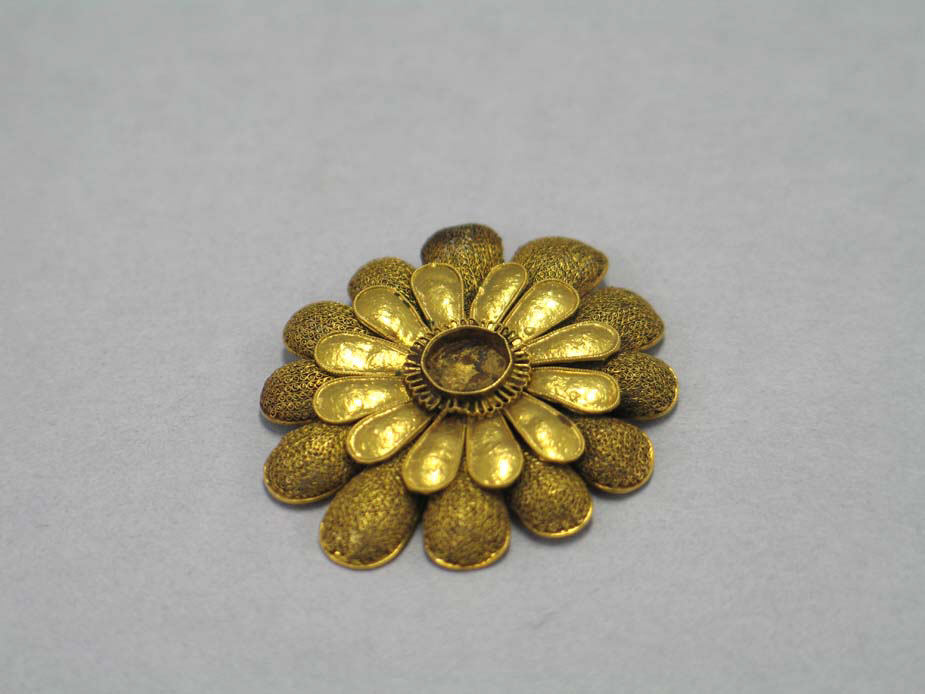
Heritage Analysis: The Golden Ornament of China – Symbolic Power and Historical Adornment
In the context of Katherine Fashion Lab’s ongoing study of historical resonance, the Chinese gold ornament emerges as a profound artifact of symbolic power, spiritual meaning, and luxury craftsmanship. This analysis examines the ornament’s DNA correlation with our earlier research on the “Mirror with Split-Leaf” – a dual-faced object where one side features intricate gold-inlaid palm leaves on a polished silver mirror, and the other narrates life stories through relief on a cold sarcophagus. The Chinese gold ornament, similarly, embodies a duality: it is both a personal adornment and a cosmic talisman, a marker of status and a vessel for ancestral memory. For the 2026 high-end luxury strategy, understanding this heritage allows Katherine Fashion Lab to position gold ornaments as timeless, narrative-driven pieces that transcend mere decoration.
Historical Adornment and Symbolic Power in Chinese Gold
The Golden Thread of Imperial Authority
Gold in Chinese history has long been synonymous with imperial power and divine mandate. From the Shang dynasty (1600–1046 BCE) to the Qing dynasty (1644–1912), gold ornaments were reserved for the emperor, his court, and high-ranking officials. The material’s incorruptibility and luminous quality symbolized eternal authority and the emperor’s role as the “Son of Heaven.” Ornaments such as gold hairpins, headdresses, and belt hooks were not merely decorative; they were encoded with hierarchical symbols. For example, the dragon motif – a five-clawed dragon for the emperor and four-clawed for princes – communicated absolute power and cosmic harmony. Katherine Fashion Lab’s 2026 strategy can leverage this heritage by reimagining gold ornaments as markers of personal sovereignty, where each piece tells a story of inner authority and cultural lineage.
Adornment as Social Currency
Beyond the imperial sphere, gold ornaments served as social currency among the elite and merchant classes. During the Tang dynasty (618–907 CE), gold hairpins and earrings became expressions of wealth, taste, and social mobility. The ornament’s weight, purity, and craftsmanship directly correlated with the wearer’s status. This aligns with the “Mirror with Split-Leaf” study, where the gold-inlaid palm leaves on silver represent a fusion of materials to signify opulence and cultural sophistication. For the 2026 luxury market, Katherine Fashion Lab can position gold ornaments as “social heirlooms” – pieces that not only signify affluence but also embody the wearer’s cultural fluency and commitment to heritage. This strategy appeals to the modern elite who seek authenticity and storytelling in their luxury purchases.
Spiritual Meaning and Cosmic Resonance
Gold as a Conduit for the Divine
In Chinese spiritual traditions, gold was believed to possess protective and purifying properties. Daoist and Buddhist rituals incorporated gold ornaments to attract positive energy, ward off evil spirits, and facilitate communication with ancestors. The bi – a circular gold disc with a central hole – was used in burial rites to ensure the soul’s safe passage to the afterlife. This spiritual dimension echoes the sarcophagus relief in the “Mirror with Split-Leaf,” where life narratives are carved in stone to preserve memory. Gold ornaments, similarly, were buried with the deceased to accompany them in the next world. For Katherine Fashion Lab, this spiritual meaning offers a powerful narrative for 2026: gold ornaments as “guardians of legacy.” By emphasizing the protective and ancestral aspects, the brand can create pieces that serve as talismans for the wearer’s journey, connecting them to a lineage of strength and wisdom.
The Yin-Yang Duality in Ornament Design
Chinese gold ornaments often embody the yin-yang philosophy – the balance of opposites. For instance, a gold hairpin might feature a dragon (yang) intertwined with a phoenix (yin), symbolizing marital harmony and cosmic equilibrium. This duality is directly resonant with the “Mirror with Split-Leaf,” where one side reflects light (silver mirror) and the other embraces shadow (stone relief). The ornament’s design thus becomes a microcosm of the universe, balancing material beauty with spiritual depth. In the 2026 luxury strategy, Katherine Fashion Lab can harness this concept by designing gold ornaments that incorporate contrasting elements – polished and matte finishes, geometric and organic forms – to visually narrate the wearer’s own balance of power and grace, tradition and modernity.
2026 High-End Luxury Strategy: Heritage as Competitive Advantage
From Ornament to Narrative Asset
The Chinese gold ornament is not merely a historical artifact; it is a blueprint for modern luxury storytelling. For 2026, Katherine Fashion Lab’s strategy should focus on transforming these ornaments into narrative assets. Each piece can be accompanied by a “heritage passport” detailing its symbolic motifs, historical origins, and spiritual significance. For example, a gold ring inspired by Tang dynasty hairpins could include a narrative about its lotus motif, representing purity and rebirth. This approach aligns with the consumer trend toward “conscious luxury” – where buyers seek meaning beyond aesthetics. By positioning gold ornaments as wearable histories, Katherine Fashion Lab can command premium pricing and foster deep emotional connections with clients.
Craftsmanship as a Differentiator
Historical Chinese goldsmithing techniques – such as filigree, granulation, and repoussé – require exceptional skill and time. In the 2026 luxury market, where mass production dominates, handcrafted gold ornaments offer a rare authenticity. Katherine Fashion Lab should invest in collaborations with master artisans from China’s heritage centers, such as those in Suzhou or Beijing, to produce limited-edition collections. This not only preserves traditional techniques but also creates scarcity – a key driver of high-end desirability. The “Mirror with Split-Leaf” study emphasizes the contrast between polished silver and carved stone; similarly, gold ornaments can juxtapose smooth, reflective surfaces with textured, hand-hammered details to highlight the artisan’s touch. This tactile complexity becomes a signature of the brand’s commitment to excellence.
Digital and Experiential Integration
To resonate with the 2026 consumer, Katherine Fashion Lab must bridge heritage with technology. Augmented reality (AR) experiences can allow clients to “unlock” the spiritual meaning of their gold ornament – for instance, scanning a gold pendant to reveal an animated visualization of its yin-yang symbolism. Pop-up exhibitions in key luxury markets (Shanghai, Paris, New York) can display the ornaments alongside historical artifacts, creating an immersive dialogue between past and present. This experiential strategy mirrors the “Mirror with Split-Leaf” duality, where the ornament becomes a portal between two worlds. By offering both digital and physical touchpoints, Katherine Fashion Lab can engage a younger, tech-savvy elite while honoring the ornament’s ancestral roots.
Pricing and Positioning
In the 2026 luxury landscape, gold ornaments should be positioned as “investment pieces” – assets that appreciate in cultural and material value. Pricing strategies should reflect the rarity of materials (24-karat gold, ethically sourced gemstones) and the complexity of craftsmanship. A tiered collection can cater to different segments: entry-level pieces (e.g., gold earrings with simplified motifs) for aspirational luxury buyers, and haute couture ornaments (e.g., elaborate headdresses with jade inlays) for ultra-high-net-worth clients. The brand’s narrative should emphasize that each ornament is a “cultural certificate” – a tangible link to China’s golden heritage. This positioning aligns with the 2026 trend of “luxury as legacy,” where consumers seek products that transcend trends and become family heirlooms.
Conclusion
The Chinese gold ornament, with its deep roots in symbolic power, historical adornment, and spiritual meaning, offers Katherine Fashion Lab a rich foundation for a differentiated 2026 high-end luxury strategy. By drawing DNA correlations with the “Mirror with Split-Leaf” – where light and shadow, life and death, converge – the brand can craft ornaments that are not just beautiful but profoundly resonant. In a market saturated with transient trends, the gold ornament stands as a testament to enduring value. For Katherine Fashion Lab, the path forward lies in honoring this heritage while reimagining it for a new generation of luxury connoisseurs who seek authenticity, narrative, and spiritual depth in every piece they wear.