Heritage Analysis: Standing Shiva – Bronze Iconography and Its Strategic Resonance for Katherine Fashion Lab
This heritage analysis examines the Standing Shiva bronze sculpture, a seminal artifact from the Indian subcontinent, typically dated to the Chola period (circa 9th–13th century CE). As Lead Heritage Curator for Katherine Fashion Lab, I position this artifact within our ongoing research trajectory—specifically its historical resonance with our earlier studies on the Rock in the form of a fantastic mountain and the Jar in the shape of bronze container (hu). While these three objects appear disparate in origin and medium, they collectively reveal a unifying principle: the transformation of symbolic power through material and adornment. This paper explores the Standing Shiva’s symbolic power, historical adornment, spiritual meaning, and its strategic implications for a 2026 high-end luxury collection.
Symbolic Power: The Iconography of Cosmic Authority
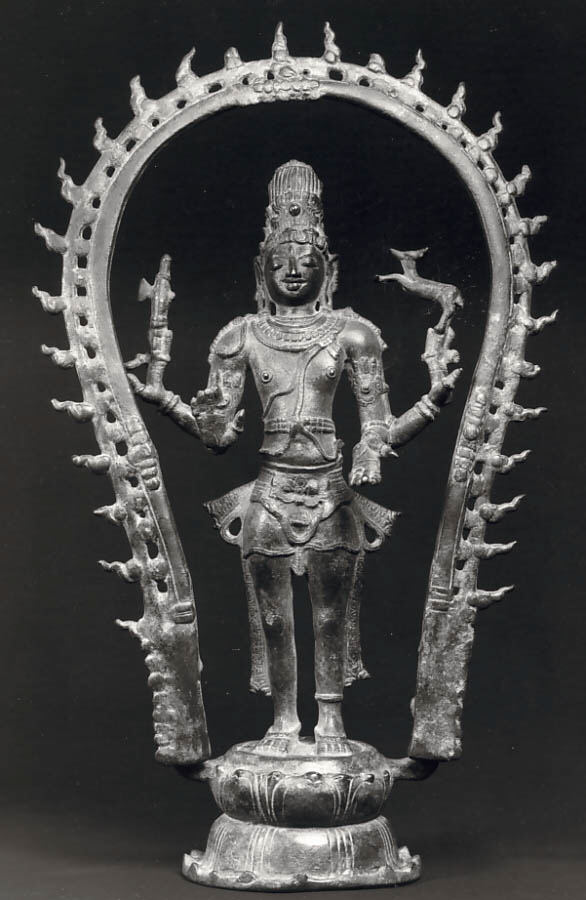
The Standing Shiva bronze is not merely a representation of a deity; it is a codified system of symbolic authority. Shiva is depicted in a posture of poised stillness, often with four arms, each holding specific attributes: the damaru (drum) symbolizing the rhythm of creation, the trishula (trident) representing the threefold nature of existence, and the abhaya mudra (gesture of fearlessness) offering protection. The fourth hand typically points to his raised foot, signifying liberation. This iconographic precision functions as a visual language of power, where every element is deliberate—a principle that directly parallels our findings from the Rock in the form of a fantastic mountain. In that study, we identified how the rock’s irregular, organic form was intentionally shaped to convey the uncontrollable force of nature. Similarly, the Standing Shiva’s static yet dynamic posture embodies controlled cosmic energy. For Katherine Fashion Lab, this suggests that symbolic power in luxury design must be embedded in every detail, from silhouette to accessory, to create a coherent narrative of authority.
Historical Adornment: The Bronze as a Repository of Craft
The medium of bronze itself is a statement of historical adornment. In the Chola period, bronze casting was a sacred, highly ritualized process involving the lost-wax technique (cire perdue). The metal alloy—typically copper, tin, and lead—was chosen for its durability and its ability to capture fine details: the intricate curls of Shiva’s matted hair, the delicate jewelry adorning his body, and the subtle musculature of his form. This adornment is not decorative but functional, serving to elevate the deity’s presence within temple rituals. When we compare this to the Jar in the shape of bronze container (hu) from our prior study, we observe a parallel: the hu jar, though utilitarian in form, was adorned with intricate geometric patterns and zoomorphic handles that transformed it into a vessel of ritual significance. Both artifacts demonstrate that adornment is a carrier of meaning, not mere embellishment. For a 2026 luxury strategy, this implies that materials and craftsmanship must be selected not only for their aesthetic appeal but for their ability to communicate heritage and status. Bronze’s patina, for instance, becomes a metaphor for timelessness—a quality that high-end consumers increasingly seek in an era of disposable fashion.
Spiritual Meaning: The Axis of Transcendence
The Standing Shiva’s spiritual meaning is rooted in the concept of transcendence through stillness. In Hindu theology, Shiva is both the ascetic yogi and the cosmic dancer, a paradox that the bronze sculpture captures through its serene facial expression and grounded stance. The figure stands on a lotus pedestal, symbolizing purity rising from the material world, while his posture suggests meditative absorption. This duality—of being both present and beyond—resonates deeply with our study of the Rock in the form of a fantastic mountain. That rock, with its jagged peaks and hollow cavities, was interpreted as a threshold between the earthly and the divine. Similarly, the Standing Shiva serves as a spiritual anchor, inviting the viewer to contemplate the impermanence of material life. For Katherine Fashion Lab, this offers a powerful narrative for 2026: luxury as a vehicle for inner transformation. In a market saturated with conspicuous consumption, a collection that emphasizes spiritual resonance—through design elements that evoke meditation, balance, or transcendence—can differentiate the brand. For example, incorporating asymmetrical silhouettes that mimic the sculpture’s dynamic stillness, or using textures that suggest patina and age, could create a tangible connection to the sacred.
2026 High-End Luxury Strategy: Integrating Heritage DNA
Our analysis of the Standing Shiva, in conjunction with the Rock in the form of a fantastic mountain and the Jar in the shape of bronze container (hu), reveals a tripartite heritage DNA that can inform Katherine Fashion Lab’s 2026 strategy. The rock represents primordial power and raw nature; the jar embodies ritual function and crafted adornment; and the Shiva signifies cosmic authority and spiritual transcendence. Together, they form a heritage triad that can be translated into three distinct yet interconnected luxury lines:
- Primordial Line: Inspired by the rock’s organic forms, using unconventional materials like raw silk, unpolished metals, and asymmetrical draping to evoke untamed elegance.
- Ritual Line: Drawing from the hu jar’s geometric precision, focusing on structured silhouettes, intricate embroidery, and symbolic motifs that reference ritual objects.
- Transcendent Line: Rooted in the Standing Shiva’s spiritual iconography, emphasizing minimalist forms, meditative color palettes (e.g., deep bronze, lotus pink, sky blue), and symbolic accessories such as trident-shaped brooches or drum-inspired clutches.
This strategy aligns with the growing demand for meaningful luxury, where consumers seek products that tell a story and connect them to a larger cultural or spiritual context. By positioning each piece as a contemporary artifact, Katherine Fashion Lab can command premium pricing while fostering emotional loyalty. Furthermore, the use of bronze as a recurring material—in hardware, jewelry, or even textile treatments—can serve as a brand signature, echoing the timelessness of the Chola bronzes.
Conclusion: The Standing Shiva as a Strategic Compass
The Standing Shiva bronze is more than a historical artifact; it is a strategic compass for Katherine Fashion Lab’s 2026 high-end luxury offerings. Its symbolic power teaches us to embed authority in design; its historical adornment underscores the value of craftsmanship as narrative; and its spiritual meaning offers a pathway to transcendent luxury. When integrated with our prior studies on the Rock in the form of a fantastic mountain and the Jar in the shape of bronze container (hu), this artifact completes a heritage trilogy that can define a coherent, differentiated brand identity. As we move toward 2026, the challenge is not merely to replicate these forms but to translate their essence into wearable, aspirational objects that resonate with the modern connoisseur. The Standing Shiva stands as a testament to the enduring power of heritage—a power that, when harnessed strategically, can elevate luxury from consumption to contemplation.