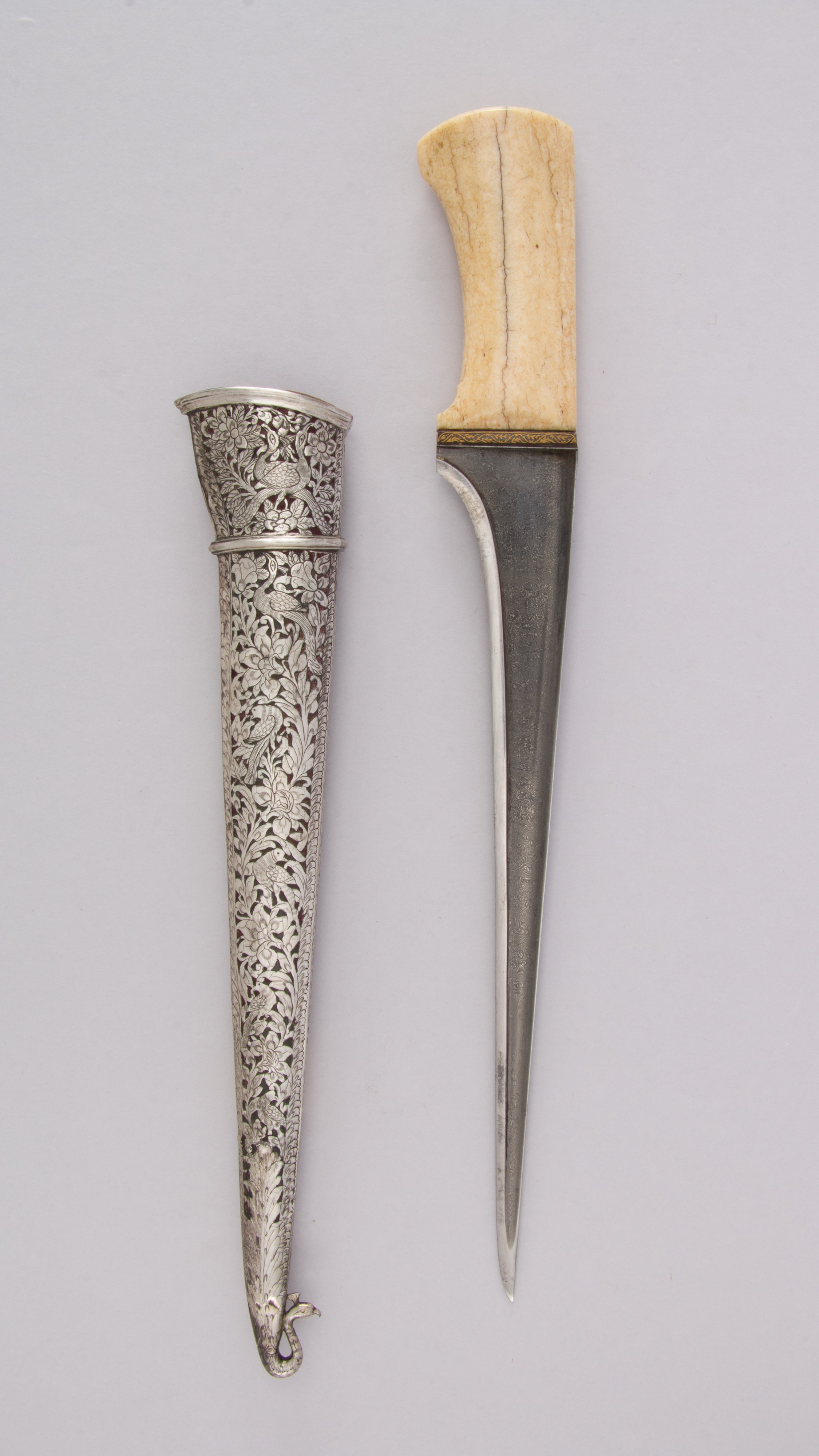
Heritage Analysis: The Pesh-kabz Dagger as a Cultural Artifact and Luxury Archetype
As Lead Heritage Curator for Katherine Fashion Lab, I present this strategic standalone research on the South Indian Pesh-kabz dagger and its sheath—a masterwork of martial artistry, spiritual symbolism, and aristocratic adornment. Crafted from steel, silver, wood, ivory, and gold, this object transcends its functional origins to become a potent emblem of sovereign power, divine protection, and refined taste. This analysis examines its symbolic power, historical adornment, spiritual meaning, and proposes a strategic pathway for its reinterpretation within a 2026 high-end luxury framework.
Symbolic Power: Authority, Protection, and the Duality of the Blade
The Pesh-kabz, characterized by its distinctive T-shaped cross-section and reinforced tip, was designed not merely for combat but for assertion of dominance. In South Indian courts, particularly within the Deccan sultanates and Vijayanagara Empire, the dagger served as a tangible extension of the ruler’s will. Its presence in courtly regalia signified the monarch’s capacity to protect his realm and punish transgressors. The inclusion of gold and ivory elevates the weapon from a tool of violence to a symbol of legitimate authority—a fusion of martial prowess and divine sanction.
Material Hierarchy and Status Signaling
The strategic selection of materials—steel for resilience, silver for purity, gold for divinity, and ivory for rarity—creates a layered semiotic system. The elephant ivory, sourced from a creature revered in Hindu mythology as a symbol of wisdom and royal power (associated with the god Indra’s mount Airavata), imbues the dagger with an aura of cosmic authority. The gold overlay, often engraved with floral or geometric motifs, further communicates the owner’s connection to celestial order. In luxury branding, this material hierarchy offers a blueprint for exclusivity: the deliberate orchestration of rare, culturally charged materials to narrate power without explicit proclamation.
Historical Adornment: The Dagger as Wearable Art
The Pesh-kabz was not merely carried; it was worn as an integral component of courtly attire. Suspended from a silk or brocade sash at the waist, the sheath became a focal point of the ensemble, its silver and gold mounts catching light to announce the wearer’s status. The wooden core of the sheath, often carved to fit the blade precisely, was wrapped in silver or gold foil, while the ivory hilt was shaped to ergonomically fit the hand, sometimes carved with intricate patterns or inlaid with precious stones.
Adornment as Ritual and Performance
Historical accounts from European travelers to South Indian courts describe nobles adjusting their daggers as a deliberate gesture—a performative act that communicated readiness, confidence, and belonging to an elite class. The dagger’s placement on the right hip, closest to the sword arm, signaled martial readiness, while its removal and presentation to a guest signified profound trust. This ritualized adornment offers contemporary luxury brands a powerful narrative: the idea of accessories as instruments of social performance, where each piece is designed to be seen, touched, and interpreted within a codified system of gestures.
Spiritual Meaning: The Dagger as a Conduit to the Divine
Beyond its secular power, the Pesh-kabz held profound spiritual significance. In Hindu and Islamic traditions, the dagger was often consecrated through rituals that invoked divine protection for the bearer. The blade’s pointed shape was associated with the trishula (trident) of Shiva, symbolizing the destruction of ignorance and evil. The gold and silver elements were believed to channel positive energies, while the ivory—a material from a sacred animal—was thought to ward off malevolent forces.
Protective Amulet and Cosmic Alignment
Many South Indian daggers were inscribed with verses from the Quran or Hindu mantras, transforming the weapon into a talisman. The act of drawing the blade was seen as a moment of spiritual alignment, where the bearer’s will merged with divine purpose. For the 2026 luxury consumer, this spiritual dimension offers a profound differentiator: the ability to imbue objects with intention, protection, and a sense of cosmic belonging. As modern consumers seek meaning beyond materiality, the Pesh-kabz’s spiritual architecture—where form, material, and ritual converge—provides a template for creating objects that are not merely beautiful but spiritually resonant.
2026 High-End Luxury Strategy: From Artifact to Archetype
To translate the Pesh-kabz’s heritage into a 2026 luxury strategy, Katherine Fashion Lab must move beyond replication and toward archetypal reimagination. The dagger is not a product to be copied but a system of symbolic codes to be decoded and redeployed across categories—from jewelry to leather goods to fragrance.
Strategic Pillars for 2026
1. Material Alchemy and Sourcing Narrative: The Pesh-kabz’s material hierarchy—steel, silver, gold, ivory—can be modernized using ethically sourced alternatives. Use responsibly mined gold, recycled silver, and synthetic ivory (or certified reclaimed ivory) to maintain rarity without ecological compromise. The narrative should emphasize the transformation of materials: steel as strength, gold as light, and ivory as wisdom. This aligns with the 2026 luxury consumer’s demand for transparency and sustainability without sacrificing exclusivity.
2. Ritualized Unboxing and Gestural Design: The dagger’s historical performance—its drawing, presentation, and display—can inspire a new category of “ritual accessories.” Design a limited-edition leather bracelet or belt buckle that requires a specific gesture to open or close, echoing the ceremonial drawing of the blade. The unboxing experience should mimic the unveiling of a sacred object, with layered reveals, tactile materials (silk, wood, metal), and a companion booklet explaining the spiritual symbolism. This creates a haute couture of gestures, where the act of wearing becomes a personal ritual.
3. Symbolic Codes in Pattern and Motif: The dagger’s engraved patterns—often geometric or floral—can be abstracted into a proprietary “Pesh-kabz code” for use in prints, embroidery, and hardware. The T-shaped cross-section of the blade can inspire a signature clasp or closure across handbags and jewelry. This ensures brand recognition while maintaining cultural integrity. Luxury in 2026 will be defined by the ability to tell stories through pattern, not logo.
4. Spiritual Protection as Brand Philosophy: Position the collection as a “modern talisman,” offering protection, focus, and intention to the wearer. Collaborate with contemporary spiritual advisors or historians to create a meditation or intention-setting ritual for each piece. This taps into the growing wellness-luxury convergence, where consumers seek objects that support mental and emotional well-being. The dagger’s historical role as a protector becomes a metaphor for the brand’s promise: to guard the wearer’s identity, ambitions, and inner peace.
5. Limited Edition “Courtly Arsenal” Series: Launch a capsule of 100 numbered pieces—a ring, a cuff, and a belt—each referencing a specific historical dagger from a South Indian court. Each piece comes with a digital provenance ledger (blockchain-certified) detailing the original artifact’s history, materials, and symbolic meaning. This merges heritage with technology, appealing to the 2026 collector who values both story and scarcity.
Conclusion: The Dagger as a Mirror for Modern Luxury
The South Indian Pesh-kabz dagger is far more than a weapon; it is a concentrated expression of authority, artistry, and spirituality. Its materials speak of power, its form of performance, and its history of protection. For Katherine Fashion Lab, this artifact offers a strategic blueprint for creating luxury that is not merely consumed but experienced, interpreted, and cherished as a personal icon. By decoding its symbolic power, historical adornment, and spiritual meaning, we can craft a 2026 strategy that elevates the brand from purveyor of goods to guardian of cultural archetypes. The dagger’s legacy is not in its blade, but in the story it tells—and the story we choose to continue.