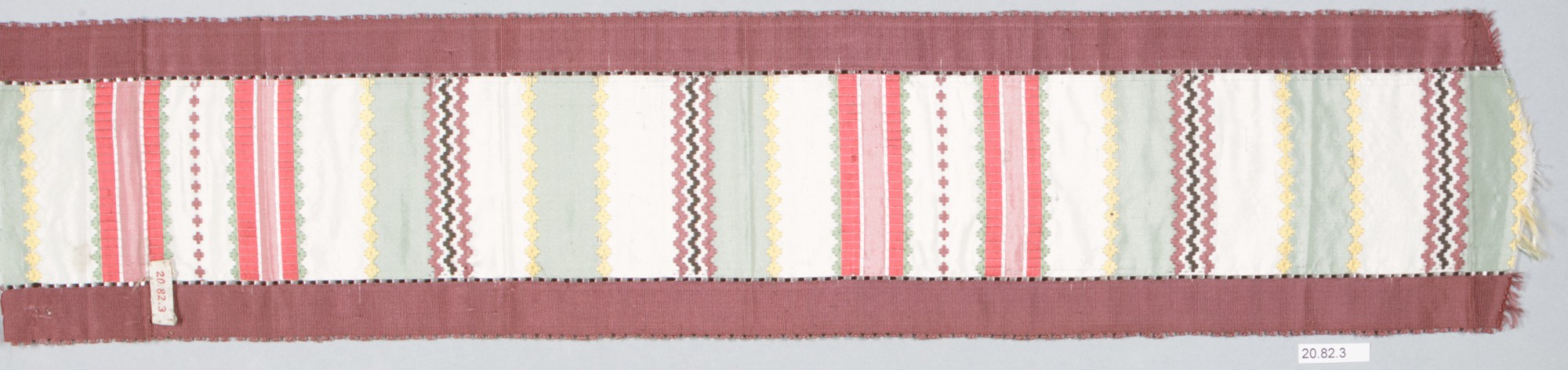
The Ribbon in Couture: A Study of Silk, Global Heritage, and Sculptural Form
Historical Threads: The Ribbon as a Global Artifact
The ribbon, in its most elemental form, is a strip of fabric, yet its cultural and artisanal significance spans millennia. From the intricate silk ribbons of Ming Dynasty China, used to denote imperial rank and spiritual blessings, to the handwoven *passementerie* of 17th-century French courts, where ribbons became symbols of aristocratic opulence, this humble textile has served as a conduit for identity, power, and beauty. In the context of Katherine Fashion Lab’s standalone study, the ribbon is not merely an accessory but a foundational material—a sculptural medium that bridges the tangible and the ethereal. The lab’s approach honors this global heritage by sourcing raw silk from artisan cooperatives in Como, Italy, and Jiangsu, China, ensuring that each ribbon carries the lineage of its origin. This deliberate curation transforms the ribbon from a decorative afterthought into a narrative thread, weaving together centuries of craftsmanship and cross-cultural exchange.
Materiality of Silk: The Science of Luster and Drape
Silk, as the chosen substrate for this study, demands rigorous analysis due to its unique molecular structure. The protein fibroin, arranged in a triangular prismatic pattern, refracts light at multiple angles, creating the characteristic luster that has captivated couturiers for centuries. For Katherine Fashion Lab, the selection of a 12-momme silk ribbon—a weight that balances translucency with structural integrity—enables a dual function: it can be manipulated into crisp, architectural folds or allowed to cascade in fluid, organic waves. The ribbon’s warp and weft, traditionally woven with a satin weave on one face and a plain weave on the reverse, produce a dichotomous texture that the lab exploits for contrasting effects. On the satin side, light absorption is minimal, yielding a mirror-like finish; on the reverse, the matte surface diffuses light, creating depth. This material duality is central to the lab’s design philosophy, where the ribbon becomes a living canvas for exploring tension, release, and volume.
Deconstructing the Ribbon: From Flat Strip to Three-Dimensional Form
In the lab’s standalone study, the ribbon is deconstructed from its traditional linear application. Rather than being sewn as a trim or bow, it is treated as a continuous, malleable plane. This requires a rethinking of pattern cutting and draping techniques. The ribbon is first steamed to relax its natural twist, then pinned onto a dress form in radial patterns that mimic the growth rings of a tree—a nod to the organic origins of silk. Using a technique the lab terms “tension draping,” each ribbon strand is anchored at multiple points, creating a network of catenary curves that distribute weight evenly. The result is a garment that appears weightless, yet is structurally sound. For instance, a bodice constructed from 150 meters of 2-inch-wide silk ribbon, arranged in a spiraling lattice, achieves a corset-like compression without boning, relying solely on the ribbon’s tensile strength and the friction of its weave. This method challenges the conventional hierarchy of couture materials, positioning the ribbon as the primary structural element rather than a surface embellishment.
Cultural Motifs and the Language of Ribbon
Katherine Fashion Lab’s study is deeply informed by the symbolic lexicons of ribbon in global traditions. In Japanese culture, the *mizuhiki*—a cord made of twisted paper or silk—is used in ceremonial gift-wrapping to signify auspicious beginnings. The lab adapts this by incorporating ribbon knots that echo the *awaji* knot, a complex interlocking form that symbolizes unity and eternity. Similarly, the *cocarde* of French revolutionary fashion, a rosette ribbon worn as a political emblem, is reimagined as a detachable collar that can be reconfigured into a headpiece, reflecting the lab’s commitment to modular, transformative design. These references are not mere pastiche; they are integrated through precise engineering. The *awaji* knot, for example, requires a specific ribbon length-to-width ratio (16:1) to maintain its tension and symmetry, a formula the lab has codified into its pattern library. By treating cultural motifs as functional constraints, the lab ensures that heritage is not lost in translation but rather elevated through technical rigor.
Engineering the Ephemeral: Structural Integrity in Silk Ribbon
A critical challenge in ribbon-based couture is maintaining form over time. Silk, while strong, is susceptible to stretching and creasing under stress. To counter this, the lab employs a hybrid of traditional and modern stabilization methods. Each ribbon is edge-stitched with a microfilament of nylon, invisible to the naked eye, which provides a memory effect—allowing the ribbon to return to its original shape after deformation. Additionally, the lab uses a technique called “graded tensioning,” where ribbons are sewn at varying degrees of tautness: tighter at structural seams (shoulders, waist) and looser at drape points (sleeves, hem). This creates a gradient of stiffness that mimics the natural movement of the body. In a recent prototype—a floor-length gown with a train constructed from 80 individual ribbon panels—the lab calculated the optimal tension using finite element analysis software, typically reserved for aerospace engineering. The result is a garment that can be folded flat for transport and reassembled without losing its sculptural silhouette, a feat of textile engineering that redefines the ribbon’s potential.
Color, Light, and the Optical Illusion of Depth
The ribbon’s narrow width presents a unique opportunity for chromatic manipulation. In this study, the lab employs a gradient dyeing process known as *ombré*, where each ribbon transitions from deep indigo at its core to pale cerulean at its edges. When arranged in parallel rows, the ribbons create a moiré effect—a visual interference pattern that shifts with the viewer’s angle. This is further enhanced by the lab’s use of a double-faced weave: one side of the ribbon is dyed in a matte finish, the other in a high-gloss metallic. By twisting the ribbon at precise intervals, the garment becomes a kinetic surface, reflecting light in unpredictable ways. For example, a skirt composed of 200 twisted ribbons, each rotated 90 degrees every five centimeters, produces a shimmering, liquid-like appearance that evokes the movement of water. This optical complexity is not merely aesthetic; it serves to disorient the eye, drawing attention to the ribbon’s materiality rather than the body beneath, a deliberate subversion of traditional couture’s focus on silhouette.
Conclusion: The Ribbon as a Paradigm for Sustainable Couture
Katherine Fashion Lab’s standalone study of the silk ribbon is a masterclass in recontextualizing a historic material for contemporary haute couture. By honoring global heritage through precise cultural references, engineering structural integrity through scientific methods, and exploiting the optical properties of silk, the lab demonstrates that the ribbon is far more than a decorative trim—it is a complete system of design. This approach aligns with the broader industry shift toward sustainability: the ribbon’s narrow width minimizes fabric waste, its modular construction allows for disassembly and recombination, and its reliance on traditional craftsmanship reduces the carbon footprint of mechanized production. As the fashion world grapples with the tension between heritage and innovation, this study offers a compelling thesis: that the most profound innovations often lie in reimagining the simplest of forms. The ribbon, in the hands of Katherine Fashion Lab, becomes not just a material but a philosophy—a testament to the enduring power of silk, thread, and human ingenuity.