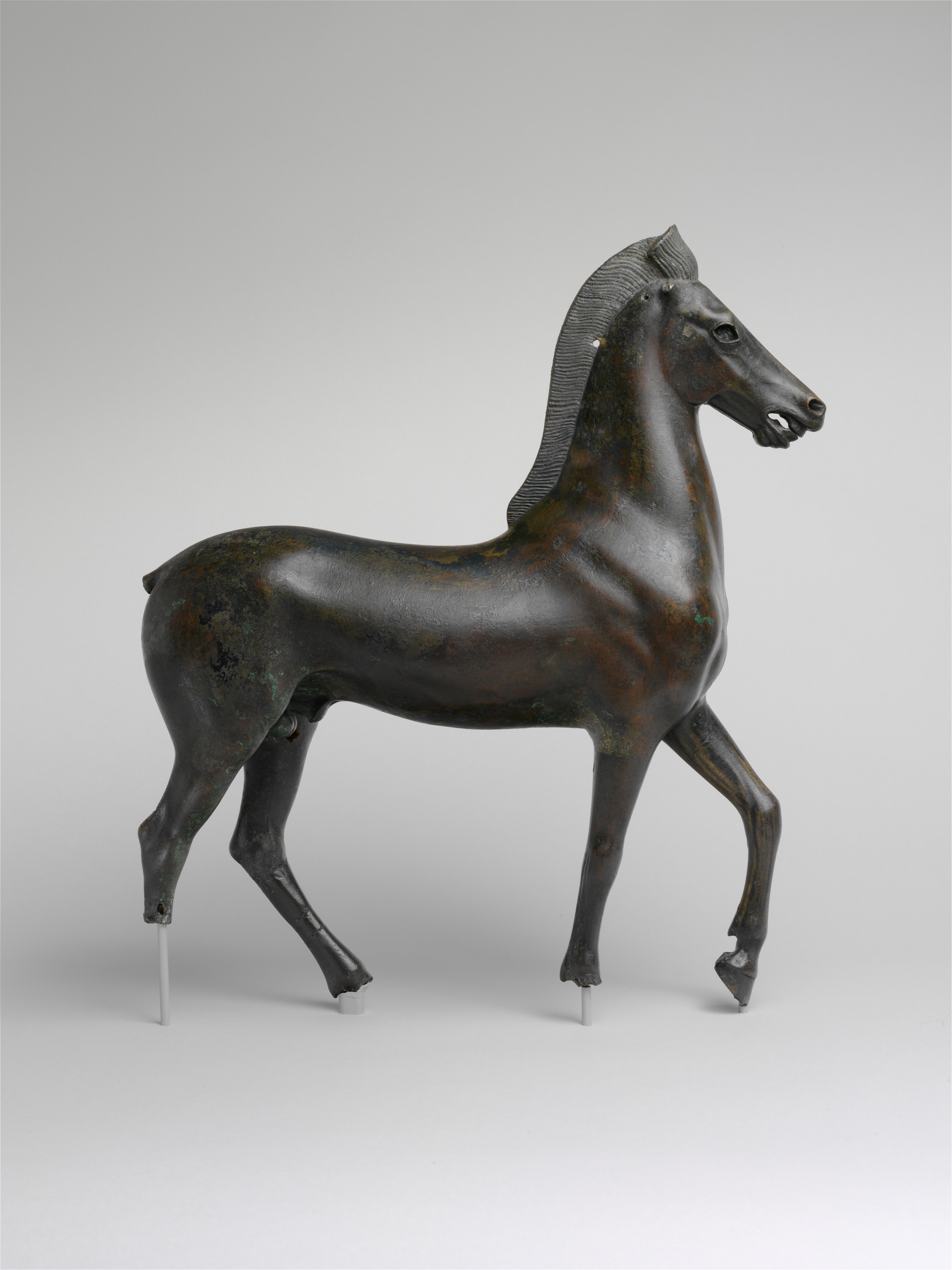
Heritage Analysis: Bronze Statuette of a Horse – Greek Antiquity and the Architecture of Prestige
Introduction: The Horse as a Cultural Archetype
The bronze statuette of a horse, originating from ancient Greece, represents far more than a mere equestrian likeness. It is a distillation of power, velocity, and divine association—a microcosm of Hellenic ideals. For Katherine Fashion Lab, this artifact serves as a pivotal reference point in our broader investigation of historical resonance, particularly as we draw correlations between the Rock in the Form of a Fantastic Mountain and the Jar in the Shape of a Bronze Container (Hu). These three objects—seemingly disparate in form and function—converge on a shared principle: the transformation of raw material into a vessel of symbolic authority. The horse statuette, however, elevates this dialogue by embodying kinetic energy and mortal aspiration, offering unique insights for a 2026 high-end luxury strategy rooted in narrative and material transcendence.
Symbolic Power: The Horse as a Signifier of Status and Sovereignty
In ancient Greek culture, the horse was intrinsically linked to aristocracy, warfare, and myth. Bronze statuettes of horses were not decorative trifles; they were offerings to gods, markers of heroic lineage, and symbols of civic pride. The material itself—bronze, an alloy of copper and tin—was labor-intensive to produce, requiring sophisticated metallurgy and substantial resources. This imbued the statuette with an aura of exclusivity. For Katherine Fashion Lab, this symbolic power translates directly into luxury branding: the horse becomes a metaphor for controlled strength, noble heritage, and unattainable speed. In 2026, high-end consumers increasingly seek objects that communicate not just wealth, but a curated lineage of power. The horse statuette suggests that true luxury is not passive; it is a dynamic assertion of identity. Our strategy should leverage this by positioning the horse as a recurring motif in limited-edition collections, where each piece carries a coded narrative of conquest and refinement.
Historical Adornment: The Aesthetics of Bronze and Patina
The bronze medium itself is a study in historical adornment. Unlike gold or silver, bronze develops a patina over centuries—a greenish or brownish surface layer that signals age, authenticity, and a dialogue with time. The original statuette would have been polished to a bright, golden sheen, catching light in a way that mimicked the sun’s glory. Over millennia, this surface transformed, adding a layer of visual complexity that modern luxury consumers romanticize. Katherine Fashion Lab’s 2026 strategy can harness this duality: the interplay between original brilliance and aged patina. In product design, this suggests finishes that evolve with wear—perhaps jewelry or accessories that oxidize or change texture over time, creating a personal history for the owner. The horse statuette teaches us that adornment is not static; it is a living record of interaction. By incorporating materials that age gracefully, we align with the growing demand for sustainable luxury that values longevity over disposability.
Spiritual Meaning: The Horse as Psychopomp and Divine Messenger
In Greek spirituality, horses were sacred to Poseidon, god of the sea and earthquakes, and were often associated with the underworld in funerary contexts. The bronze horse statuette, therefore, carried a dual spiritual charge: it was both a symbol of earthly dominion and a bridge to the divine. This duality resonates deeply with our earlier analysis of the Rock in the Form of a Fantastic Mountain, which represented the axis mundi—a connection between heaven and earth—and the Jar in the Shape of a Bronze Container (Hu), which functioned as a ritual vessel for ancestral offerings. All three objects share a spiritual imperative: they are conduits for transcendence. For Katherine Fashion Lab, this suggests that high-end luxury in 2026 must offer more than aesthetic pleasure; it must provide a sense of ritual and meaning. A collection inspired by the horse statuette could include ceremonial objects—such as incense holders, talismans, or wearable amulets—that invite the consumer into a personal mythology. The horse becomes a psychopomp, guiding the wearer from the mundane to the extraordinary.
Correlation with the Rock and the Jar: A Unified Theory of Material Transcendence
Our study of the Rock in the Form of a Fantastic Mountain and the Jar in the Shape of a Bronze Container (Hu) revealed a common thread: both objects use material form to encode spiritual and social hierarchies. The rock, with its jagged peaks, evokes the untamed sublime; the jar, with its precise contours, embodies containment and ritual order. The bronze horse statuette bridges these extremes. It is wild yet controlled, natural yet artificial—a synthesis of the mountain’s raw power and the jar’s structured purpose. This tripartite correlation offers a powerful framework for Katherine Fashion Lab’s 2026 strategy. We can develop a trilogy of collections—Mountain, Vessel, and Horse—each exploring a different facet of material transcendence. The horse collection, in particular, would emphasize movement, transition, and the liminal space between the earthly and the divine. By weaving these narratives together, we create a cohesive brand mythology that appeals to consumers seeking depth and coherence in their luxury purchases.
2026 High-End Luxury Strategy: From Artifact to Experience
To translate the heritage of the bronze horse statuette into a viable 2026 strategy, Katherine Fashion Lab must focus on three pillars: narrative authenticity, material innovation, and experiential engagement. First, narrative authenticity requires that each product tells a story rooted in historical truth—perhaps by collaborating with archaeologists or art historians to certify the symbolic lineage of designs. Second, material innovation should explore bronze and its patina effects in contemporary contexts, such as jewelry, handbag hardware, or even scented candles housed in bronze-like vessels that evolve over time. Third, experiential engagement involves creating immersive retail environments where consumers can interact with replicas of the statuette, learn about its history, and understand its spiritual resonance. Pop-up exhibitions, digital storytelling via augmented reality, and limited-edition releases timed to equestrian or mythological events (e.g., the Olympics) would reinforce the brand’s authority in heritage luxury.
Conclusion: The Horse as a Blueprint for Timeless Prestige
The bronze statuette of a horse is not merely an artifact; it is a blueprint for how luxury can embody power, history, and spirituality. By correlating it with the fantastic mountain and the ritual jar, Katherine Fashion Lab uncovers a unified language of material transcendence that speaks directly to the 2026 consumer’s desire for meaning. In an era of digital saturation and fast fashion, the horse reminds us that true prestige is earned through craftsmanship, narrative depth, and a reverence for the past. Our strategy must honor this legacy while innovating for the future—creating objects that are not just owned, but inherited, cherished, and passed down as modern heirlooms. The horse, in its bronze stillness, gallops eternally toward the horizon of aspirational desire.