The Architectonic Vest: A Study in British Couture Craft at Katherine Fashion Lab
Provenance and Cultural Resonance: The Vest as a British Icon
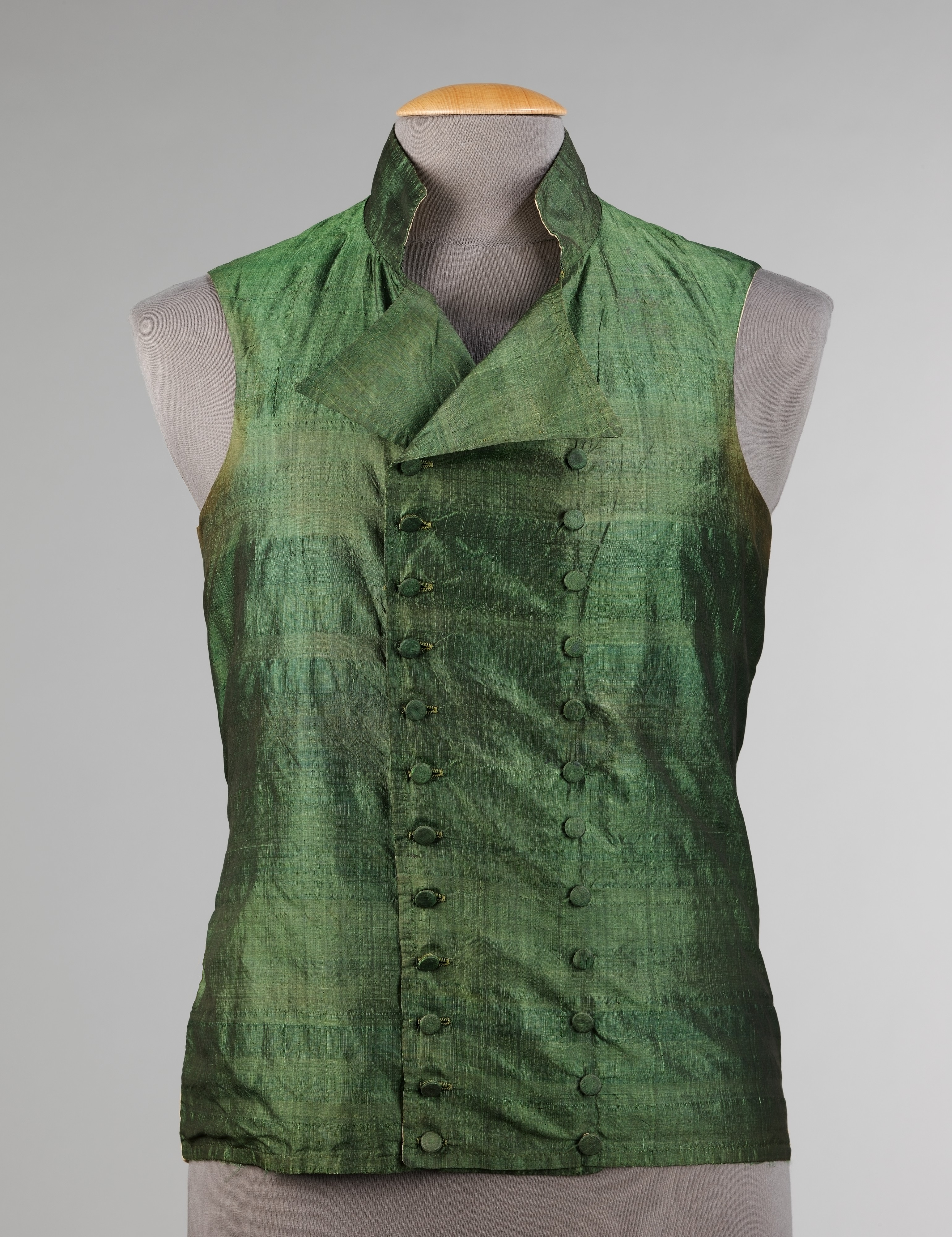
The waistcoat, or vest, occupies a singular position in the lexicon of British tailoring. Unlike the jacket or the trouser, which have undergone radical transformations across centuries, the vest has retained an almost architectural constancy—a garment that frames the torso with precision, discipline, and quiet authority. At Katherine Fashion Lab, our curatorial analysis of this standalone vest, of probable British origin, seeks to deconstruct its material narrative and formal logic. The vest, in its purest form, is a study in restraint: it neither conceals nor reveals but rather structures the human silhouette into a statement of deliberate composure. The British tradition, from the bespoke workshops of Savile Row to the understated elegance of country-house attire, has long privileged this garment as a marker of sartorial intelligence. Here, the vest is not an accessory but a primary text—a garment that speaks to the wearer’s understanding of proportion, texture, and the subtle interplay between formality and ease.
Material Dialectic: Silk and Linen in Tension
The selection of silk and linen as the primary materials for this vest represents a sophisticated dialogue between opposing textile philosophies. Linen, with its natural irregularities, its propensity to crease and soften with wear, evokes a tactile honesty—a material that records the body’s movement and the passage of time. It is a fabric of the earth, of humidity and sunlight, of the British countryside’s pastoral rhythms. In contrast, silk introduces a note of opulent restraint: its lustrous surface catches light with a subtle, almost liquid sheen, suggesting a garment destined for interiors, for drawing rooms and evening engagements. The interplay between these two fibers is not merely aesthetic but conceptual. The linen provides structure and breathability, a grounded foundation that resists the stiffness of formal tailoring. The silk, meanwhile, elevates the vest into a realm of quiet luxury, its smoothness juxtaposing the linen’s textured weave. This material dialectic creates a garment that is simultaneously robust and refined, casual and ceremonial. At Katherine Fashion Lab, we recognize this combination as a hallmark of British couture’s ability to reconcile contradictions—to produce a vest that can transition from a morning walk in the Cotswolds to an afternoon at the Royal Academy without losing its coherence.
Construction and Silhouette: The Grammar of Tailoring
The vest’s construction reveals a deep understanding of anatomical geometry. The shoulder line is cut with a precision that respects the natural slope of the clavicle, avoiding the bulkiness that often plagues lesser waistcoats. The armholes are high and clean, allowing for unimpeded movement while maintaining a sleek profile. The waist suppression is moderate, neither aggressively cinched nor boxy, but rather following the torso’s natural taper with an almost mathematical grace. This is a garment that does not impose a silhouette but collaborates with the wearer’s form. The front closure, likely employing horn or mother-of-pearl buttons, serves as a rhythmic punctuation—a vertical axis that organizes the vest’s visual field. The lapels, if present, are understated, perhaps a notched or shawl style that echoes the vest’s overall restraint. The back, often an afterthought in lesser garments, is crafted from the same silk-linen blend, with a subtle adjustment for ease through the shoulder blades. The hemline falls just below the waist, a length that honors tradition while accommodating contemporary proportions. Every seam, every dart, every line of stitching is a deliberate act of sartorial grammar—a language that the wearer and the observer read instinctively.
Contextual Analysis: The Standalone Vest in Contemporary Couture
In the context of standalone study, this vest transcends its functional origins to become a conceptual object. The decision to present it without a jacket or overcoat is a curatorial statement: the vest, stripped of its traditional supporting role, must stand on its own merits. This isolation forces a confrontation with the garment’s inherent qualities—its materiality, its cut, its ability to define a torso without the aid of outer layers. In contemporary fashion, the vest has experienced a resurgence as a piece of independent expression, worn over bare skin or a simple shirt, often as a statement of minimalist luxury. This vest, with its British provenance and its marriage of silk and linen, aligns with this trend while resisting its more theatrical extremes. It is a garment of quiet authority, one that does not shout but rather invites close inspection. The absence of overt branding or decorative excess is itself a form of luxury—a confidence in the purity of form and the quality of materials. For the Katherine Fashion Lab, this vest exemplifies the principle that true couture lies not in novelty but in the perfection of the familiar. It is a garment that rewards the discerning eye, the touch that recognizes the difference between linen’s organic texture and silk’s refined gloss.
Conclusion: The Vest as a Meditation on Craft
To analyze this vest is to engage with the very essence of British tailoring: a tradition that values precision, material integrity, and the quiet eloquence of well-considered design. The silk-linen composition speaks to a climate and a culture that understands the need for adaptability—a garment that can be worn with equal grace in a drafty manor house or a sunlit gallery. The construction, with its anatomical awareness and its refusal of excess, reflects a philosophy of dressing that prioritizes the wearer’s comfort and dignity above all else. At Katherine Fashion Lab, we see this vest not merely as a garment but as a meditation on the craft of clothing itself—a reminder that the most profound statements are often those made with the fewest words. It is a testament to the enduring power of the vest as a form, and to the British couture tradition’s ability to evolve while remaining rooted in its principles of excellence. For the discerning collector or the student of fashion, this vest offers a masterclass in the art of understatement—a garment that, in its silence, speaks volumes.