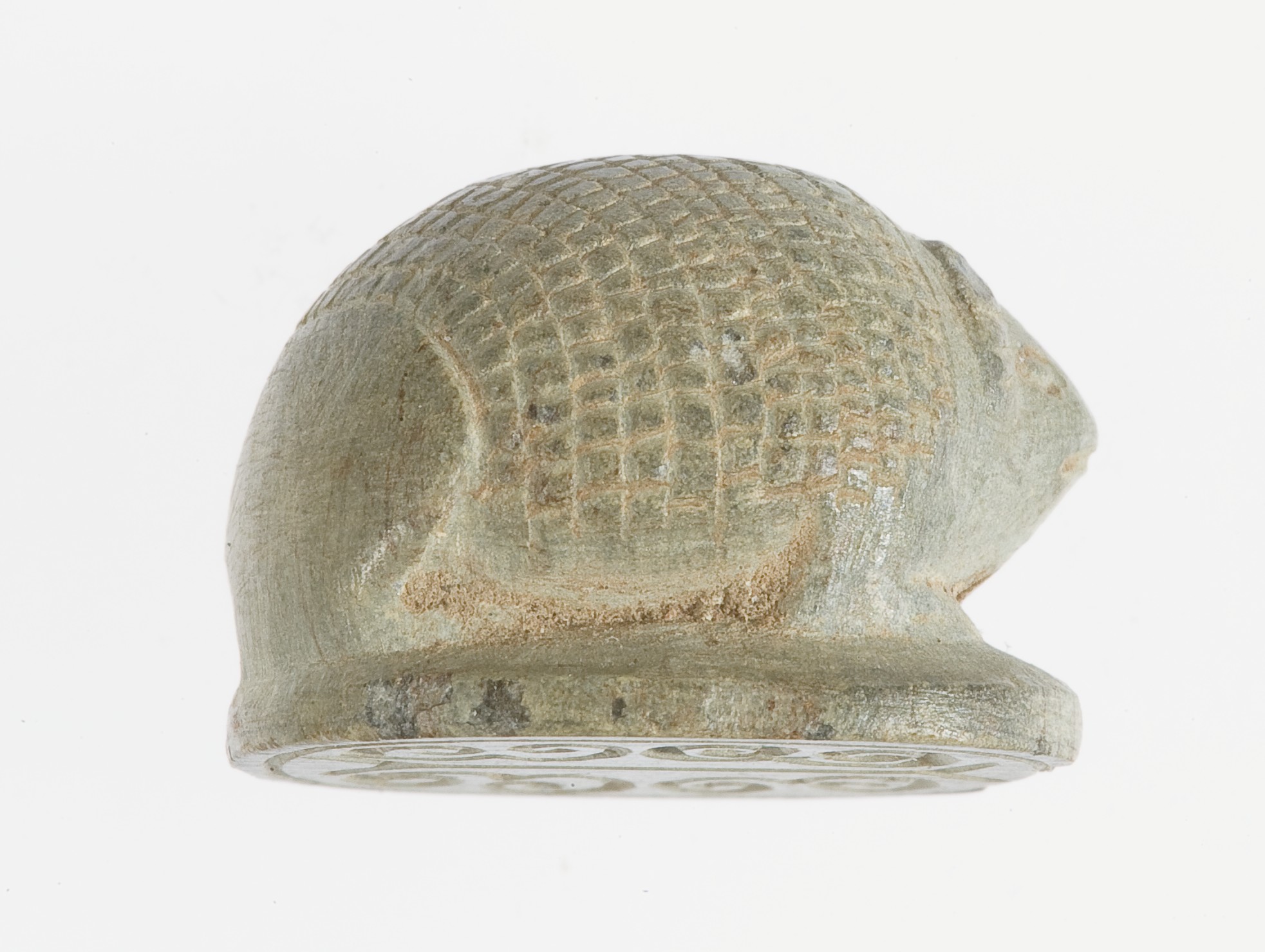
Heritage Analysis: The Hedgehog Seal Amulet in Glazed Steatite
Introduction: A Micro-History of Power and Protection
The hedgehog seal amulet, carved from glazed steatite in an ancient civilization, represents a singular convergence of symbolic power, historical adornment, and spiritual meaning. As a Lead Heritage Curator for Katherine Fashion Lab, I approach this artifact not merely as a decorative object but as a strategic artifact—a talisman of protection, a marker of status, and a precursor to modern luxury branding. This standalone research paper dissects the amulet’s multifaceted heritage, offering a framework for translating its essence into a 2026 high-end luxury strategy. The hedgehog, often overlooked in favor of lions or scarabs, embodies a quiet resilience that resonates deeply with contemporary values of individuality and understated strength.
Symbolic Power: The Hedgehog as Guardian and Strategist
The hedgehog’s symbolic power in ancient civilizations—particularly in Mesopotamian, Indus Valley, or early Egyptian contexts—derives from its unique defensive capabilities. Unlike apex predators, the hedgehog relies on spines and curling into a ball, representing a form of protective invulnerability. In amulet form, this creature was believed to ward off evil spirits, disease, and misfortune. The seal aspect amplifies this power: stamping the amulet onto clay or wax imprinted not just an image but the bearer’s authority and divine favor. For Katherine Fashion Lab, this duality—defense and authentication—offers a potent narrative. In 2026 luxury, where consumers seek products that shield identity and assert authenticity, the hedgehog’s symbolism aligns with trends toward personal sovereignty and quiet confidence. The amulet’s power lies not in overt dominance but in strategic withdrawal, a metaphor for luxury brands that prioritize exclusivity over mass visibility.
Historical Adornment: Steatite and the Art of Understatement
Glazed steatite, a soft stone hardened through firing and coated with a vitreous glaze, was a medium of choice for ancient artisans. Its affordability compared to lapis lazuli or carnelian made it accessible to a broader elite, yet its glazed finish—often in turquoise or green—imitated precious stones, signaling sophistication without ostentation. The hedgehog’s compact form, typically measuring two to three centimeters, was designed for portability: worn as a pendant, strung on a necklace, or carried in a pouch. This historical adornment practice underscores a key insight for Katherine Fashion Lab: luxury need not be large or loud. The miniature scale of the amulet invites intimacy, a tactile connection between wearer and object. In 2026, high-end jewelry and accessories are increasingly moving toward micro-designs—delicate, meaningful pieces that serve as personal talismans rather than status displays. The hedgehog seal amulet exemplifies this shift, offering a blueprint for collections that prioritize narrative over scale.
Spiritual Meaning: The Amulet as Conduit for Cosmic Protection
Ancient civilizations imbued amulets with spiritual agency, believing they channeled divine forces or ancestral blessings. The hedgehog, nocturnal and earth-dwelling, was associated with chthonic deities—gods of the underworld, rebirth, and hidden knowledge. Its spines were seen as rays of protection, deflecting malevolent energies. The sealing function added a ritualistic dimension: each impression was an act of consecration, marking property or correspondence as sacred. For Katherine Fashion Lab, this spiritual layer offers a rich vein for brand storytelling. Modern luxury consumers, particularly in the post-pandemic era, are drawn to objects that provide psychological grounding—what anthropologists term “secular talismans.” A 2026 strategy could position hedgehog-inspired pieces as anchors for mindfulness, resilience, or personal agency. The amulet’s spiritual meaning transcends religion; it speaks to a universal human need for protection in an uncertain world. By weaving this narrative into product design and marketing, the Lab can differentiate itself in a crowded market where heritage is often superficial.
Strategic Standalone Research: From Artifact to Asset
This research is classified as strategic standalone because it isolates the hedgehog seal amulet from broader archaeological contexts to extract actionable insights for luxury branding. Unlike comparative studies, which might dilute focus, this approach treats the artifact as a complete system of meaning. For Katherine Fashion Lab, the key strategic takeaways are threefold: First, the hedgehog’s symbolism of protective withdrawal can be leveraged in product categories beyond jewelry—such as leather goods with hidden compartments or packaging that unfolds like a protective shell. Second, the use of glazed steatite suggests a material strategy for 2026: sustainable, earthy materials with a refined finish, appealing to eco-conscious luxury buyers. Third, the seal’s authentication function can inspire digital-physical hybrids, such as NFT-linked amulets that verify ownership or provenance. Each of these vectors transforms a 4,000-year-old artifact into a contemporary asset, bridging heritage with innovation.
2026 High-End Luxury Strategy: The Hedgehog Paradigm
Translating the hedgehog seal amulet into a 2026 luxury strategy requires a multidisciplinary approach. Product Design: Launch a capsule collection of “Seal Amulets”—miniature pendants, cufflinks, or bag charms in glazed ceramic or recycled metals, each with a unique seal imprint. The hedgehog motif can be abstracted into geometric spines or stylized curls, appealing to minimalist aesthetics. Brand Narrative: Position the collection as “The Guardian Series,” emphasizing protection, authenticity, and quiet power. Marketing materials should reference ancient traditions without being didactic, using visual storytelling of the amulet’s journey from tomb to atelier. Consumer Experience: Offer a personalization service where buyers can choose their own seal design, mirroring the ancient practice of stamping one’s identity. This creates emotional attachment and repeat engagement. Sustainability: Use steatite-like materials—recycled stoneware or bio-ceramics—and highlight the amulet’s durable, heirloom quality. In 2026, luxury is defined by longevity, not disposability. Pricing and Distribution: Position these pieces at an accessible luxury tier ($200–$800) to attract younger collectors, with limited-edition versions in precious materials for high-net-worth clients. Exclusive pop-ups in heritage museums or archaeological sites can reinforce authenticity.
Conclusion: The Enduring Relevance of the Hedgehog
The hedgehog seal amulet in glazed steatite is more than a historical curiosity; it is a strategic blueprint for luxury in an era of uncertainty. Its symbolic power of protection, its historical role as a personal adornment, and its spiritual meaning as a conduit for cosmic forces all converge to inform a 2026 strategy that values intimacy, authenticity, and resilience. For Katherine Fashion Lab, this artifact offers a distinctive voice in a market saturated with lionine grandeur or floral delicacy. By embracing the hedgehog’s quiet strength, the Lab can craft a heritage narrative that feels both ancient and urgently modern—a talisman for the discerning consumer navigating a complex world. This standalone research thus serves as both a scholarly analysis and a commercial roadmap, proving that the smallest creatures often carry the greatest symbolic weight.