The Art of the Engageante: A Couture Analysis of Sleeve Trimming at Katherine Fashion Lab
Historical Precedence and Global Heritage
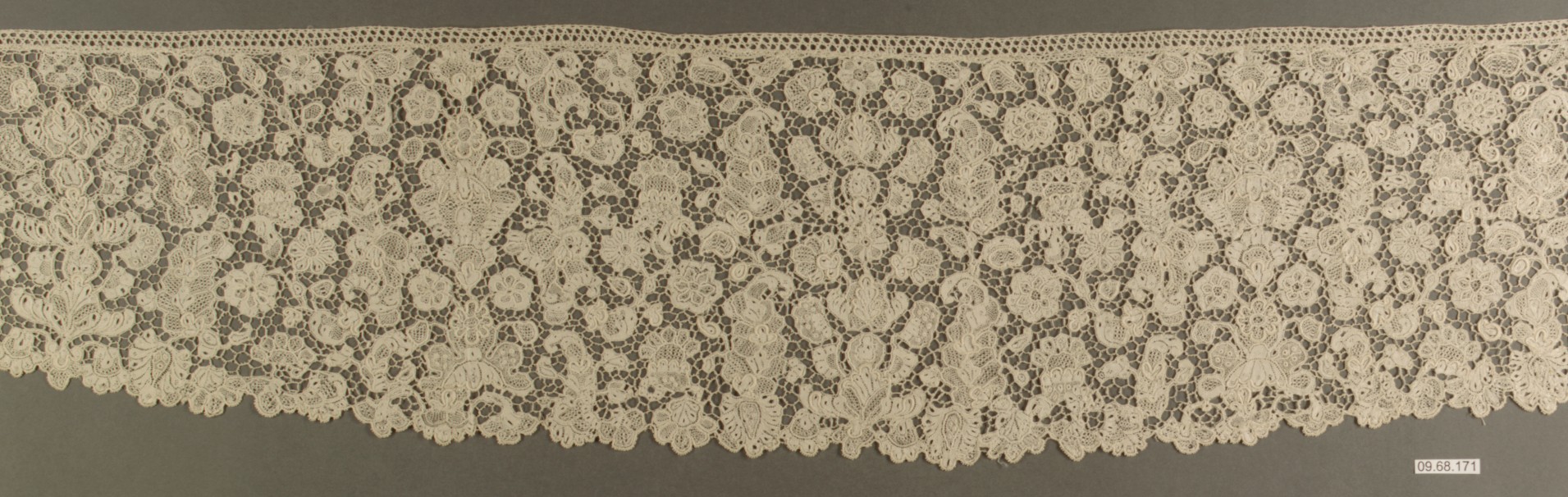
The engageante, a detachable and often opulent sleeve trimming, represents one of fashion’s most evocative intersections of utility and ornament. Originating in the 17th and 18th centuries, these lace or embroidered cuffs were not mere accessories but statements of social standing, craftsmanship, and global trade. At Katherine Fashion Lab, the engageante is reimagined not as a relic of aristocratic Europe but as a living artifact of global heritage. The studio’s approach draws from the intricate needle lace traditions of Venice, the geometric precision of Bruges, and the delicate floral motifs of early Chinese export lace. This synthesis is not an appropriation but a scholarly homage—a recognition that the engageante’s lineage is a tapestry woven from multiple cultures, each contributing its own technique and aesthetic philosophy. The standalone study of this element allows for a focused deconstruction of how global influences coalesce into a single, wearable art form, free from the distractions of an entire garment’s silhouette.
Material Mastery: Needle Lace as Structural Poetry
The choice of needle lace as the primary material for Katherine Fashion Lab’s engageantes is a deliberate act of technical and conceptual rigor. Unlike bobbin lace, which is constructed with multiple threads and bobbins, needle lace is built stitch by stitch with a single needle and thread, mimicking the precision of embroidery but achieving the airy transparency of a net. This technique, known in Italian as punto in aria (stitch in the air), requires an almost architectural understanding of tension and negative space. For the couture analysis, the material’s properties are paramount: needle lace offers a paradox of strength and fragility. Each engageante is a micro-architecture of loops, picots, and buttonhole stitches that must withstand the physical demands of movement while retaining the ethereal quality that defines high fashion. The lab’s artisans employ a blend of linen thread for structural integrity and silk filament for luminosity, creating a surface that catches light differently with each gesture of the wrist. This material choice also speaks to sustainability—needle lace is inherently slow fashion, requiring hundreds of hours per cuff, and its durability ensures heirloom status.
Design Vocabulary: The Standalone Study
Contextualized as a standalone study, the engageante at Katherine Fashion Lab is liberated from the constraints of a full sleeve. This isolation allows for an unprecedented focus on proportion, scale, and negative space. The typical engageante extends from the elbow to the wrist, but the lab experiments with asymmetrical lengths, scalloped edges, and irregular latticework that defies the symmetrical norms of historical precedents. One notable design, titled “Cartography of the Wrist,” uses needle lace to map imaginary trade routes, with dense stitching representing ports and open loops representing oceans. The standalone context also permits a study of how the engageante interacts with the bare arm—a relationship of contrast between the skin’s warmth and the lace’s cool precision. The lab’s designs often feature a structural under-cuff of silk organza, invisible from the front, which provides shape without compromising the lace’s transparency. This engineering ensures that the engageante retains its volume and does not collapse under its own weight, a common failure in historical reproductions.
Technical Execution: From Pattern to Punto
The creation of a single engageante begins with a cartoon—a full-scale drawing on parchment that serves as the blueprint for the lace. At Katherine Fashion Lab, these cartoons are not merely functional but are treated as artworks in themselves, often incorporating watercolor washes that suggest the final thread colors. The needle lace is worked directly over the cartoon, with a foundation thread outlining the design’s perimeter. Artisans employ a variety of stitches: the point de Venise for raised, dimensional petals; the point de Bruxelles for fine, net-like backgrounds; and the point de neige for textured, snowflake-like motifs. The standalone study allows for extreme magnification of these techniques—each engageante might feature a single, oversized floral motif that spans the entire cuff, or a repetitive geometric pattern that creates a moiré effect when the arm moves. The lab’s innovation lies in integrating metallic threads—gold and silver-plated silk—into the needle lace without disrupting its flexibility. This is achieved by wrapping the metal thread around a silk core, allowing it to bend without kinking. The result is an engageante that glimmers like armor yet drapes like a second skin.
Cultural Resonance and Modernity
In the context of contemporary fashion, the engageante as a standalone study challenges the notion that accessories are secondary. Katherine Fashion Lab positions these sleeve trimmings as primary narrative devices, capable of conveying complex cultural stories without the need for a full garment. The global heritage aspect is explicit: one collection references the Alençon lace of France, with its distinctive cordonnet (raised outline), while another draws from the Reticella of Italy, with its geometric cutwork. Yet the lab avoids pastiche by abstracting these influences into a modern visual language. The engageante becomes a canvas for discussing labor, trade, and the value of handcraft in an age of automation. The standalone study also addresses the practicalities of modern dressing—these cuffs can be worn over a simple sheath dress, a t-shirt, or even a tailored jacket, transforming the entire silhouette with minimal effort. This versatility is a nod to the engageante’s historical function as a detachable, washable, and interchangeable element, but it is recontextualized for the 21st-century consumer who seeks both luxury and adaptability.
Conclusion: The Future of the Fragment
Katherine Fashion Lab’s analysis of the engageante as a standalone study in needle lace is a masterclass in couture thinking. By isolating a single element of dress and tracing its global heritage, the lab demonstrates that fashion is not merely about garments but about systems of meaning. The needle lace engageante, in its intricate stitching and cultural layering, becomes a microcosm of the entire fashion ecosystem—from the hands of the artisan to the imagination of the wearer. In an industry increasingly obsessed with speed, this slow, deliberate study of a sleeve trimming is a radical act. It whispers that beauty lies in the detail, that heritage is not static but evolving, and that the smallest piece of lace can carry the weight of the world. For the discerning collector and the scholar of dress, these engageantes are not accessories but artifacts—living documents of a global conversation stitched in thread and air.