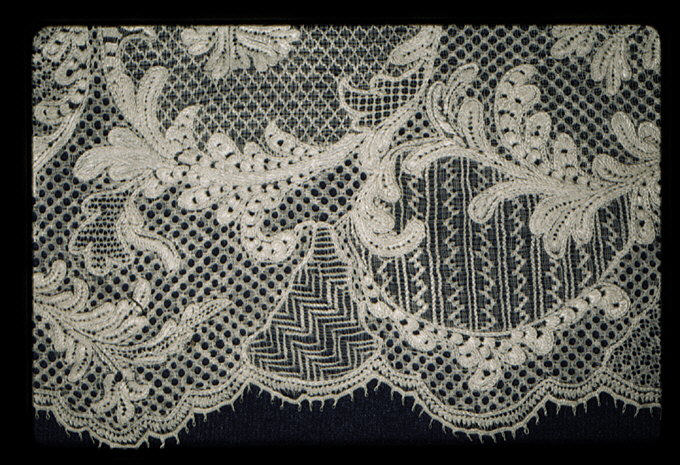
The Art of the Border: Drawnwork as a Cartography of Global Heritage
In the rarefied world of haute couture, the border is seldom a mere edge. It is a threshold, a declaration, and a negotiation between the garment and the void that surrounds it. At Katherine Fashion Lab, the subject of the border is elevated from a structural necessity to a conceptual thesis, executed through the painstaking technique of drawnwork. This analysis, conducted as a standalone study, positions drawnwork not merely as a decorative finish but as a material language that maps global heritage onto the very fabric of couture. The border becomes a cartographic line, tracing the intersections of culture, labor, and artistry across continents.
Drawnwork: The Architecture of Absence
Drawnwork, or punto tirato, is a textile technique that achieves its effect by withdrawing threads from the warp or weft of a fabric, leaving a lattice of open spaces that are then stitched into intricate patterns. Unlike embroidery, which adds material to the surface, drawnwork operates through subtraction—a deliberate act of removal that creates structure through absence. For Katherine Fashion Lab, this method is ideologically resonant: it mirrors the way borders function in geopolitics, defining territories by what they exclude as much as by what they contain.
The materiality of drawnwork in this collection is rooted in global heritage. The technique itself spans millennia, with origins traced to ancient Egypt, the Coptic textiles of the Nile Valley, and the Renaissance lacework of Italy. The Lab’s research draws from these disparate lineages, treating the drawn thread as a universal glyph. The base fabric is a handwoven cotton-linen blend sourced from the Deccan Plateau of India, where artisans have practiced similar openwork for centuries. The threads withdrawn are not discarded but repurposed into the border’s architectural framework, a closed-loop system that honors resource-conscious couture.
Border as Threshold: Deconstructing the Edge
In conventional garment construction, the border is a finish—a hem, a seam, a binding that prevents fraying. Katherine Fashion Lab subverts this utility by transforming the border into a threshold that mediates between the wearer’s body and the external world. Each garment in this study features a drawnwork border that is deliberately oversized, extending several inches into the body of the fabric. This is not a fringe or a trim; it is a zone of transition where the solid weave dissolves into a diaphanous grid.
The design language borrows from the mihrab of Islamic architecture, the arched niche that marks the direction of prayer. The drawnwork border mimics this arched geometry, with threads pulled into concentric semicircles that echo the portals of mosques from Samarkand to Córdoba. Simultaneously, the pattern references the quipu of the Inca, the knotted cords used for record-keeping across the Andes. The border thus becomes a palimpsest of global thresholds—sacred, administrative, and migratory.
The color palette is restrained: ivory, ecru, and a deep indigo derived from natural dyes. The indigo is applied only to the drawnwork threads, creating a chromatic boundary that separates the border from the undyed body of the garment. This visual demarcation reinforces the border’s role as a distinct territory, a liminal space where the fabric’s history is both preserved and rewritten.
Material Memory: The Labor of the Line
Every drawnwork border in this collection is the product of hundreds of hours of hand labor. The artisans—collaborators from Gujarat, Peru, and the Veneto region of Italy—work with a shared vocabulary of stitches: the Venetian punto a rammendo for the lattice, the Indian chikan for the fill patterns, and the Peruvian pallay for the geometric motifs. This collaboration is not a fusion but a counterpoint, where each tradition retains its distinct voice within the border’s polyphonic structure.
The material memory of drawnwork is also a memory of displacement. The technique has historically been carried by migrant communities: Armenian refugees brought it to the Levant, Chinese silk workers to the Philippines, and European nuns to colonial missions. Katherine Fashion Lab’s border acknowledges this diaspora by incorporating a subtle asymmetry—one side of the drawnwork is slightly denser, a nod to the uneven distribution of cultural influence across borders. The wearer is invited to trace this irregularity, to feel the tactile narrative of movement and adaptation.
From an MBA perspective, this approach redefines value creation in couture. The border is not an afterthought but a strategic asset, a site of differentiation that commands a premium in the luxury market. The labor intensity of drawnwork—each centimeter requiring up to four hours of hand-stitching—positions the garment as a collectible artifact. The global heritage embedded in the technique adds a layer of cultural capital that appeals to discerning clients seeking authenticity and provenance.
Standalone Study: The Border as a Complete Statement
This analysis is a standalone study, meaning the border is examined in isolation from a full garment silhouette. Katherine Fashion Lab has produced a series of textile panels—each measuring 100 by 30 centimeters—where the drawnwork border is the sole protagonist. These panels are intended to be displayed as art objects, framed or mounted, as well as integrated into bespoke garments. The decision to isolate the border underscores its conceptual weight: it is not a detail but a complete statement of design philosophy.
The panels are structured around three archetypal borders. The first, titled Threshold, uses a single row of drawnwork with a scalloped edge, referencing the coastal boundaries of the Mediterranean. The second, Cartography, features a grid of drawnwork with interlocking circles, evoking the latitude and longitude lines of colonial maps. The third, Membrane, employs a double layer of drawnwork with a void in between, creating a translucent barrier that suggests the porous nature of modern borders—both permeable and restrictive.
The materiality of these panels is enhanced by the tactile contrast between the dense, unworked fabric and the open, airy border. Light passes through the drawnwork, casting shadows that change with the viewer’s angle. This kinetic quality transforms the border from a static edge into a dynamic interface, one that engages the environment in a dialogue about inclusion and exclusion.
Conclusion: The Border as a Global Lexicon
Katherine Fashion Lab’s drawnwork border is a masterclass in couture as critical practice. By elevating a technique rooted in global heritage, the Lab challenges the fashion industry’s tendency to treat borders as peripheral. Instead, the border becomes a central protagonist, a site where material, history, and geopolitics converge. The drawnwork is not decorative; it is a cartographic tool that maps the invisible lines that define our world—lines of culture, labor, and identity.
For the luxury consumer, this border offers more than aesthetic pleasure. It offers intellectual engagement with the craft’s provenance, a tangible connection to the hands that withdrew each thread, and a wearable meditation on the nature of boundaries. In an era where borders are both fiercely guarded and increasingly obsolete, Katherine Fashion Lab’s drawnwork reminds us that the most profound borders are not made of steel or stone, but of thread and absence—a line drawn through the fabric of heritage, waiting to be read.