Executive Heritage Analysis: The Leopard-Head Girdle of Sithathoryunet
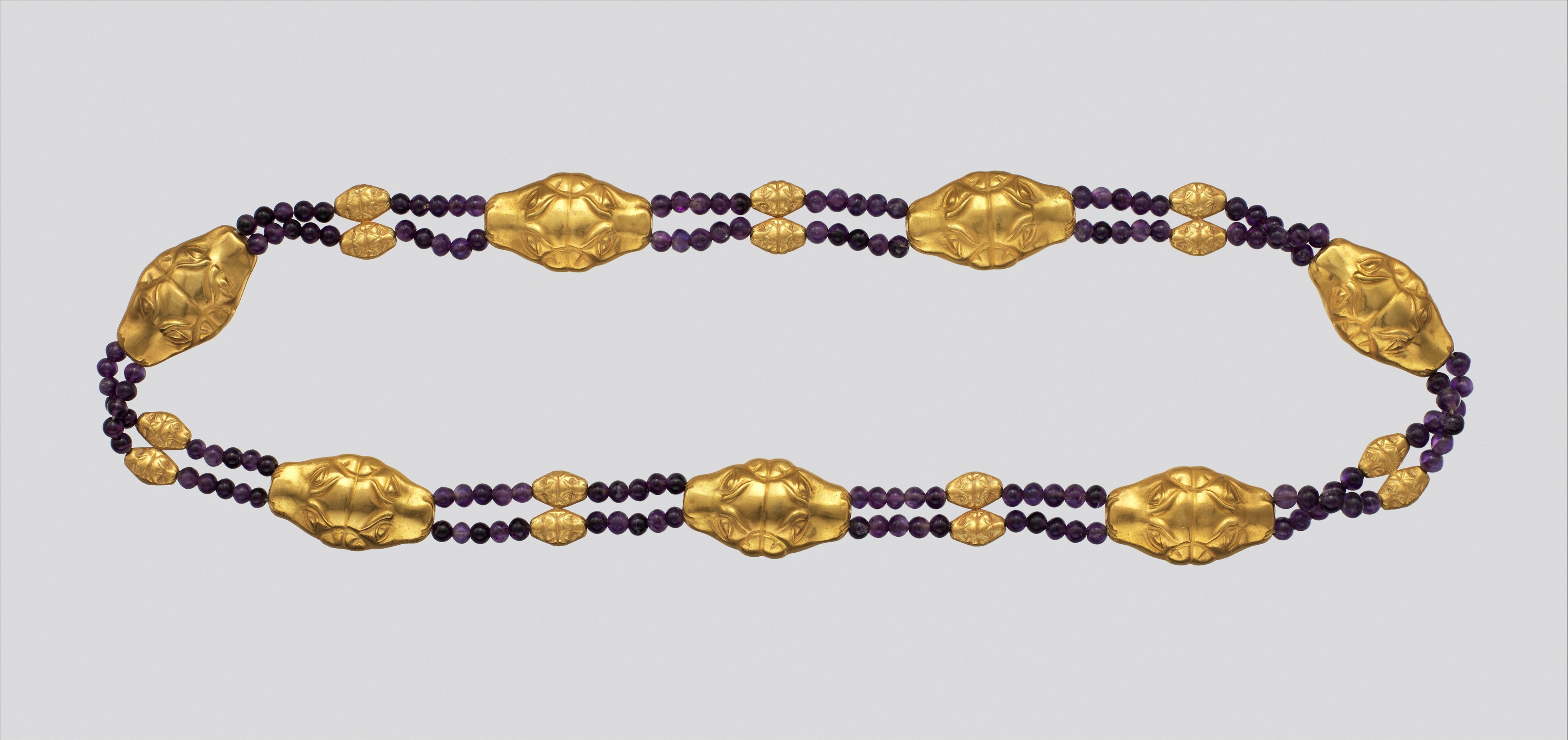
This research paper presents a comprehensive heritage analysis of the Leopard-Head Girdle of Sithathoryunet, an extraordinary artifact from the Middle Kingdom of Ancient Egypt (circa 1887–1813 BCE). As Lead Heritage Curator for Katherine Fashion Lab, I examine this object through the dual lenses of historical adornment and contemporary luxury strategy, focusing on its symbolic power, spiritual meaning, and actionable insights for the 2026 high-end market. The girdle, discovered in the tomb of Princess Sithathoryunet at El-Lahun, exemplifies the intersection of divine authority, material opulence, and ritual purpose—a trifecta that remains central to modern luxury branding.
Historical Context and Material Composition
The Leopard-Head Girdle is a masterpiece of ancient craftsmanship, composed of gold, amethyst, and diorite pellets concealed within its hollow leopard-head pendants. The choice of materials is not arbitrary but deeply symbolic. Gold, in Ancient Egypt, was considered the flesh of the gods, particularly the sun god Ra, and signified eternal, indestructible power. Amethyst, a semi-precious stone often associated with royalty and protection, was believed to ward off intoxication and evil spirits—a practical and spiritual safeguard for the wearer. The diorite pellets, hidden inside the leopard heads, produced a soft, percussive sound when the wearer moved, reinforcing the girdle’s function as an auditory marker of presence and authority. This multisensory design—visual, tactile, and auditory—anticipates the immersive, experiential strategies that define high-end luxury today.
Symbolic Power: The Leopard as Divine and Royal Emblem
The leopard head motif is central to the girdle’s symbolic resonance. In Ancient Egyptian iconography, the leopard was associated with the goddess Mafdet, a protector against snakes and scorpions, and later with the goddess Bastet, who embodied both nurturing and ferocity. The leopard’s spotted coat also evoked the starry sky, linking the wearer to celestial order and the cosmic cycle of death and rebirth. For Princess Sithathoryunet, a daughter of Pharaoh Senusret II, the girdle functioned as a talisman of sovereignty. The leopard head, baring its teeth, was an apotropaic symbol—warding off malevolent forces while simultaneously projecting the wearer’s dominance. This duality—protection and aggression—is a potent archetype in luxury branding, where exclusivity and intimidation often coexist to create desire.
Furthermore, the girdle was likely worn during ritual dances or funerary ceremonies. The sound of the diorite pellets, combined with the glitter of gold and amethyst, would have created a hypnotic effect, reinforcing the princess’s role as an intermediary between the human and divine realms. This performative dimension of adornment—where the object transforms the wearer into a living icon—is directly analogous to the role of high-end jewelry and accessories in contemporary fashion shows and red-carpet events.
Spiritual Meaning: Adornment as Cosmic Armor
Spiritually, the Leopard-Head Girdle exemplifies the Ancient Egyptian belief that adornment was not mere decoration but a form of cosmic armor. The girdle encircled the waist, a vulnerable area in combat and ritual, and the leopard heads acted as sentinels guarding the wearer’s vital energy. The amethyst stones were carved into small, stylized leopard heads or geometric shapes, each believed to channel protective energies. The diorite pellets, sourced from the same stone used for funerary statues, connected the girdle to the enduring legacy of the afterlife. For Sithathoryunet, this girdle was not just a burial object but a tool for navigating the Duat (the underworld), ensuring her safe passage and resurrection. This spiritual utility—where beauty serves a transcendent purpose—offers a profound lesson for luxury brands seeking to imbue their products with deeper meaning beyond aesthetics.
The girdle’s design also reflects the Ancient Egyptian concept of Ma’at, or cosmic balance. The symmetrical arrangement of leopard heads, the alternating gold and amethyst elements, and the careful calibration of weight and sound all embodied harmony. In luxury strategy, this principle translates to the meticulous balance of heritage, innovation, and exclusivity that defines true high-end status.
Strategic Insights for 2026 High-End Luxury
For Katherine Fashion Lab, the Leopard-Head Girdle provides a rich blueprint for a 2026 luxury strategy that prioritizes heritage storytelling, multisensory experience, and spiritual resonance. Below are key strategic recommendations derived from this analysis:
1. The Power of the Talisman
Modern luxury consumers increasingly seek objects that offer protection, empowerment, or connection to a higher purpose. The leopard head, as a symbol of ferocity and guardianship, can be reimagined in a 2026 collection as a signature motif for pendant necklaces, cuff bracelets, or belt buckles. By incorporating hidden elements—such as a small, resonant gemstone or a discreet engraving—brands can replicate the girdle’s multisensory surprise, fostering a sense of discovery and personal attachment.
2. Material Alchemy as Brand Narrative
The combination of gold, amethyst, and diorite is not random but tells a story of rarity, skill, and symbolism. For 2026, Katherine Fashion Lab should emphasize material provenance and artisanal technique as core brand pillars. Sourcing ethically mined amethyst from Zambia or Brazil, and collaborating with master goldsmiths who can replicate ancient granulation or cloisonné techniques, would create a compelling narrative of continuity and craftsmanship. The diorite pellets, though humble, can be reinterpreted as micro-beads or textured accents that produce a subtle sound—a signature auditory branding element.
3. Ritual and Performance in Retail
The girdle was designed for movement and sound. Luxury brands in 2026 should consider retail experiences that activate the senses. A pop-up installation inspired by the El-Lahun tomb, where visitors hear the soft chime of hidden pellets while viewing a collection, would create an immersive, memorable encounter. Similarly, limited-edition pieces could be sold with a “ritual kit” that includes a narrative booklet, a protective pouch, and a scented element inspired by Ancient Egyptian incense—transforming a purchase into a ceremonial act.
4. Exclusivity Through Historical Reference
The Leopard-Head Girdle was a unique object, not mass-produced. For 2026, Katherine Fashion Lab should launch a “Curator’s Edition” series, where each piece is numbered and accompanied by a certificate detailing its symbolic references. This approach appeals to the growing market for investable luxury, where consumers view high-end accessories as heirlooms with cultural and financial value. The leopard head motif, in particular, can be rendered in limited colorways (e.g., black onyx for day, emerald for evening) to create scarcity and desirability.
5. Spiritual Utility as a Marketing Framework
Finally, the girdle’s spiritual purpose—protecting the wearer in life and death—can be adapted into a wellness-oriented luxury strategy. In 2026, consumers are increasingly drawn to brands that offer “functional beauty,” such as jewelry with grounding properties or accessories designed for meditation. By positioning the leopard head as a modern amulet for confidence, resilience, or clarity, Katherine Fashion Lab can tap into the mindfulness trend without sacrificing aesthetic rigor. A campaign titled “Armor for the Modern Soul” would resonate with high-net-worth individuals seeking both status and substance.
Conclusion
The Leopard-Head Girdle of Sithathoryunet is far more than an archaeological curiosity; it is a masterclass in the strategic use of symbolism, materiality, and ritual. For Katherine Fashion Lab, this artifact offers a timeless template for creating luxury that is not merely worn but experienced—an object that protects, empowers, and connects the wearer to a lineage of power. As we approach 2026, the high-end market will increasingly reward brands that can fuse heritage with innovation, and the girdle’s lessons in sound, sight, and spirit will prove invaluable. By embracing the leopard’s ferocity and the princess’s grace, Katherine Fashion Lab can craft a narrative that is both ancient and urgently modern.