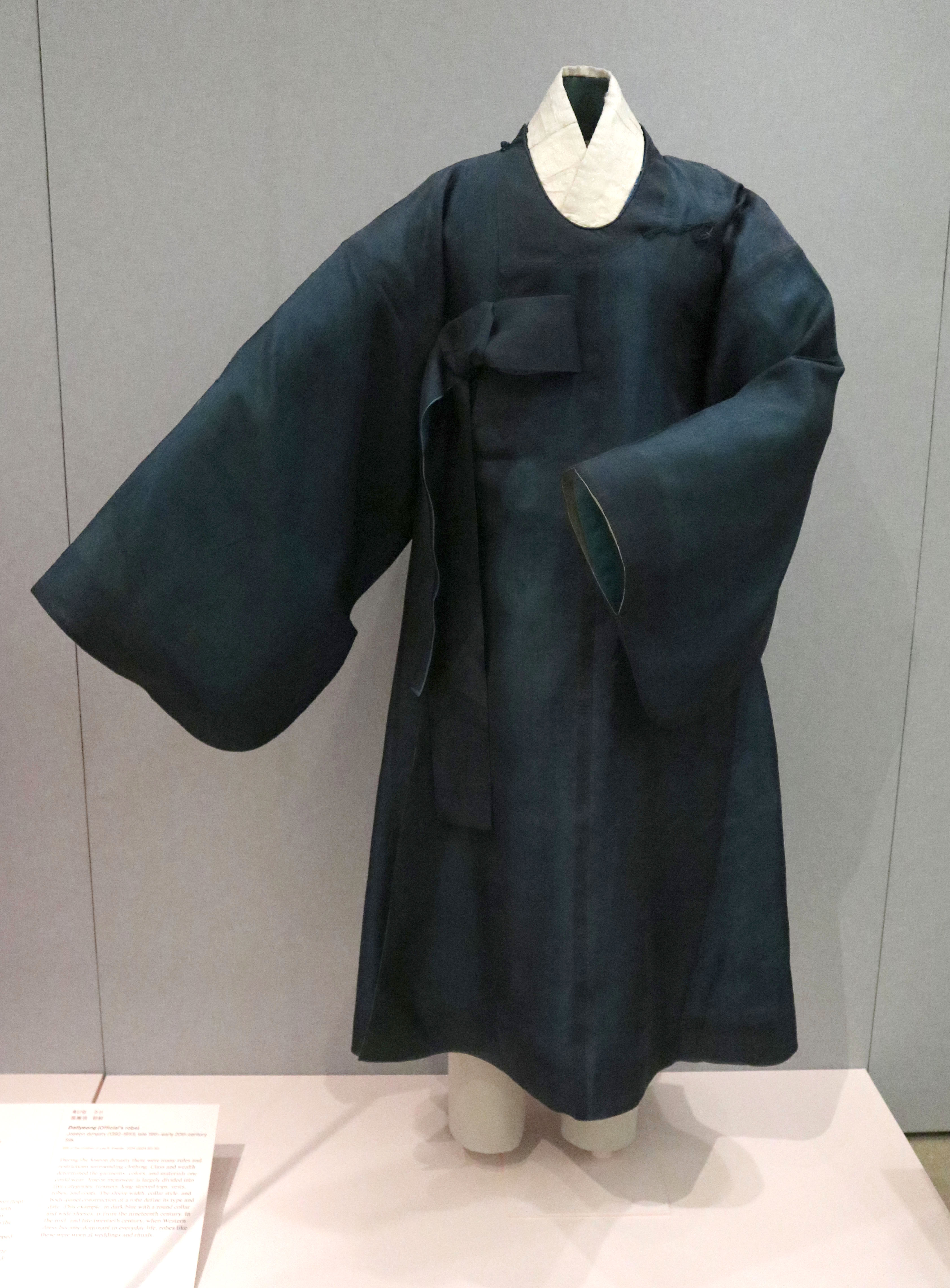
The Dallyeong: A Study in Silken Authority
Within the vast lexicon of global couture, few garments articulate the convergence of political power, social hierarchy, and artistic mastery as precisely as the Korean Dallyeong. As a standalone study, this official’s robe transcends mere clothing; it is a three-dimensional document of dynastic governance, Confucian ethics, and the unparalleled artistry of Korean silk weaving. For Katherine Fashion Lab, dissecting the Dallyeong is not an exercise in historical nostalgia, but a vital exploration of how structure, material, and symbolism can inform contemporary design language. The robe’s silent authority speaks volumes about the relationship between the wearer and the state, a dialogue that remains profoundly relevant in today’s fashion landscape.
Historical Context: The Robe as State Apparatus
The Dallyeong (단령), characterized by its round collar and distinctive overlapping closure, served as the quintessential formal attire for civil and military officials during the Joseon Dynasty (1392–1910). Unlike the flowing, unstructured garments of earlier periods, the Dallyeong was a rigorously codified uniform. Its cut, color, and embellishments were not matters of personal taste but of legal decree, meticulously outlined in the Gyeongguk Daejeon (National Code). The robe was a visual manifestation of the rigid bureaucratic hierarchy that underpinned Neo-Confucian society. Every fold, every stitch, every hue was a calculated signal of rank, function, and moral standing.
The garment’s structure itself embodies Confucian ideals. The overlapping front panels, secured by a fabric belt or a metal buckle, create a clean, unbroken line from shoulder to hem. This verticality suggests moral rectitude and unyielding integrity. The wide, billowing sleeves, while aesthetically dramatic, served a practical purpose: they allowed for the dignified, measured gestures expected of a scholar-official. In the courtly context, the Dallyeong was not merely worn; it was performed. The fabric’s weight and the sleeve’s volume dictated a specific posture—shoulders back, head held high, movements deliberate and unhurried. This is a garment that disciplines the body to reflect the soul.
Material Mastery: The Language of Silk
The choice of silk as the primary material for the Dallyeong was neither arbitrary nor purely aesthetic. In Joseon Korea, silk was a material of profound economic and symbolic value. Its production was a state-monitored industry, and access to high-quality silk was a privilege reserved for the elite. The fabric’s natural luster, its ability to hold intricate dyes, and its remarkable drape made it the ideal medium for conveying authority. Unlike wool or cotton, silk catches light in a way that suggests otherworldliness, elevating the wearer from the mundane to the official.
From a couture analysis perspective, the handling of silk in the Dallyeong is a masterclass in structural engineering. The robe is typically constructed from multiple panels of silk, cut on the straight grain to maintain the garment’s crisp silhouette. The weight of the silk—often a medium-weight, tightly woven sa or myeongju—provides the necessary body to hold the robe’s shape without sacrificing fluidity. The seams are meticulously felled, ensuring that the interior finish is as immaculate as the exterior, a hallmark of Korean tailoring that prioritizes integrity over ostentation. The lining, usually a contrasting silk, adds a layer of thermal comfort and visual depth, a subtle whisper of luxury that only the wearer knows.
Symbolic Chromatics and Embellishment
The color palette of the Dallyeong was a strict code of social standing. The highest-ranking officials—those of the first and second ranks—wore robes of deep, vibrant purple or crimson, colors derived from expensive, imported dyes. Third and fourth ranks wore blue, while fifth and sixth ranks wore green. Lower-ranking officials were relegated to black or dark gray. This chromatic hierarchy was not merely decorative; it was a visual shorthand for the entire bureaucratic apparatus. At a glance, any observer could assess a man’s place in the order of things.
Beyond color, the most potent symbol of rank was the hyungbae (흉배), the embroidered rank badge affixed to the chest and back. These circular or square patches were veritable works of art, embroidered with silk and gold thread. Civil officials wore badges depicting cranes, clouds, and other auspicious symbols, representing scholarly refinement and longevity. Military officials wore tigers, leopards, or bears, signifying martial prowess and courage. The precision of the embroidery—often employing techniques like jisu (flat stitching) and suyeon (long and short stitches)—demonstrates a level of craftsmanship that rivals any haute couture atelier today. For Katherine Fashion Lab, the hyungbae is a brilliant precursor to the modern logo or monogram, a personal identifier woven into the very fabric of the garment.
Construction and Silhouette: The Art of Draped Authority
The Dallyeong’s construction is a study in geometric precision. The robe is essentially a T-shaped garment, with the body and sleeves cut from a single continuous length of fabric. The round collar is reinforced with a stiffened inner band, often of horsehair or multiple layers of silk, to maintain its shape. The sleeves, while wide, are not unstructured; they are cut with a distinct curve at the lower edge, creating a graceful, bell-like silhouette when the arms are raised. The robe’s length, typically falling to the ankles, is designed to be worn with a high-waisted undergarment, creating a seamless, elongated line that makes the wearer appear taller and more imposing.
The closure system is deceptively simple yet profoundly effective. The left panel overlaps the right, and the two are secured by a fabric belt tied at the waist or a metal buckle. This asymmetrical closure is not random; it mirrors the Confucian principle of ye (ritual propriety), where the left side (associated with the yang, or masculine principle) dominates the right (yin, or feminine). The belt, often made of the same silk, is tied in a specific knot that serves as a final, subtle indicator of rank. The overall silhouette is one of controlled volume—a garment that is generous in its proportions yet disciplined in its lines. This tension between fullness and restraint is a hallmark of Korean sartorial elegance.
Contemporary Relevance for Katherine Fashion Lab
The Dallyeong is not a relic. For the modern couturier, it offers a rich vocabulary of design principles. Its emphasis on structural clarity over decorative excess is a direct counterpoint to the often-cluttered aesthetics of contemporary fashion. The use of silk as a tool for social communication reminds us that fabric choice is never neutral; it is a statement of values and intent. The hyungbae concept—a personalized emblem integrated into the garment’s architecture—can be reimagined as a form of bespoke branding, where the client’s identity is woven into the design itself.
Moreover, the Dallyeong’s ergonomic discipline—its ability to shape the wearer’s posture and movement—is a lesson in the power of clothing to influence behavior. In an era of casualization, the Dallyeong stands as a testament to the idea that formal attire can be a tool for empowerment, not constraint. For Katherine Fashion Lab, a contemporary interpretation might retain the robe’s clean lines and asymmetrical closure while experimenting with modern materials like technical silks or sustainable blends. The color code could be updated to reflect corporate or cultural hierarchies, while the embroidered badge could become a platform for digital or handcrafted artistry.
In conclusion, the Dallyeong is far more than a historical garment. It is a sophisticated system of visual communication, a testament to the artistry of silk, and a profound meditation on the relationship between clothing and authority. For Katherine Fashion Lab, this standalone study reaffirms that the most enduring designs are those that marry material excellence with symbolic depth. The Dallyeong’s silent command remains a powerful muse for the future of couture.