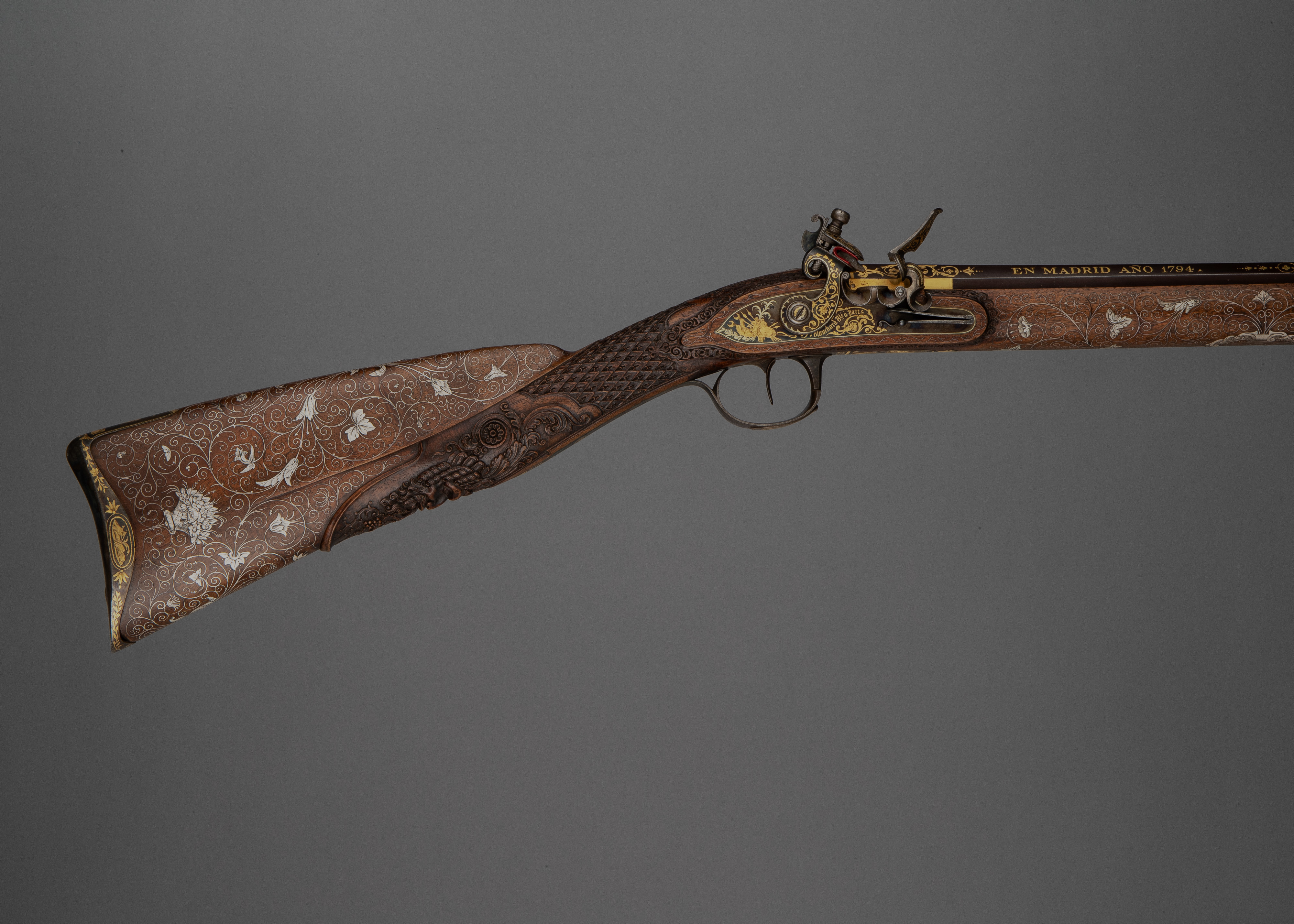
Executive Heritage Analysis: The Flintlock Smooth Bore Gun as a Symbolic Artifact for Katherine Fashion Lab
This strategic standalone research paper examines the flintlock smooth bore gun, originating from Madrid, Spain, as a multifaceted artifact of symbolic power, historical adornment, and spiritual meaning. Crafted from steel, walnut wood, silver, and gold, this object transcends its functional origins to embody a profound narrative of authority, craftsmanship, and transcendence. For Katherine Fashion Lab, a 2026 high-end luxury strategy must leverage these layers of meaning—transforming a weapon of precision into a talisman of elite identity, a testament to artisanal mastery, and a vehicle for spiritual resonance. The analysis herewith provides a comprehensive framework for integrating this heritage into a cohesive brand narrative, positioning the flintlock as a cornerstone of aspirational luxury.
Symbolic Power: Authority, Precision, and the Architecture of Control
The flintlock smooth bore gun, as developed in Madrid during the 17th and 18th centuries, was not merely a tool of ballistic force but a deliberate instrument of symbolic authority. In Spanish courtly culture, such firearms were often commissioned by nobility and royalty as markers of sovereign power and military acumen. The smooth bore design, while less accurate than rifled counterparts, emphasized rapid loading and close-range dominance—a metaphor for decisive, unyielding control. The flintlock mechanism, with its precise ignition sequence, represented the fusion of human intention with mechanical reliability, echoing the Enlightenment-era valorization of reason over chaos.
For Katherine Fashion Lab, this symbolic power translates into a luxury strategy that prioritizes precision engineering and authoritative design. In 2026, high-end consumers seek objects that convey not just status but command—over their environments, their narratives, and their legacies. The flintlock’s heritage of controlled force can inspire collections that emphasize clean lines, deliberate proportions, and materials that evoke strength without aggression. A tailored jacket with silver-threaded lapels, for instance, could reference the gun’s metallic accents, while a walnut-handled handbag echoes the stock’s ergonomic authority. The key is to channel the gun’s symbolism of measured power into wearable statements of self-possession, appealing to a clientele that values subtle dominance over overt display.
Historical Adornment: The Artisan’s Signature in Steel, Wood, Silver, and Gold
The choice of materials in the Madrid flintlock is a study in historical adornment, where function and beauty coalesce. Steel provided the structural integrity for the barrel and lock plate, while walnut wood—selected for its density and grain—offered a warm, organic counterpoint to the metal. Silver and gold inlays, often engraved with scrolling foliage, heraldic crests, or religious motifs, transformed the firearm into a canvas for artisanal virtuosity. These embellishments were not superfluous; they signified the owner’s wealth, taste, and connection to a lineage of craftsmanship that spanned generations.
In the context of 2026 luxury strategy, Katherine Fashion Lab must embrace this ethos of adornment as narrative. The flintlock’s material hierarchy—steel for durability, walnut for tactility, precious metals for prestige—offers a blueprint for product development. Consider a luxury footwear line: steel-tipped heels for structural integrity, walnut-stained leather for organic warmth, and silver or gold buckles as signature details. Alternatively, a timepiece collection could feature a steel case, walnut dial accents, and gold hands, evoking the gun’s mechanical precision. The historical practice of engraving personal or familial symbols onto firearms suggests a 2026 strategy of bespoke customization, where clients co-create pieces with unique inscriptions or motifs, reinforcing exclusivity and emotional attachment.
Spiritual Meaning: The Gun as Talisman and Transitional Object
Beyond its secular uses, the flintlock smooth bore gun carried profound spiritual meaning in Spanish culture. Firearms were often blessed by clergy before battle, imbuing them with protective properties. The silver and gold inlays frequently depicted saints, crosses, or the Virgin Mary, transforming the weapon into a talisman against evil and a conduit for divine favor. The act of firing—a controlled explosion—was metaphorically linked to spiritual transformation, where lead and powder were alchemized into a force that could alter fate. This duality of destruction and protection resonates with the human desire for transcendence through material objects.
For Katherine Fashion Lab, integrating spiritual meaning requires a nuanced approach that avoids literal religious iconography while capturing the essence of protection and transformation. In 2026, luxury consumers increasingly seek objects with soul—items that offer emotional resonance or metaphysical comfort. A flintlock-inspired accessory, such as a silver-plated brooch or a gold pendant, could be designed with abstract symbols of guardianship, like a circular motif representing the cycle of life and death. The walnut wood could be sourced from sustainably harvested trees, with each piece carrying a certificate of provenance, akin to a blessing. The brand might also develop a ritualistic unboxing experience, where the act of revealing the product mirrors the loading and firing sequence, creating a moment of personal transformation. This strategy positions Katherine Fashion Lab not merely as a purveyor of goods but as a curator of spiritual artifacts for the modern elite.
2026 High-End Luxury Strategy: Synthesis and Application
A 2026 luxury strategy for Katherine Fashion Lab, inspired by the Madrid flintlock, must synthesize the artifact’s symbolic power, historical adornment, and spiritual meaning into a cohesive brand ecosystem. The following pillars are recommended:
Pillar One: The Authority of Precision
Launch a flagship collection titled “The Arsenal,” featuring tailored outerwear, structured handbags, and precision-machined jewelry. Each piece should incorporate steel accents (perhaps in matte or brushed finishes) and walnut wood elements, such as handles or closures. The design language should emphasize sharp angles and balanced proportions, echoing the flintlock’s mechanical elegance. Marketing narratives should focus on the mastery of control, positioning the wearer as a modern-day strategist who commands respect through understated power.
Pillar Two: Artisanal Adornment as Heritage
Revive the tradition of bespoke embellishment by offering clients the option to add silver or gold inlays to select products, such as cufflinks, belt buckles, or handbag clasps. Collaborate with contemporary engravers to develop motifs that blend Spanish heritage with modern minimalism. This pillar should be supported by a craftsmanship showcase in flagship stores, where artisans demonstrate engraving techniques, reinforcing the brand’s commitment to slow luxury and historical continuity.
Pillar Three: Spiritual Resonance Through Ritual
Develop a limited-edition line of “Talisman” accessories—pendants, rings, and scarves—that incorporate abstract protective symbols. Each item should be accompanied by a digital or physical “blessing card” that tells the story of the flintlock’s spiritual role in Spanish history. The brand could also host private events where clients participate in a curated ritual, such as a guided meditation on transformation, linking the product to personal growth. This approach taps into the 2026 trend of mindful luxury, where consumption is a form of self-care and spiritual expression.
Pillar Four: Strategic Storytelling and Exclusivity
Position the flintlock narrative as intellectual property through a white-paper series, museum partnerships, and a digital archive accessible to top-tier clients. Limit production runs to fewer than 500 units per design, emphasizing scarcity and collectibility. The brand’s 2026 campaign should feature imagery that juxtaposes the flintlock’s Madrid origins with contemporary urban landscapes, underscoring the timelessness of power and beauty. Collaborate with historians and curators to authenticate the narrative, ensuring credibility and depth.
Conclusion: The Flintlock as a Blueprint for Timeless Luxury
The flintlock smooth bore gun from Madrid is far more than a historical relic; it is a blueprint for luxury that endures. Its symbolic power teaches us that authority need not be loud but precise. Its historical adornment reminds us that materials are a language of status and artistry. Its spiritual meaning reveals that even objects of destruction can become vessels for protection and transformation. For Katherine Fashion Lab, adopting this heritage means committing to a 2026 strategy that values substance over spectacle, craftsmanship over mass production, and meaning over mere aesthetics. By channeling the flintlock’s essence, the brand can offer its clientele not just products, but legacies—objects that carry the weight of history and the promise of transcendence. This is the strategic imperative for the discerning luxury house of tomorrow.