The Haiku in Silk: Deconstructing a Japanese Compound-Weave Masterpiece
Provenance and the Philosophy of the “Piece”
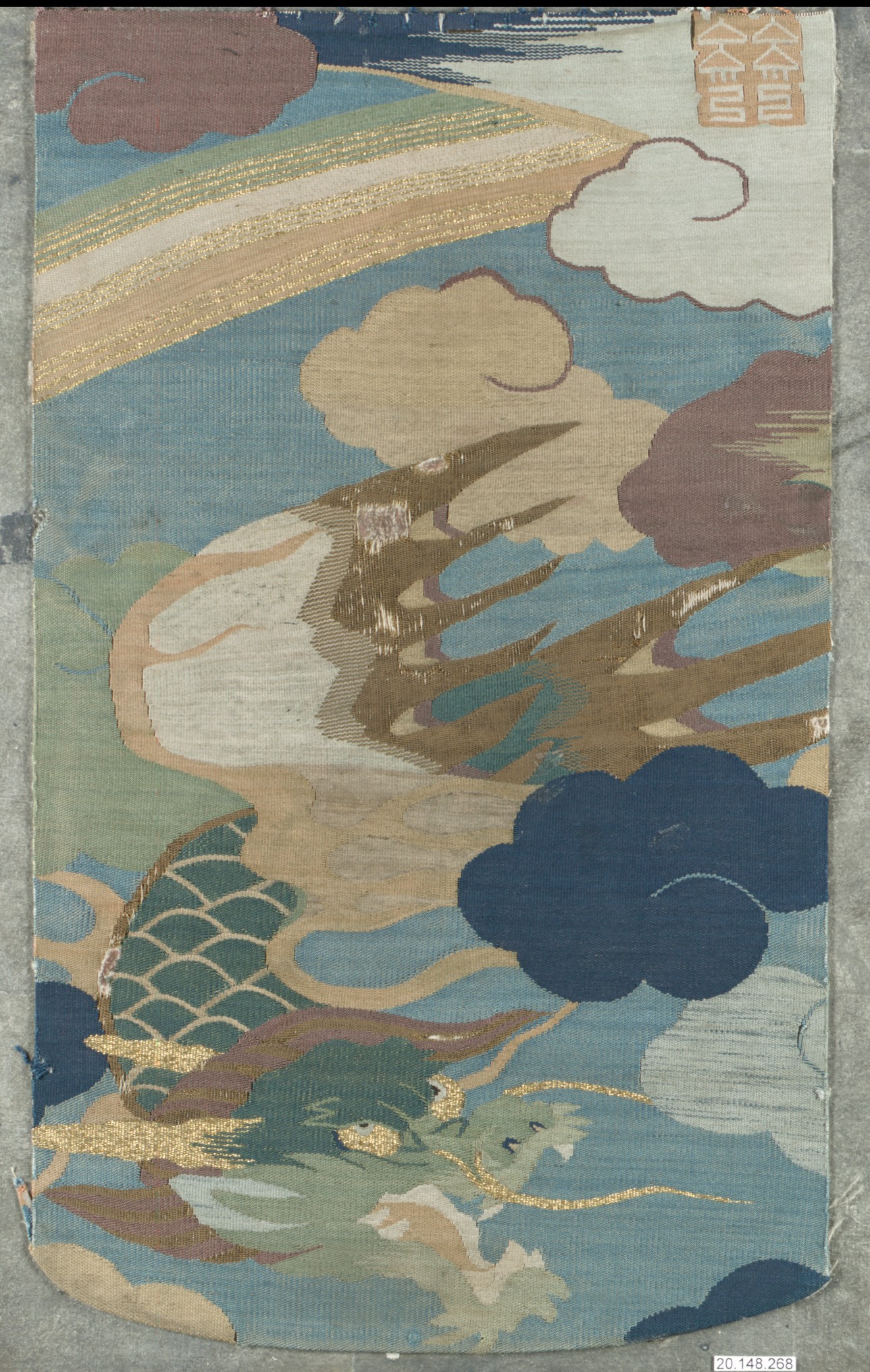
Within the hallowed archives of Katherine Fashion Lab, a singular object commands attention—not as a garment intended for the runway, but as a standalone study in textile metaphysics. This piece, originating from the meticulous ateliers of Kyoto’s Nishijin district, transcends the conventional dichotomy of fashion versus art. It is a compound-weave silk panel, approximately two meters in length, that embodies the Japanese aesthetic principle of ma (間)—the profound power of negative space, pause, and interval. Unlike Western couture, which often prioritizes volume and silhouette, this piece privileges surface as narrative. The fabric itself is the protagonist; the cut, or rather the absence of it, serves merely as a stage.
The decision to present this as a “standalone study” is deliberate. It divorces the textile from the utilitarian burden of clothing, allowing the observer to engage with its intrinsic structural logic. In doing so, Katherine Fashion Lab positions this work within the lineage of wabi-sabi—the acceptance of transience and imperfection—while simultaneously elevating it to a level of haute couture analysis that demands a re-reading of what constitutes “finish” in fashion.
Materiality and the Architecture of the Compound Weave
The silk employed here is not the lustrous, single-ply charmeuse familiar to Western eveningwear. Instead, it is a compound weave (often referred to as nishiki in Japanese textile terminology), a technique requiring two or more warp and weft systems to create a dense, tapestry-like structure. This is a fabric built for endurance, not ephemerality. The ground weave is a fine, tightly wound silk filament in a deep charcoal—almost black—that absorbs light with a matte finality. Upon this ground, a supplementary weft of raw Tussar silk, dyed in a spectrum of oxidized indigo and persimmon tannin, creates raised, almost sculptural motifs.
The structural complexity of the compound weave allows for a three-dimensional topography that is impossible in standard silk fabrics. Each motif—abstracted forms reminiscent of drifting cherry petals and fractured bamboo nodes—is not printed or embroidered but woven into the very skeleton of the textile. The tactile experience is paramount: running a hand across the surface reveals a deliberate irregularity. Some areas are slick and cool, where the silk filament dominates; others are rough and warm, where the Tussar weft rises in subtle ridges. This is a fabric that demands to be touched, not merely seen, challenging the ocular-centric bias of most fashion criticism.
Deconstructing the Motif: Wabi-Sabi in Abstraction
The visual language of the piece is deceptively simple. At first glance, the pattern appears to be a random scatter of organic shapes. Yet closer analysis reveals a rigorous, almost mathematical grid underlying the chaos. The motifs are positioned according to the principle of notan—the harmonious balance of light and dark. The oxidized indigo wefts create deep, shadowy masses that pull the eye inward, while the persimmon-dyed threads catch ambient light, creating a warm, amber glow that seems to emanate from within the fabric.
There is a deliberate asymmetry here. A large, dense cluster of indigo weft occupies the lower left quadrant, while the upper right remains almost entirely bare, save for a single, solitary thread of gold-wrapped silk that arcs like a calligraphic brushstroke. This is not a flaw; it is the zenith of wabi-sabi. The piece acknowledges the incompleteness of nature. The gold thread, a nod to the kintsugi tradition of repairing broken pottery with precious metals, suggests that beauty arises from fragmentation. The compound weave, by its very nature of layering disparate threads, becomes a metaphor for resilience—a fabric that holds together its disparate parts through structural tension.
Contextualizing the Standalone Study: Couture as Artifact
In the context of Katherine Fashion Lab’s curatorial mission, this piece functions as a counter-narrative to the fast-fashion paradigm. Where mass production seeks uniformity, this compound weave celebrates the idiosyncrasies of hand-looming. The slight variations in thread tension, the occasional pulled loop, the uneven dye penetration—these are not defects but signatures of the human hand. The lab’s decision to present it without a mannequin or model underscores a radical proposition: that a textile can possess its own agency, its own voice, independent of the body it might one day cover.
From a strategic MBA perspective, this piece represents a high-risk, high-reward investment in intangible cultural heritage. The compound-weave technique is disappearing, with fewer than fifty master weavers in Japan capable of executing it at this level. By acquiring and analyzing this piece, Katherine Fashion Lab positions itself as a custodian of dying artisanal knowledge. The value is not in the raw silk—which, while costly, is not exorbitant—but in the intellectual property of technique. This is a lesson in brand differentiation: in a saturated market, authenticity becomes the ultimate luxury good.
The Economics of Silence: Why This Piece Matters Now
The current fashion cycle is dominated by noise—digital prints, aggressive logos, and hyper-visible branding. This Japanese piece offers a radical alternative: silence as a design statement. The charcoal ground is so deep that it appears to recede, forcing the eye to slow down and search for the subtle shifts in texture. In an era of scrolling and swiping, this textile demands contemplative engagement. It is a product that cannot be fully appreciated on a screen; its value is unlocked only through physical presence and prolonged observation.
For the discerning collector, this piece is not a seasonal acquisition but a generational asset. The compound weave, if properly stored in a climate-controlled environment, can last centuries. It is an heirloom in waiting. Katherine Fashion Lab’s analysis thus serves a dual purpose: to educate the market on the technical mastery involved, and to create a scarcity narrative that justifies a price point exceeding that of many finished couture gowns. The “standalone study” designation effectively removes the piece from the fashion calendar, positioning it instead within the realm of fine art—where value is determined not by trend cycles but by provenance and craft.
Conclusion: The Thread Unbroken
In this Japanese compound-weave silk, Katherine Fashion Lab has unearthed a masterclass in material storytelling. The piece is a palimpsest of labor, culture, and philosophy—every thread a sentence, every motif a paragraph in a narrative that stretches back centuries. To analyze it solely as a “piece of fabric” is to miss its profound commentary on time, impermanence, and the beauty of the unfinished. It stands as a quiet rebuke to the disposable nature of modern fashion, a testament to the enduring power of the hand, the loom, and the patient eye. For the student of couture, it is not merely a study; it is a prayer.