The Armored Silhouette: Deconstructing the German Shaffron as Couture Archetype
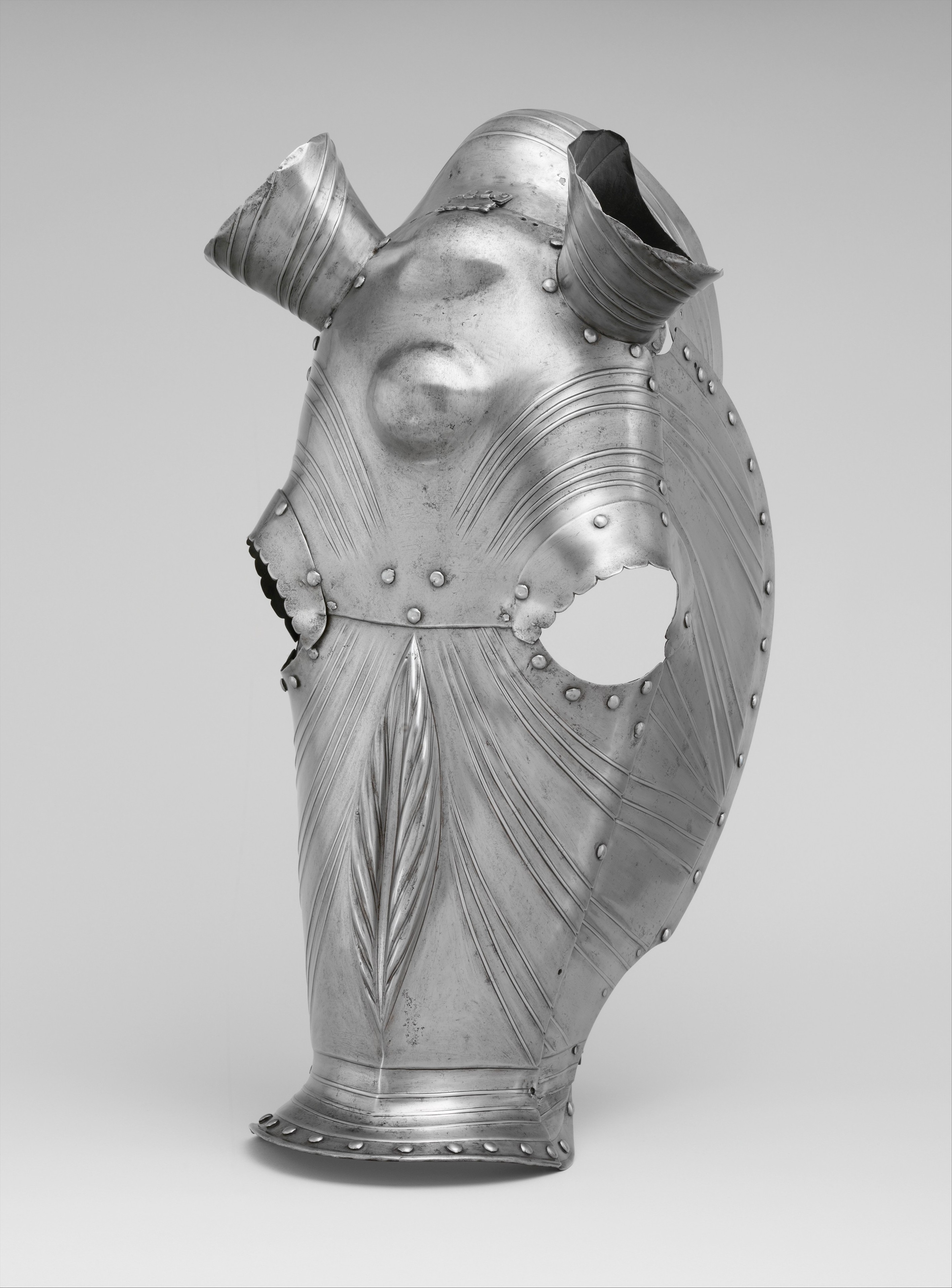
In the annals of fashion history, the human form has long been the primary canvas for sartorial expression. Yet, to confine our analysis to the bipedal figure is to overlook a profound chapter in the history of protective adornment: the equestrian armor. At Katherine Fashion Lab, we approach historical artifacts not merely as relics of warfare, but as radical, functional couture. Our subject today is a singular piece: a German shaffron, likely forged in Nuremberg during the late 15th or early 16th century. Crafted from high-carbon steel, this horse’s head defense is a standalone study in the intersection of material science, ergonomic design, and aristocratic symbolism. It is, in essence, a haute couture piece for a non-human client—a testament to the lengths to which craftsmanship was taken to protect and glorify a partner in both battle and ceremony.
Materiality and the Language of Steel
The shaffron’s primary material—steel—is not merely a functional choice but a statement of intent. In the context of Renaissance Nuremberg, a city renowned for its metallurgical innovation, steel represented the pinnacle of technological prowess. The metal’s composition, a precise alloy of iron and carbon, was manipulated through quenching and tempering to achieve a balance between hardness and flexibility. This is the same meticulous attention to material that a contemporary couturier applies to silk or cashmere. The steel’s surface, now bearing the patina of centuries, would have originally been polished to a mirror-like finish, catching the light and projecting an image of invincibility. The choice of steel over leather or padded cloth was a deliberate escalation—a move from the merely protective to the performative. The shaffron’s weight, approximately 3 to 4 pounds, was distributed across the horse’s poll and nasal bridge, a feat of engineering that mirrors the way a tailored jacket distributes tension across the shoulders. The material does not simply cover; it sculpts the animal’s head into a weaponized form, extending the horse’s natural profile into a sleek, metallic extension of the rider’s will.
Ergonomics and the Equine Silhouette
To understand the shaffron as couture, one must appreciate its ergonomic precision. Unlike human armor, which conforms to a bipedal skeleton, this piece must accommodate the complex anatomy of a horse’s skull—the protruding nasal bone, the sensitive ears, the wide-set eyes. The shaffron’s structure is divided into three primary plates: the front (or “crown”), which covers the forehead and poll; the cheek pieces, which hinge to allow for movement; and the nasal guard, which descends to protect the bridge. Each plate is articulated with riveted hinges, a detail that allows the horse to turn its head, lower it to graze, or toss it in defiance. This articulation is the equestrian equivalent of a gusset in a tailored suit—a hidden mechanism that enables freedom of movement within a rigid structure. The interior of the shaffron would have been lined with leather or felt, padded to absorb shock and prevent chafing. This lining, now lost to time, was the couture’s “inner lining,” a layer of comfort that speaks to a deep understanding of the wearer’s needs. The shaffron does not merely protect; it enhances the horse’s silhouette, creating a streamlined, predatory profile that intimidates adversaries and commands respect in the tournament field.
Symbolism and the Gaze of the Other
In the context of a standalone study, the shaffron must be read as a symbol of status and identity. The horse, in medieval and Renaissance culture, was not a mere vehicle; it was a partner, a weapon, and a symbol of knightly virtue. To armor its head was to elevate the animal from beast to companion-in-arms. The shaffron’s design often incorporated decorative elements—etched lines, gilded borders, or heraldic motifs—that aligned the horse with its rider’s lineage. While this specific example from Nuremberg may be unadorned, its very form carries symbolic weight. The steel’s reflective surface would have caught the sun, creating a blinding glare that disoriented enemies. This is a form of psychological warfare, a couture tactic that manipulates the gaze of the other. The shaffron transforms the horse’s head into a monolith of power, erasing the softness of flesh and replacing it with the cold certainty of metal. In a modern context, this echoes the way a structured shoulder pad or a sharp lapel can project authority. The shaffron is not just armor; it is a mask, one that allows the horse to become an icon of chivalric might.
Construction and the Art of the Artisan
The creation of a shaffron required a master armorer’s skill, a process that parallels the atelier system of haute couture. The steel would have been heated in a forge, then hammered into shape over a wooden form (a “stake”) that replicated the horse’s skull. This is a process of cold forging and hot shaping, where the artisan’s eye and hand are paramount. The fit was achieved through trial and error, with the armorer adjusting the curvature until the metal sat flush against the animal’s contours. The rivets, each hand-forged, were placed with precision to avoid pressure points. The edges were rolled or turned under to prevent sharp cuts—a detail that demonstrates a concern for the horse’s comfort that is almost maternal. This is the same meticulous attention to finish that a couturier applies to a hem or a seam. The shaffron is not mass-produced; it is a bespoke creation, tailored to a specific horse’s dimensions. The armorer’s signature, often hidden on the interior, is a mark of pride, much like a designer’s label sewn into a gown.
The Shaffron as a Standalone Artifact
Viewing this shaffron in isolation—removed from its original context of rider, horse, and battlefield—allows us to appreciate it as a pure object of design. It is a study in negative space, where the absence of the horse’s head becomes a void that the viewer must fill. The curved planes of the steel create a dialogue between light and shadow, a visual rhythm that changes with every angle. The patina of age—the darkening of the metal, the subtle pitting—adds a layer of texture that speaks to history. This is not a pristine garment; it is a worn, lived-in piece that carries the memory of sweat, dust, and the heat of battle. In a gallery setting, the shaffron becomes a sculpture, its form abstracted from its function. Yet, to ignore its purpose is to miss the point. The shaffron is a testament to the belief that even a horse—a creature of flesh and blood—deserves to be adorned with the same care and artistry as a king. It is a reminder that couture is not limited to the human form; it is a universal language of protection, status, and beauty.
Conclusion: The Legacy of Equine Couture
In the Katherine Fashion Lab, we see the German shaffron as a precursor to modern protective design—from motorcycle helmets to equestrian gear. Its principles of articulation, material selection, and ergonomic fit are timeless. The shaffron challenges us to expand our definition of fashion, to see the horse as a client worthy of the same sartorial respect as a human. It is a piece that demands we look beyond the surface, to understand the craftsmanship that goes into protecting a creature that, in many ways, was the engine of medieval society. As we deconstruct this artifact, we are reminded that fashion is not merely about covering the body; it is about empowering it, transforming it, and elevating it to an ideal. The shaffron is that ideal, forged in steel and tempered by history.