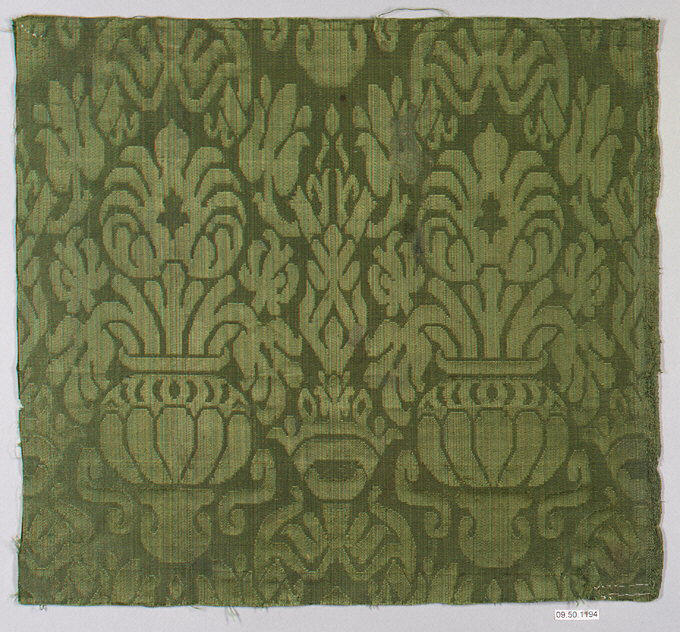
Deconstructing the Piece: A Standalone Study in Silk and Memory
In the rarefied atmosphere of haute couture, a single Piece is never merely a garment; it is a thesis, a manifesto, and a universe contained within a silhouette. For Katherine Fashion Lab, this particular object of study—a standalone creation born from a philosophy of Global Heritage and realized in the primordial luxury of Silk—demands an analysis that transcends seasonal trends. It requires an excavation of meaning, material, and method, treating the Piece not as a product but as a profound cultural and aesthetic artifact. This analysis posits that the Piece operates on three interconnected planes: as a palimpsest of global narratives, as a dialogue between material intelligence and artisanat, and as a self-referential study in autonomous form.
The Palimpsest: Global Heritage as Non-Linear Narrative
The directive of "Global Heritage" is intentionally vast, resisting simplistic appropriation or pastiche. In this Piece, heritage is not a literal motif but a synthesized grammar. We observe a silhouette that hints at the architectural volume of a Japanese kosode, yet its drapery follows the fluid, body-conscious lines of a classical Greek chiton. The fastening system may abstract the concept of a South American tupu (shawl pin) through a complex, non-functional sculptural clasp, while the surface texture whispers of West African weaving rhythms. This is not fusion, but conceptual layering.
The Lab’s methodology here is critical. By decontextualizing these heritage elements from their specific origins and re-contextualizing them into a coherent, unfamiliar whole, the Piece creates a new, hybrid language. It speaks of connectivity and exchange, not of ownership or stereotype. The heritage is in the collective memory of human craftsmanship—the universal impulse to drape, fold, secure, and adorn. The Piece becomes a map where borders are deliberately blurred, suggesting that in the highest echelons of creativity, influence flows as freely as the silk itself, creating a standalone object that belongs everywhere and nowhere, a true citizen of couture.
Material Intelligence: The Primacy of Silk
Silk is the constant, the foundational text upon which the narrative of Global Heritage is inscribed. Its selection is a strategic masterstroke, for silk is itself a global heritage material, with its own millennia-spanning history of trade, cultural significance, and technical evolution. The Lab’s treatment of silk in this standalone study is one of extreme juxtaposition and technical interrogation.
First, consider the multiplicity of silk states employed. A single Piece might incorporate: a spongy, matte crêpe de Chine for structural bodice elements, referencing the weight of history; a translucent, liquid chiffon or georgette for passages of air and mystery, alluding to the veil or the sash; and a heavy, luminous duchesse satin or ottoman for graphic, sculptural interventions. This material polyphony allows the form to shift in character across the geography of the body—from solid to ethereal, from light-capturing to light-emitting.
Second, the finishing techniques applied to the silk constitute a core part of the Piece’s intellectual argument. Degumming might be applied selectively to create zones of dullness against shine, a visual metaphor for the erosion and preservation of cultural memory. Hand-painting using organic dyes could follow the irregular pathways of ancient trade routes, while shibori (tie-dye) or plissé (pleating) techniques are deployed not for pattern, but to manipulate the garment’s inherent architecture, creating permanent shadows and volumes that change with movement. The silk is not a passive substrate; it is an active collaborator, its inherent properties—its memory, its luster, its strength—fully leveraged in the service of the concept.
Autonomous Form: The Piece as Its Own Context
The "Standalone study" context liberates the Piece from the conventions of a collection or a thematic runway. It exists in a vacuum of its own making, which paradoxically amplifies its power. Without the distraction of adjacent pieces or an overarching narrative, every decision is magnified. The silhouette must be self-sufficient and self-explanatory. It likely explores a singular, complex idea of construction—perhaps a spiral cut that eliminates side seams, or a three-dimensional origami-like form that defies traditional front/back dichotomies.
This autonomy forces the viewer—and the analyst—to engage in a deep, slow looking. The absence of a prescribed context means the Piece generates its own. It might evoke the solitude of a museum artifact, the intensity of a laboratory specimen, or the purity of a mathematical model. The finish, the interior construction, the very way it is intended to be stored or displayed (on a bespoke armature, perhaps) become part of its identity. It is couture as a closed-loop system: the concept (Global Heritage) informs the material (Silk), which dictates the technique, which ultimately manifests in a form (the Piece) that reflects back upon and fully contains the original concept. There is no external referent required.
Conclusion: The Laboratory as Atelier
This analysis ultimately reveals that Katherine Fashion Lab’s "Piece" is a meta-commentary on the practice of haute couture itself. By taking "Global Heritage" as a conceptual raw material and "Silk" as a physical one, and subjecting them to the rigorous conditions of a "Standalone study," the Lab demonstrates that the future of luxury lies not in novelty for its own sake, but in depth, synthesis, and intellectual rigor. The Piece stands as evidence that heritage is not a archive to be mined, but a living, mutable language to be spoken in new dialects. It proves that silk, one of humanity’s oldest luxuries, remains one of its most potent mediums for avant-garde expression. Finally, it asserts that in an age of relentless production, the ultimate luxury—and the most profound statement—may be a single, perfect, and profoundly considered Piece.