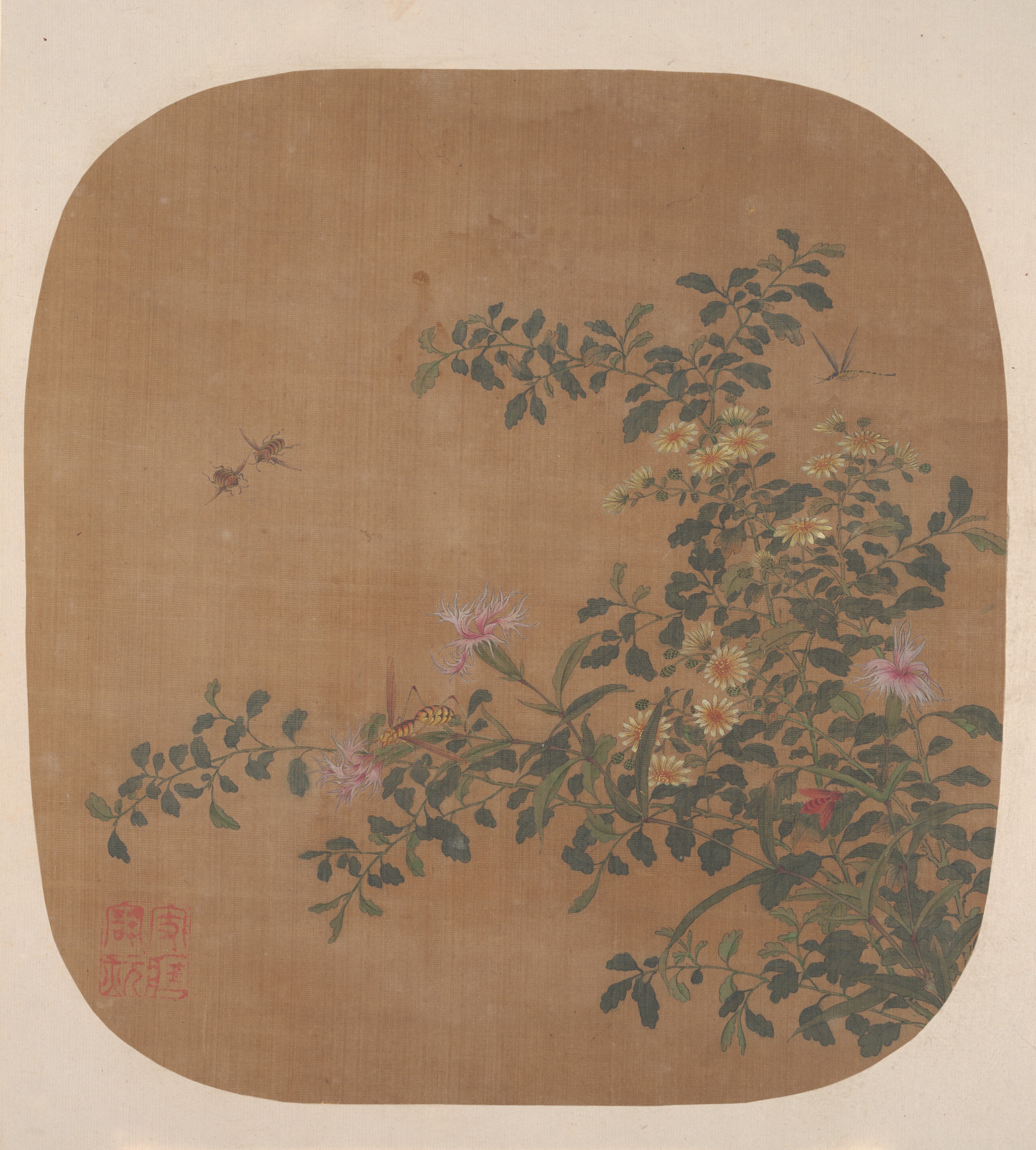
The Symbiotic Elegance of Nature: A Couture Analysis of “Flowers and Bees”
Introduction: The Intersection of Art and Fashion
In the rarefied world of haute couture, inspiration often transcends the boundaries of textile and silhouette, drawing from the deepest wells of cultural heritage and natural philosophy. At Katherine Fashion Lab, we are committed to deconstructing these influences to inform our design lexicon. The subject of this analysis—a Chinese album leaf from the Ming or Qing dynasty, mounted as a fan, depicting “Flowers and Bees” in ink and color on silk—offers a profound case study. This standalone study is not merely a botanical illustration; it is a masterclass in balance, ephemerality, and the intricate dance of life. For the discerning fashion professional, this artwork provides a blueprint for integrating narrative depth, chromatic subtlety, and structural integrity into a collection. The following analysis will dissect the piece’s aesthetic, symbolic, and material properties, translating them into actionable couture elements.
Historical and Cultural Context: The Language of Silk
To understand the couture potential of this fan-mounted album leaf, one must first appreciate its origins in Chinese literati culture. During the Ming (1368–1644) and Qing (1644–1912) dynasties, fan paintings were not mere accessories but intimate expressions of scholarly refinement. They were often exchanged as gifts, inscribed with poetry, and displayed as seasonal tokens. The choice of silk as the ground material is critical; silk’s luminosity and absorbency create a unique interplay between the ink’s permanence and the color’s transience. For Katherine Fashion Lab, this translates into a philosophy of materiality. The silk fan is a precursor to modern couture fabrics—delicate yet resilient, demanding precision in application. The “Flowers and Bees” subject matter, a classic trope in Chinese art, symbolizes harmony and fertility. The flower represents beauty and transience, while the bee embodies industriousness and pollination—a symbiotic relationship that mirrors the partnership between designer and artisan. In a couture context, this duality suggests a collection that celebrates both fragility and strength, where each stitch is a deliberate act of creation.
Compositional Analysis: The Geometry of Nature
The fan’s crescent shape imposes a dynamic geometry on the composition. Typically, Chinese fan paintings employ a radial or asymmetrical layout to guide the viewer’s eye along the ribs of the fan. In this study, the flowers—likely peonies or plum blossoms—are rendered with bold, calligraphic strokes, their petals overlapping in a rhythm that mimics the folds of a pleated gown. The bees are depicted with minute precision, their wings a whisper of translucent color against the silk. This contrast between the macro (the flower’s expansive form) and the micro (the bee’s delicate anatomy) is a key couture technique. It suggests a design approach where a single, oversized floral motif dominates a garment’s structure, while intricate embroidery or beading—representing the bees—adds a layer of detail that rewards close inspection. The use of negative space, a hallmark of Chinese painting, is equally instructive. The fan’s empty areas are not voids but breathing spaces, allowing the silk’s natural sheen to act as a counterpoint to the ink. In a gown, this could translate to strategic cutouts or sheer panels that reveal the skin, creating a dialogue between coverage and exposure.
Color Palette and Pigment Application: A Study in Restraint
The palette of “Flowers and Bees” is restrained yet potent. Traditional Chinese pigments—derived from minerals and plants—include vermillion, malachite green, azurite blue, and ochre, all tempered by the black of ink. The artist likely employed a wet-on-wet technique for the petals, allowing colors to bleed softly, evoking the velvety texture of live blooms. For the bees, a touch of gold or yellow ochre suggests the iridescence of their carapaces. This chromatic strategy is a lesson in tonal harmony for couture. Rather than relying on a full spectrum, the designer can select three to four key colors—such as deep crimson, jade, and charcoal—and use them in varying intensities. The ink outlines, which define the forms, can be reinterpreted as black soutache braid or hand-painted seams on a silk organza dress. The fan’s aged patina, a result of centuries of exposure, introduces a subtle yellowing that softens the palette—a reminder that couture garments, like art, gain character through wear and time.
Textural and Structural Parallels: From Fan to Fabric
The physical construction of the fan itself offers structural insights. The ribs, typically made of bamboo or sandalwood, provide a rigid framework that supports the flexible silk leaf. This tension between support and drape is a fundamental couture principle. In a garment, this could manifest as boning or architectural seams that shape the fabric while allowing movement. The fan’s folding mechanism suggests pleating—a technique that Katherine Fashion Lab could explore through accordion pleats or knife pleats that echo the fan’s radial lines. The mounting process, where the silk is glued to the paper backing and then to the ribs, parallels the construction of a couture gown’s lining and interlining. The artist’s use of “boneless” brushstrokes (without outlines) for the bees contrasts with the “bone” strokes for the flowers, a dichotomy that can inspire a mix of appliqué and embroidery in a single garment.
Symbolic Interpretation for Modern Couture
Beyond aesthetics, the symbology of flowers and bees resonates deeply with contemporary fashion narratives. The bee, a symbol of community and diligence, aligns with the slow fashion movement and the artisanal ethos of haute couture. The flower, representing growth and decay, speaks to sustainability and the lifecycle of garments. For a collection titled “Symbiosis,” Katherine Fashion Lab could develop pieces that incorporate transformable elements—a detachable bee-shaped brooch that becomes a hair ornament, or a floral bodice that can be worn in multiple configurations. The fan’s standalone study nature suggests that each piece in the collection should be a singular work of art, capable of being appreciated in isolation yet part of a cohesive narrative. This approach elevates the garment from mere clothing to a collectible artifact, much like the fan itself.
Conclusion: Translating Tradition into Tomorrow
The Chinese fan-mounted album leaf of “Flowers and Bees” is a testament to the enduring power of nature as a muse for couture. Its meticulous composition, symbolic depth, and material integrity offer a rich vocabulary for design innovation. For Katherine Fashion Lab, this analysis yields a clear directive: embrace asymmetry, honor materiality, and weave narrative into every stitch. By translating the fan’s radial geometry into structural pleats, its restrained palette into tonal dressing, and its symbiotic theme into modular design, we can create a collection that pays homage to Chinese artistry while pushing the boundaries of modern luxury. In the hands of a skilled couturier, a 400-year-old fan becomes not a relic, but a living inspiration—a reminder that the most exquisite fashion is, at its core, a dialogue between the artist and the world.