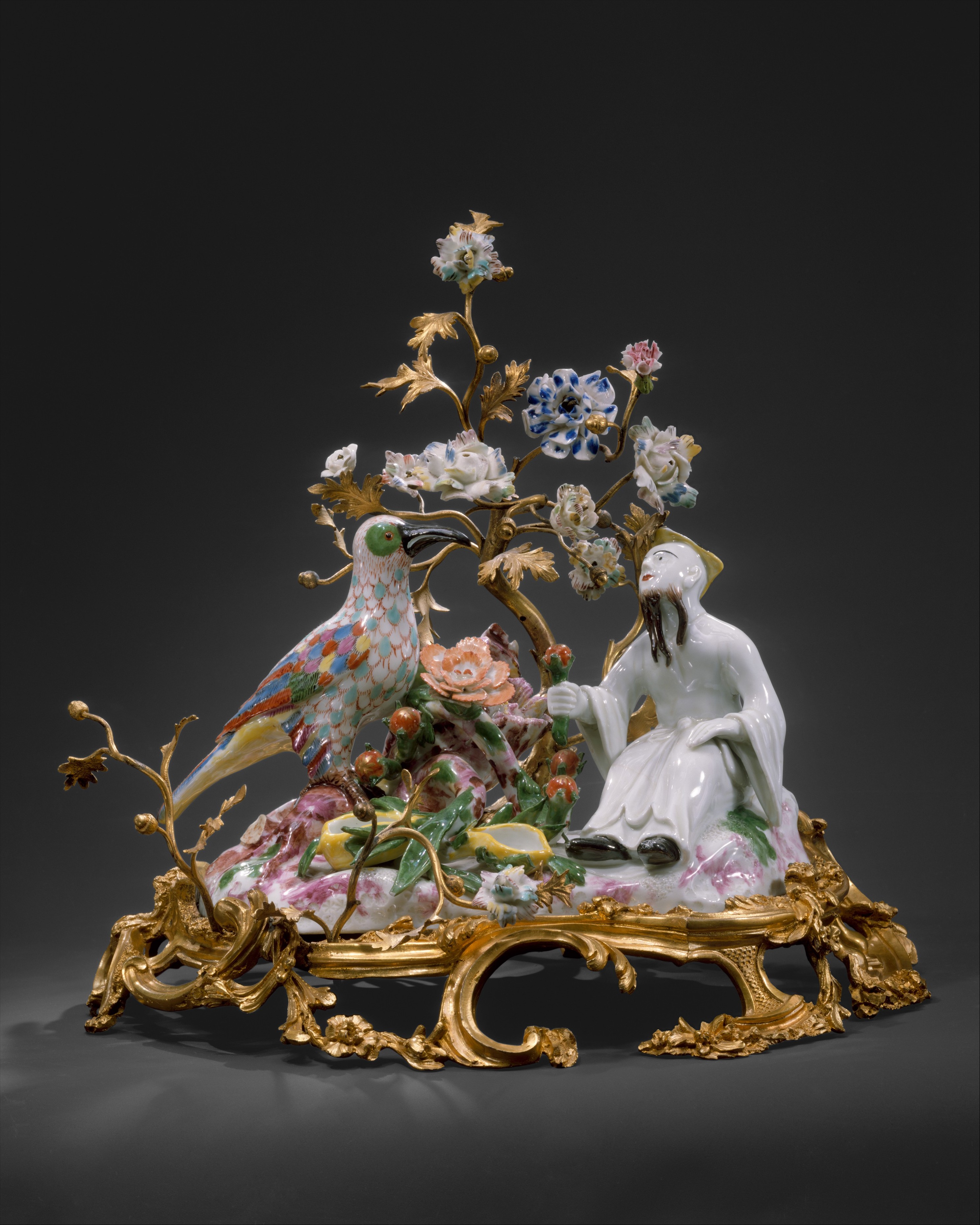
Heritage Analysis: Chinese Figure with Bird in Porcelain and Gilt-Bronze
Introduction: The Object as Cultural Artifact
The subject of this analysis is a Chinese figure with bird, rendered in hard-paste porcelain with gilt-bronze mounts and soft-paste porcelain flowers. Originating from the ancient civilization of China, this object embodies a confluence of spiritual symbolism, historical adornment, and material mastery. As a strategic standalone research piece for Katherine Fashion Lab, this artifact offers profound insights into the symbolic power of avian motifs, the decorative language of Chinese porcelain, and the potential for translating these elements into high-end luxury strategies for 2026. The figure is not merely a decorative object; it is a repository of cultural memory, a testament to craftsmanship, and a blueprint for modern luxury branding.
Symbolic Power: The Bird as Spiritual Mediator
In ancient Chinese cosmology, birds held a privileged position as intermediaries between the earthly and celestial realms. The figure’s bird—often identified as a crane, phoenix, or magpie—carries distinct symbolic weight. The crane, for instance, is associated with longevity, wisdom, and transcendence, frequently depicted in Daoist iconography as the mount of immortals. The phoenix, or fenghuang, represents virtue, grace, and the union of yin and yang, often reserved for imperial contexts. The magpie, conversely, symbolizes joy and auspicious news, appearing in folk traditions as a harbinger of happiness.
For Katherine Fashion Lab, this symbolic power can be leveraged to create a narrative of transcendence and exclusivity. The bird motif, when abstracted or reinterpreted, communicates a brand’s aspiration to elevate the wearer beyond the mundane. In 2026 luxury strategy, such symbolism can be embedded in product lines—through embroidery, jewelry, or textile patterns—to evoke a sense of spiritual heritage. The bird becomes a signature emblem, not merely decorative but talismanic, offering consumers a connection to ancient wisdom and personal transformation.
Historical Adornment: The Art of Porcelain and Gilt-Bronze
The medium of hard-paste porcelain, combined with gilt-bronze mounts and soft-paste porcelain flowers, represents a pinnacle of technical achievement in Chinese decorative arts. Hard-paste porcelain, fired at high temperatures, offers durability and a luminous, translucent quality that has been coveted since the Tang dynasty. The addition of gilt-bronze mounts—a European adaptation during the 18th and 19th centuries—reflects the cross-cultural exchange of luxury goods, where Chinese porcelain was often mounted in ormolu to suit European aristocratic tastes. The soft-paste porcelain flowers, delicately modeled and painted, add a layer of ephemeral beauty, contrasting with the permanence of the hard-paste body.
Historically, such figures were placed in temples, palaces, or scholar’s studios as objects of contemplation and status. The adornment itself—the intricate carving, the gilding, the floral appliqués—was not merely aesthetic but signaled the owner’s refinement, wealth, and cultural literacy. For Katherine Fashion Lab, this historical context informs a strategy of material storytelling. In 2026, luxury brands will differentiate through the narrative of their materials: porcelain’s fragility and strength, bronze’s permanence, and the handcrafted nature of each element. A collection inspired by this figure might use ceramic-like finishes, gold accents, and floral motifs to evoke a sense of curated rarity. The object’s history of cross-cultural exchange also suggests a strategy of global fusion, where Eastern and Western luxury traditions are synthesized for a discerning, cosmopolitan clientele.
Spiritual Meaning: The Figure as a Vessel for Transcendence
The spiritual dimension of the Chinese figure with bird extends beyond symbolism to function. In Confucian, Daoist, and Buddhist traditions, such objects were often used in ritual contexts—as offerings, meditation aids, or protective talismans. The figure’s serene posture and the bird’s poised stance suggest a state of harmony, a visual meditation on the balance between nature and humanity. The soft-paste porcelain flowers, often depicting peonies or lotuses, reinforce this spiritual lexicon: the peony symbolizes wealth and honor, while the lotus represents purity and enlightenment.
For Katherine Fashion Lab, the spiritual meaning can be operationalized through experiential luxury. In 2026, high-end consumers increasingly seek products that offer not just status but meaning—objects that serve as anchors for mindfulness, ritual, or personal growth. A luxury brand might create a “spiritual capsule” collection, where each piece is accompanied by a narrative of its symbolic origins, perhaps even a meditation guide or a digital experience that connects the wearer to the artifact’s cultural roots. The bird and figure motif can be used in scent diffusers, jewelry, or home decor, positioning the brand as a purveyor of conscious luxury—where beauty and spirituality converge.
2026 High-End Luxury Strategy: Translating Heritage into Modern Desire
The Chinese figure with bird offers a robust framework for a 2026 luxury strategy that prioritizes authenticity, craftsmanship, and emotional resonance. Below are key strategic pillars derived from this heritage analysis:
1. Symbolic Branding: The bird motif should be developed as a proprietary brand icon, akin to the Hermès scarf or the Cartier panther. By consistently using the bird in logo variations, packaging, and limited-edition collections, Katherine Fashion Lab can create a recognizable symbol of transcendence and exclusivity. The figure’s association with longevity and wisdom can be marketed as a counterpoint to fast fashion, appealing to consumers who value permanence over trend.
2. Material Innovation: The combination of hard-paste porcelain, gilt-bronze, and soft-paste flowers suggests a strategy of hybrid materiality. In 2026, luxury brands can experiment with ceramic-coated metals, 3D-printed porcelain-like textures, and hand-applied gold leaf. These materials evoke the artifact’s opulence while allowing for modern wearability. A handbag, for instance, might feature a porcelain clasp and gilt-bronze hardware, with floral embroidery in silk thread.
3. Narrative-Driven Collections: Each collection should be anchored by a heritage narrative. For example, a “Celestial Messenger” line could feature pieces inspired by the figure’s bird, with storytelling that traces the motif’s journey from ancient Chinese temples to contemporary ateliers. This narrative can be reinforced through digital content—short films, interactive timelines, and artist collaborations—that educates consumers on the cultural significance of the design. The goal is to transform the purchase into an act of cultural patronage.
4. Experiential Retail: The spiritual meaning of the figure can be brought to life in retail environments. Flagship stores might include meditation rooms, porcelain workshops, or curated spaces where the figure is displayed alongside modern interpretations. In 2026, luxury retail must move beyond transaction to transformation; the figure’s serene presence can serve as a focal point for brand immersion, offering consumers a moment of respite and reflection.
5. Collaborations with Artisans: To maintain authenticity, Katherine Fashion Lab should partner with master porcelain artisans from Jingdezhen or bronze workers from traditional Chinese foundries. These collaborations not only ensure exceptional quality but also generate compelling stories of craft preservation. Limited-edition pieces, co-signed by the artisan and the brand, can command premium pricing and attract collectors who value cultural heritage.
Conclusion: The Figure as a Blueprint for Timeless Luxury
The Chinese figure with bird in hard-paste porcelain, gilt-bronze, and soft-paste flowers is more than a historical artifact; it is a strategic asset for Katherine Fashion Lab’s 2026 luxury vision. Its symbolic power, historical adornment, and spiritual meaning provide a rich lexicon for brand differentiation in an increasingly crowded market. By translating these elements into material innovation, narrative depth, and experiential retail, the brand can position itself at the intersection of heritage and modernity. In an era where consumers seek meaning alongside opulence, this figure offers a timeless blueprint: luxury as a vessel for transcendence, crafted with integrity, and worn with purpose.